




EXCLUSIVE
While business and general aviation is thriving globally, India has some catching up to do. Director General of IBAC, Kurt Edwards speaks exclusively with Jayant Baranwal, Editor-in-Chief, on unlocking India’s business aviation potential.
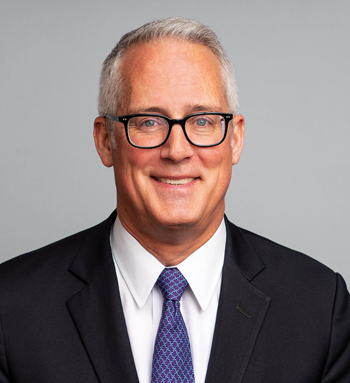
Jayant Baranwal (Baranwal): Can you share about the overall global business aviation status — some pluses and minuses?
Kurt Edwards (Edwards): The industry overall is doing well. You may recall that during the pandemic, while initially — as all of aviation did — we took a dive in terms of numbers of operations. But then folks quickly realised that business aviation provided them the safety and security they needed to fly. And so, we bounced back quite early, relative to the airlines, and the levels of activity were quite high after the first few months of the pandemic.
We’re coming back now to levels of activity that are closer to the 2019 levels, but they were still pretty good. There are some places where it may not be quite as active. China, for example, has slowed down a bit. Europe is a little bit slower than North America. But nonetheless, overall business aviation is doing well.
Baranwal: So, are you saying that we are still a little far from the pre-COVID era?
Edwards: I mean, we have come down from that peak, yes. But we are at about the same levels as we were pre-COVID, or maybe a little bit higher.
Baranwal: A little bit higher?
Edwards: A little bit, in some cases, yes.
Baranwal: Can we divide the global market into two — the supplier market and the buyer’s market? Because supplier countries are very few, while buyer countries can be enormous.
Edwards: When you’re talking about buyers and suppliers, are we talking about charter operators or manufacturers?
Baranwal: Sellers — the manufacturers.
Edwards: My understanding is that the manufacturers are in a very good spot right now. They have very good book-to-bill ratios, so they’ve got backlogs, which is always good.
WHEN YOU LOOK AT THE SIZE OF INDIA’S POPULATION, WHEN YOU LOOK AT ITS GROUND INFRASTRUCTURE, WHEN YOU LOOK AT GDP, THERE’S ALL KINDS OF POTENTIAL TO GROW
The key thing to look at, and I haven’t seen the most recent figures, is where we are on the number of used aircraft on the market. If there are very few, that means we’re doing very well. If there are many, that means we’re not doing as well. The last time I checked, maybe three or four months ago, we were in a place where there were relatively fewer used aircraft available, but perhaps that was softening a bit.
Baranwal: Since you have spoken about the used aircraft, is that a kind of challenge for brand-new aircraft sellers?
Edwards: Apparently not, because they’ve got a backlog. All of them have backlogs in terms of new aircraft sales. There are a lot of people that would prefer buying new aircraft from the very beginning and are willing to wait. In the meantime, they’re chartering or there are fractional owners.
Baranwal: So, both are on the same level in terms of their potential customers — the users?
Edwards: What I’m hearing is that if you want a new aircraft immediately, it’s not going to happen. You’re going to get in line. And so, if you want a used aircraft, depending upon the type of aircraft, that market may be extremely competitive.
Baranwal: How about the safety standard in BA and GA? Is it progressing well? The rate of undesirable incidents is lower now or what?
Edwards: Well, we had the unfortunate accident yesterday here in India, which was terrible. We’ll have the investigation and we’ll understand what happened. The safety space is one that we have to always be vigilant in. We are as successful as our safety record, correct? So, it’s critical among all operators to pay attention that way.
From our point of view, in IBAC, we have a global voluntary code of best safety practices. So, we are promoting that around the world. Since its inception, more than a thousand operators have implemented it. At its core, it is the safety management system concept.
We’ve also introduced a similar programme for ground handling — those people that handle business aviation aircraft. So, we have the IS-BAH programme, which has brought SMS to ground handling. More than 350 locations around the world have adopted that.
So, when I look at the uptake of these two standards, what I’m seeing is that there’s a definite desire to demonstrate excellence in safety. And that’s important. We always have to keep promoting that and be conscious of that.
Baranwal: It appears that in this part of the world, the Middle East is a big market. Can you tell us why? And how do you see the South East Asian market compared to the Middle East?
Edwards: My perception is that in the Middle East market, there is a desire for mid- and large-sized cabin aircraft that can do long range — to reach Europe, to reach North America, to reach East Asia and Australasia. And, Middle East has the necessary resources to purchase these aircraft.
There’s also the regulatory framework, which is very open to business aviation in the Middle East. And we were at the MEBAA Show in December 2024, and I think Airbus ACJ had a major announcement and I heard the buyers there. The manufacturers are very happy to go there. It’s a highly receptive marketplace in that region.
WHEN YOU HAVE A NATIONAL PLAN THAT BY 2047 YOU WANT INDIA TO BE AT A CERTAIN LEVEL OF ECONOMIC ACTIVITY GENERATED BY INDUSTRIES INCLUDING AVIATION, A 40 PER CENT TAX ON PRIVATE AIRCRAFT IS NOT GOING TO HELP YOU REACH THAT GOAL
Clearly India, from the most recent figures that I saw, has only about 295 turbojets and turboprops based here. And when you look at the size of its population, when you look at its ground infrastructure, when you look at GDP, there’s all kinds of potential to grow that. It’s important for the government and the industry to work together to put in place the right policies to enable it — but enable it in a safe way.
Baranwal: What are the overall average taxation levels for private aircraft ownership around the world?
Edwards: It’s a hard one to answer specifically, but it varies from market to market. We were just talking in the panel earlier today — someone gave the example of the United States, which now offers 100 per cent depreciation on your aircraft when you buy it.
I was also learning about the GST tax issue here in India going from, what, 28 per cent to 40 per cent recently?
Baranwal: Yes, 28 per cent to 40 per cent.
Edwards: So that’s not helpful, obviously, right? Canada, a few years ago, put in place a luxury tax on all products over $1,00,000 — not just aircraft, but automobiles, boats, that type of things. It wasn’t specifically aimed at aircraft, but it was written such, that from a certain point in 2021 onward, any new item above that price would be taxed an extra 10 per cent. Even 10 per cent was dissuasive when you think about how much a business jet costs.
In the business aviation world, that luxury tax had an unintended consequence of incentivising operators, buying aircraft for their fleet, to buy older aircraft — aircraft that were less fuel efficient and producing more emissions. That was the opposite of what the government wanted at the time, but it did not matter, and they still did it. So overall the Canadian fleet became a little less efficient.
The new government that came in recently found that the luxury tax was anti-competitive and not helpful. When they presented their new budget late last year, the luxury tax disappeared. So, it really was not bringing in the funds that the previous government thought it would, and it was unhelpful to the economy.
So, you can imagine Bombardier was probably pretty happy when that went away.
Baranwal: Let me be the devil’s advocate. I would say private aircraft or helicopters are the toys of the richest people in the world. So, if the government is taxing such toys, are they really wrong? If the government is imposing higher taxes on these machines owned only by the richest people, why should we say that it is not correct, the higher level of taxes?
Edwards: I suppose the way of looking at tax policy generally is putting in place policies that are fair and appropriate. I’m not saying don’t tax the rich, but if you’re putting tax policies in place, you want to make sure they’re for the right reasons and structured to incentivise bigger purposes.
Placing a 40 per cent GST on an aircraft is significant. And when you have a national plan that by 2047 you want India to be at a certain level of economic activity generated by industries including aviation, a 40 per cent tax on private aircraft is not going to help you reach that goal — at least in the short term.
So, my point of view is this industry is not saying it doesn’t want to pay into the systems that allow it to work. But you need tax policy that is smart and reasonable. Fundamentally we already pay into the system our fair share for operations and the infrastructure development. Beyond that, governments need to think smartly about what they put in place.
Baranwal: Is the US, which is the largest market, still facing bureaucratic hurdles?
Edwards: Which hurdles are you thinking about?
Baranwal: I mean initiatives like No Plane, No Gain — now evolved into Climbing Fast — all these are structured to push the government for incentives and support. Why should they constantly do so?
Edwards: North America, especially the United States, is unique in business aviation. Private aviation, General Aviation, started there first. Commercial aviation came later. There’s always been this long history of aviation in the US beginning with private operators — recreational flying, aerobatics, inventing aircraft. The commercial side grew out of that. Elsewhere in the world, the first time many people saw aircraft, it was an airliner arriving somewhere remote. That shaped how aviation was perceived.
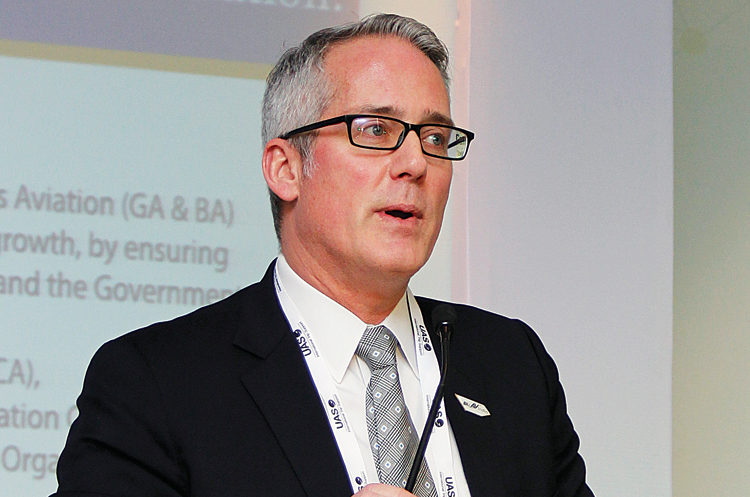
The United States currently has an administration quite favourably disposed to business aviation. It’s under the current administration that the 100 per cent depreciation tax provision came into law. So, there are probably fewer perceived hurdles to business aviation in the US now at the federal level, though there may be local battles around airports in certain cities. Generally, though, aviation is a welcome activity in the US.
There’s also an important initiative developed by several associations — one is the Alliance for Aviation Across America. This group works with local mayors, councils, governors and communities to demonstrate how many jobs aviation supports. You can look at any state and see employment figures down to the city level.
Separately, the No Plane, No Gain campaign evolved into something called Climbing Fast. It highlights the economic and societal benefits of business aviation and also the industry’s commitment to sustainability.
Every new aircraft generation is more fuel-efficient than the last. Business aviation tends to be an early adopter of technologies. Winglets first appeared on a Learjet in 1976, and now they’re everywhere. They reduce fuel burn by up to five per cent. Glass cockpits, composite materials — all of that has contributed to more efficient aircraft.
The industry is also a strong supporter of sustainable aviation fuel. We want to see greater production and uptake. We know distribution will be difficult, so we also advocate for a concept called book and claim. You can be in Delhi uplifting traditional jet fuel but purchase SAF credits. The equivalent SAF is uplifted somewhere else where it’s available, but you receive the environmental benefits for reporting purposes. Right now, book and claim are done informally. We’re working with ICAO’s Committee on Aviation Environmental Protection to establish guidance so operators worldwide can benefit transparently.
Baranwal: Some people in the industry say SAF may not really reduce emissions compared to traditional fuel. Is that true?
Edwards: Yes, it does reduce emissions. The question is to what degree. The feedstock, transportation, and production all involve emissions, so lifecycle analysis matters. But overall, there is a reduction. The goal is to reduce lifecycle emissions further over time so SAF’s benefits become even stronger.
Baranwal: Is it expensive at this stage?
Edwards: It depends where you are. Some studies in the US have found SAF at price parity in certain locations, while in others it’s higher. But when you factor it into total yearly operating costs, the increase is relatively small — single-digit percentage points. So it’s not as dramatic as people assume.
If you compare gallon to gallon, yes, you see a difference. But within total operating costs, the increase is minimal.
Baranwal: And the milestone year is 2050?
Edwards: Right. The global aviation industry — airlines, manufacturers, airports, everyone — along with ICAO member states, has agreed on a goal of net-zero carbon emissions by 2050.
It would be wonderful if that meant zero emissions entirely, but aviation is a hard-to-abate sector. Some offsetting and carbon sequestration will be necessary. That’s why the goal is net zero.