




From renewable energy and sustainable fuel partnerships to eco-centric infrastructure and corporate responsibility, Pilatus is embedding environmental stewardship into every aspect of its business
Pilatus Aircraft Ltd, the renowned Swiss aircraft manufacturer based in Stans, has long been known for its engineering excellence and versatile aircraft such as the PC-12, PC-24 and PC-21. In recent years, the company has broadened its focus to place sustainability at the heart of its corporate strategy, embedding environmental, social and governance (ESG) principles into its operations, infrastructure, products and partnerships. Drawing exclusively from official company sources and related press releases, this article explores how Pilatus is pursuing sustainability across its business and beyond.
A CULTURE OF ENVIRONMENTAL RESPONSIBILITY
Pilatus describes environmental protection as a fundamental part of its corporate ethos — “a long-standing Pilatus belief” that is woven into the company’s vision and operational practices. This commitment spans from responsibly managing raw materials and energy to optimising manufacturing processes and minimising consumption wherever possible. Pilatus holds ISO 14001 certification, reflecting its structured approach to environmental management and formalising sustainability across all departments.

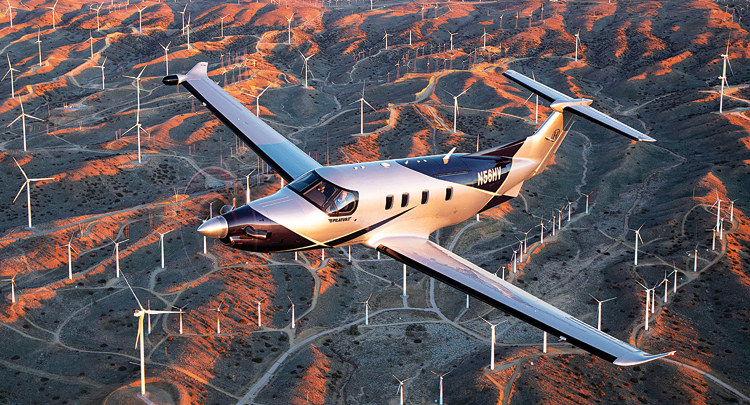
The company’s environmental initiatives begin at its headquarters in Stans, where renewable energy plays a central role. Most of the electricity used is sourced from Swiss hydropower, while buildings are predominantly heated using renewable energy generated from a regional wood-gas power plant fuelled by locally grown forest timber and waste wood. These measures not only reduce the company’s carbon footprint but also demonstrate how sustainability is integrated into everyday operations.
RENEWABLE ENERGY AND ECO-CLEVER INFRASTRUCTURE
Pilatus has actively invested in renewable energy infrastructure. A notable example is the commissioning of a large photovoltaic (solar) power plant at its headquarters in the canton of Nidwalden. With nearly 5,000 solar modules covering vast rooftop space and producing close to 1.973 megawatts of peak power, the installation generates around 1.7 million kilowatt-hours of clean electricity annually — enough to meet the power needs of over 300 average homes. This project is part of Pilatus’ roadmap towards climate-neutral aircraft production and underscores the company’s ambition to leverage clean energy for its operations.
PILATUS HAS BEEN PROACTIVE IN THIS DOMAIN, NOT ONLY CERTIFYING ITS AIRCRAFT TO FLY ON SUSTAINABLE AVIATION FUEL (SAF) BUT ALSO SCALING PARTICIPATION IN NEXT-GENERATION FUEL TECHNOLOGIES
Sustainability also informs Pilatus’ building strategies. New constructions and renovations adhere to recognised international standards — for instance, meeting Leadership in Energy and Environmental Design (LEED) Gold certification where feasible. Local timber is used extensively, particularly in timber-frame hangars that reduce dependence on steel and reflect Pilatus’ dedication to sustainable construction materials and techniques.
WINGS OF CHANGE: SUSTAINABLE AVIATION FUEL
In aviation, one of the most critical pathways to reducing environmental impact is the adoption of sustainable aviation fuels (SAF). Pilatus has been proactive in this domain, not only certifying its aircraft — including popular models such as the PC-12 and PC-24 — to fly on SAF but also scaling participation in next-generation fuel technologies.
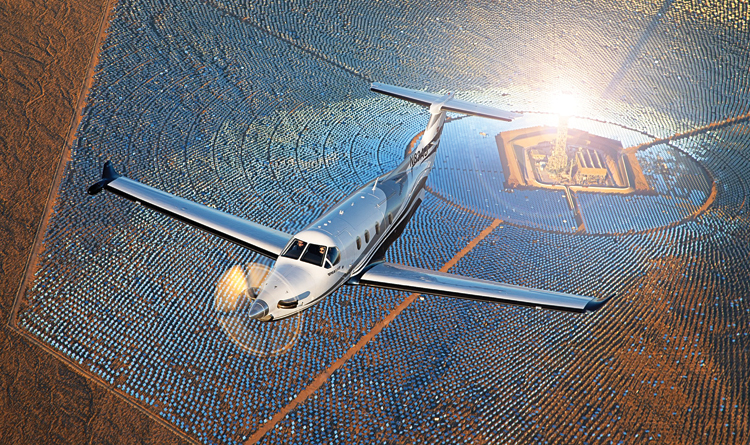
A major milestone in this journey is Pilatus’ strategic partnership with Synhelion, a Swiss startup and spin-off from ETH Zurich focused on producing solar fuels using concentrated solar energy. Through this collaboration, Pilatus has become a shareholder in Synhelion and is helping accelerate the production and commercialisation of solarderived aviation fuels that aim to significantly reduce life-cycle carbon emissions compared to conventional fossil jet fuel.
Pilatus plans to integrate these fuels into its own operations and, eventually, offer them to its global customer base, reinforcing its role as a pioneer in defossilising aviation. In official remarks, Pilatus CEO Markus Bucher emphasised the importance of this technology: “We are convinced of the value of solar fuel technology — these fuels are the best way to defossilize air travel as quickly as possible. We’re delighted to play a pioneering role together with Synhelion and make an important contribution to sustainability in the aviation industry.” This quote reflects Pilatus’ long-term strategic direction and its confidence in emerging renewable fuel solutions.
Further cementing this commitment, Pilatus has also signed fuel off-take agreements tied to future solar fuel production, demonstrating its willingness to underpin the economic viability of cleaner energy pathways within the aviation ecosystem.
BEYOND OPERATIONS: PEOPLE, GOVERNANCE AND INNOVATION
Pilatus’ sustainability lens extends beyond environmental metrics to encompass social responsibility and corporate governance. The company emphasises employee wellbeing through competitive benefits, career development opportunities and leadership training. Pilatus has also adopted a Supplier Code of Conduct aligned with ethical standards, reflecting its commitment to responsible business practices across the value chain.
PILATUS DESCRIBES ENVIRONMENTAL PROTECTION AS A FUNDAMENTAL PART OF ITS CORPORATE ETHOS THAT IS WOVEN INTO THE COMPANY’S VISION AND OPERATIONAL PRACTICES
The establishment of a Corporate Sustainability department and the rollout of its Sustainability Strategy 2.0 illustrate how Pilatus is institutionalising sustainability within governance structures and innovation frameworks. This strategy aims to foster sustainable innovation and ensure that new technologies and processes are evaluated through an environmental and social impact perspective.
SUPPORTING INNOVATION FOR FUTURE FLIGHT
Pilatus’ vision of sustainability also includes exploration of emerging technologies that could pave the way for even cleaner aviation. One example, supported through collaboration with the Swiss Federal Institute of Technology (ETH Zurich), is “Project H2,” which investigates hydrogen-powered propulsion systems for light aircraft. With zero carbon emissions at the point of use and high energy potential, hydrogen offers a promising pathway toward climate-neutral flight — and Pilatus’ involvement demonstrates its commitment to future-focused sustainability research.
CONCLUSION: A HOLISTIC GREEN STRATEGY
Pilatus Aircraft is charting a comprehensive and multifaceted sustainability journey that integrates environmental stewardship, renewable energy adoption, sustainable aviation fuel development, employee welfare, ethical governance and forward- looking innovation. By aligning its corporate strategy with climatepositive actions and partnerships, Pilatus is not only reducing its own environmental footprint but also helping to steer the aviation industry toward a more sustainable future.
From solar panels on factory roofs to pioneering solar fuel collaborations, Pilatus’ commitment to sustainability demonstrates that aerospace excellence and environmental responsibility can — and must — go hand in hand.