
The insightful articles, inspiring narrations and analytical perspectives presented by the Editorial Team, establish an alluring connect with the reader. My compliments and best wishes to SP Guide Publications.

"Over the past 60 years, the growth of SP Guide Publications has mirrored the rising stature of Indian Navy. Its well-researched and informative magazines on Defence and Aerospace sector have served to shape an educated opinion of our military personnel, policy makers and the public alike. I wish SP's Publication team continued success, fair winds and following seas in all future endeavour!"

Since, its inception in 1964, SP Guide Publications has consistently demonstrated commitment to high-quality journalism in the aerospace and defence sectors, earning a well-deserved reputation as Asia's largest media house in this domain. I wish SP Guide Publications continued success in its pursuit of excellence.
The acquisition of Air LORA and Ice Breaker missiles, together with the SPICE 1000 kits, would boost Indian Armed Forces precision strike portfolio
 |
The Author is Former Director General of Information Systems and A Special Forces Veteran, Indian Army |
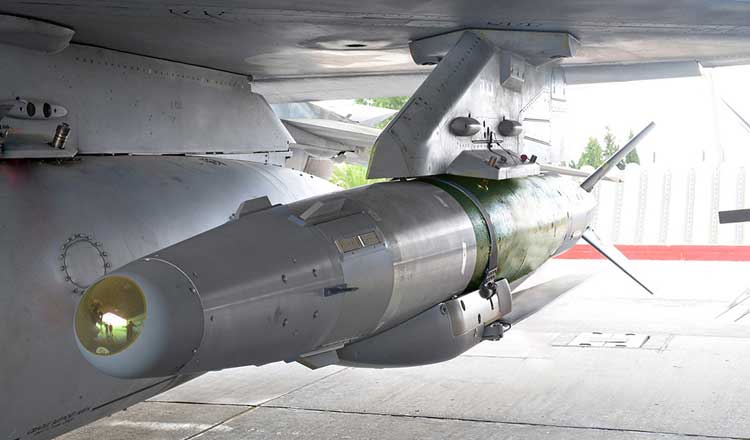
On December 29, 2025, the Defence Acquisition Council (DAC), headed by Defence Minister Rajnath Singh, approved proposals worth approximately ₹79,000 crore (around $8.78 billion) for modernising the Army, Navy, and Air Force, including new loitering munitions, radars, Astra Mk-II missiles, and integrated drone detection systems, marking a significant step towards self-reliance in defence and enhancing operational capabilities. The acquisition package, focusing on self-reliance, includes systems for all three services. Items for the Army, Navy, and Air Force cover areas like surveillance, precision strike, and combat readiness. The package approved for the Indian Air Force (IAF) included: Automatic Take-off Landing Recording System, Astra Mk-II Missiles, Full Mission Simulator and SPICE 1000 Long Range Precision Guided Kits from Rafael Advanced Defence Systems, significantly expanding the IAF's inventory of precision guided munitions for deep strike roles.
India is procuring and planning local production of the Israeli LORA (Long-Range Artillery) missile, an air-launched precision strike weapon, to enhance its air power with long-range, high-accuracy strikes against hardened targets
Israeli journalist Arie Ergozi, who has earlier served in the Israeli Defence Forces (IDF), recently reported that India has also placed orders for the Air LORA and Ice Breaker missile systems, coinciding with the IAF's procurement of SPICE 1000 guided kits for air dropped bombs. News reports had indicated earlier that both the Air LORA and Ice Breaker missiles were on offer to the IAF for some time, particularly as part of discussions on enhancing long-range stand-off strike capability against high-value and well-defended targets.
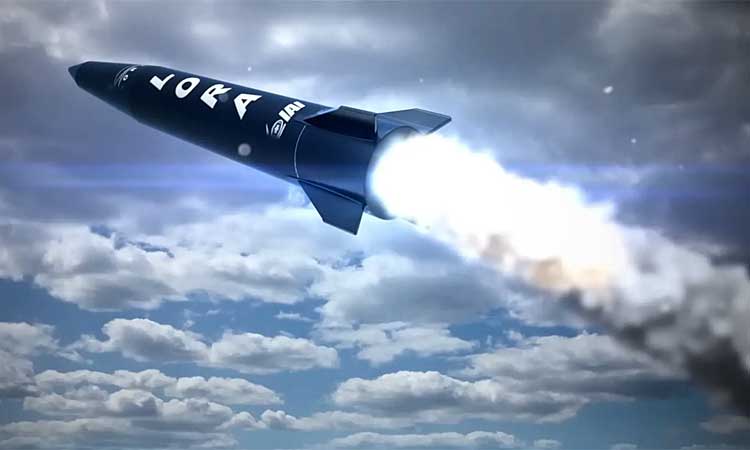
The Air LORA missile is an Israeli air-launched, long-range artillery ballistic missile (ALBM) developed by Israel Aerospace Industries (IAI), designed for precision strikes on strategic targets like missile sites and military bases from standoff distances. It features 'fire-and-forget' capability, supersonic speed (around Mach 5), and high accuracy (under 10m CEP) using advanced GPS/INS guidance, with India exploring its acquisition for enhanced deep strike capabilities. The range of Air LORA is up to 400-430 km. The advanced GPS/INS guidance incorporates robust anti-jamming. The warhead options are for blast-fragmentation or deep-penetration, up to 600 kg.
Bharat Electronics Ltd (BEL) has signed a Memorandum of Understanding (MoU) with IAI for the joint production of the Air LORA system in India under the 'Make in India' initiative
The 'fire-and-forget' function of Air LORA ensures pilot safety and immediate disengagement. Its survivability is high due to supersonic speed, shaped trajectory, and anti-jamming. The missile is designed for rapid integration with various aircraft. Air LORA provides the aircraft with deep standoff strike capability, allowing them to hit targets without entering heavily defended airspace. Potential targets include missile sites, command centres, air defence systems, and military bases; enabling rapid response to dynamic targets and provides a "game-changer" for air forces. Greece has purchased the LORA system.
According to sources, India is procuring and planning local production of the Israeli LORA (Long-Range Artillery) missile, an air-launched precision strike weapon, to enhance its air power with long-range, high-accuracy strikes against hardened targets, integrating it with platforms like the Su-30 MKI and exploring joint ventures with IAI for domestic manufacturing under India's 'Make in India' initiative, supplementing existing systems like the BrahMos. Developed by Israel Aerospace Industries, the air-launched variant (Air LORA) was unveiled in 2024. Bharat Electronics Ltd (BEL) has signed a Memorandum of Understanding (MoU) with IAI for the joint production of the Air LORA system in India under the 'Make in India' initiative. This partnership involves significant technology transfer, allowing India to manufacture advanced components locally. The first squadrons of Air LORA are expected to be ready for induction by 2026–2027.
India is also integrating Israel's Ice Breaker missile, a 5th generation advanced, AI-powered autonomous precision-guided weapon for land, air, and sea strikes
The success of Israel's Rampage missile in the recent Operation 'Sindoor' has strengthened the push for indigenous production of LORA and similar Israeli systems. India is set to finalise a major defence deal with Israel for advanced systems, including Air LORA. The IAF is actively pursuing the acquisition and indigenous production of the Air LORA missile, especially since it complements missiles like BrahMos by offering a different trajectory and targeting profile, boosting India's deterrence and tactical flexibility.
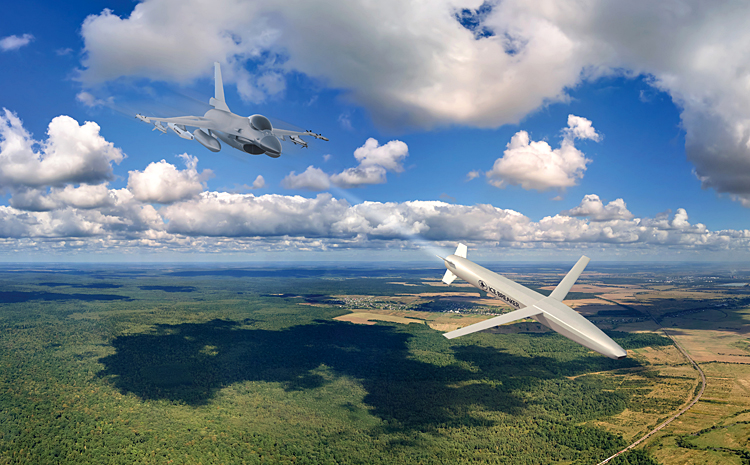
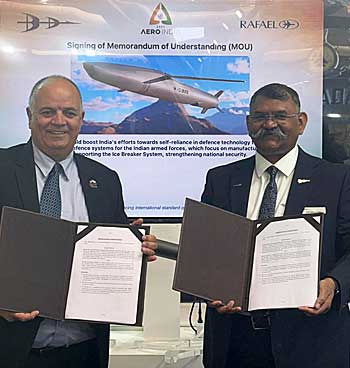
India is also integrating Israel's Ice Breaker missile, a 5th generation advanced, AI-powered autonomous precision-guided weapon for land, air, and sea strikes. Bharat Dynamics Limited (BDL) has signed a MoU with Rafael Advanced Defence Systems for local production, offering the Indian Armed Forces long-range, all-weather standoff attack capabilities against high-value targets, leveraging its compact size, stealth, and smart targeting features for enhanced defence.
Key features and capabilities of the Ice Breaker missiles include: Physical Specifications – the missile is four metres long, weighs under 400 kg, and carries a 113-kg) penetrating or blast-fragmentation warhead; Precision and Autonomy - uses advanced electro-optical seekers, AI for Automatic Target Recognition (ATR), and scene matching for autonomous strikes, even in GPS-denied environments; Versatile Platforms - can be launched from jet fighters (like Tejas), helicopters, small vessels, and ground vehicles; Stealth and Survivability - features Very Low Observable (VLO) profile and terrain-hugging flight for increased stealth and resilience to electronic countermeasures; Long Range - provides standoff attack capability, with ranges around 300 km; Flexible Engagement - supports "man-in-the-loop" control for re-targeting or aborting missions mid-flight; Customisation - the missile will be adapted to Indian Armed Forces' specific needs and the collaboration facilitates the transfer of technology (ToT). The missile will provide India a next-generation, multi-domain standoff weapon for swift, precise engagement of enemy assets like radar systems, mobile missile launchers, and naval vessels, enhancing capabilities against modern threats.
Bharat Dynamics Limited (BDL) has signed a MoU with Rafael Advanced Defence Systems for local production of Ice Breaker missile
The missile's compact and lightweight design allows it to be launched from a variety of platforms like the Tejas, Sukhoi-30 MKI, and MiG-29K jet fighters, as well as helicopters like the Prachand Light Combat Helicopter (LCH) and the Navy's MH-60R Sea Hawk. It can also be deployed with small maritime vessels and land-mobile launchers. In addition, it is compatible with the outer mould of the Spice 1000 munition, implying platforms already certified for Spice 1000 can integrate Ice Breaker with minor modifications.
According to news reports of January 21, 2025, following the IAF's approval to procure the Ice Breaker missiles, the Indian Navy has launched its own evaluation of the weapon for its fleet of MH-60R "Romeo" Sea Hawk helicopters, which could substantially upgrade the Navy's ability to neutralise maritime threats from rotary-wing aircraft operating at significant distances from the main fleet. The acquisition of Air LORA and Ice Breaker missiles, together with the SPICE 1000 kits, would boost Indian Armed Forces precision strike portfolio, combining glide kits, cruise-like autonomous weapons, and quasi-ballistic missiles, complicate the adversary's air defence planning, and enable deep-strike standoff missions.