

The insightful articles, inspiring narrations and analytical perspectives presented by the Editorial Team, establish an alluring connect with the reader. My compliments and best wishes to SP Guide Publications.

"Over the past 60 years, the growth of SP Guide Publications has mirrored the rising stature of Indian Navy. Its well-researched and informative magazines on Defence and Aerospace sector have served to shape an educated opinion of our military personnel, policy makers and the public alike. I wish SP's Publication team continued success, fair winds and following seas in all future endeavour!"

Since, its inception in 1964, SP Guide Publications has consistently demonstrated commitment to high-quality journalism in the aerospace and defence sectors, earning a well-deserved reputation as Asia's largest media house in this domain. I wish SP Guide Publications continued success in its pursuit of excellence.
India's latest defence acquisition approvals strengthen capabilities across land, sea and air, with counter-UAV, air defence, surveillance and naval technologies receiving priority.
 |
The Author is Former Director General of Information Systems and A Special Forces Veteran, Indian Army |

According to news reports of July 5, 2026, the Defence Acquisition Council (DAC), chaired by Defence Minister Rajnath Singh, has granted Acceptance of Necessity (AoN) worth approximately ₹52,000 crore, marking in-principle administrative clearance for a wide range of procurement proposals to significantly bolster the operational capabilities of the Indian Army, Navy and the Indian Air Force (IAF), covering air defence, anti-tank, electronic warfare, surveillance and naval systems.
The Defence Acquisition Council has granted Acceptance of Necessity worth approximately ₹52,000 crore for capabilities spanning the Army, Navy and Air Force.
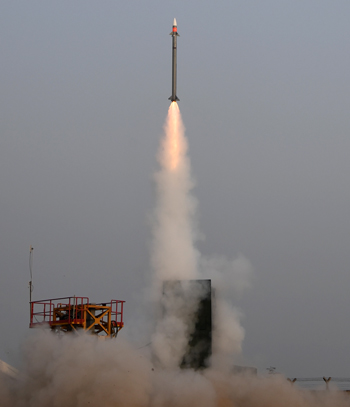
Key approvals include: for the Army - anti-UAV EW system 'Akash Tarang', Man-Portable Anti-Tank Guided Missile Systems (MPATGM), Medium-Range Surface-to-Air Missile (MRSAM), Very Short-Range Air Defence System (VSHORADS), Active Protection Systems for Tanks and jet-based kamikaze drones; for the Indian Navy - Multi-Influence Ground Mines (MIGM), Naval Shipborne Unmanned Aerial System (NSUAS) and Land-Based Testing Facility (LBTF) for Electric Propulsion System; for the IAF - Fixed-Wing Based High Altitude Pseudo Satellites (FW-HAPS).
The Akash Tarang EW system is intended to ensure that Army formations remain secure against the growing threat of UAVs in modern battlefields. Akash Tarang employs a three-tier detection system. Radio frequency sniffers identify drone communication signals, while GPS/GNSS jamming disrupts navigation. Its anti-swarm capability ensures simultaneous tracking and neutralisation of multiple drones, a critical feature given the increasing use of coordinated UAV attacks. The induction of Akash Tarang comes in the wake of Operation Sindoor, where India successfully countered repeated Pakistani drone and missile attacks. The operation highlighted the vulnerability posed by inexpensive drones deployed in swarms, reinforcing the need for specialised counter-UAV systems.
Army approvals include Akash Tarang anti-UAV electronic warfare systems, MPATGM, MRSAM, V-SHORADS, tank active protection systems and jet-based kamikaze drones.
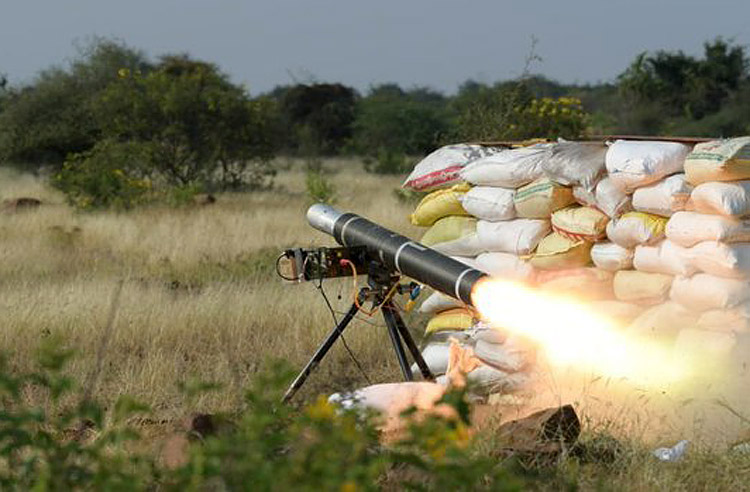
The MPATGM, developed by the Defence Research and Development Organisation (DRDO), will strengthen the Army's ability to counter mechanised threats, including enemy armoured vehicles and tanks. The approval includes 100 launchers, 2,300 missiles and five simulators, enhancing the infantry's capacity to neutralise adversary armour. The MRSAM will provide medium-range air defence against a variety of stand-off aerial threats. This system will form a critical part of India's layered air defence network, protecting formations from hostile aircraft and missiles. The MR-SAM is the most capable of the three systems cleared. Jointly developed by Israel Aerospace Industries (IAI) and the DRDO, and manufactured by Bharat Dynamics Limited, it is based on the Barak-8 missile. With a range exceeding 70 km, it can engage UAVs, helicopters, fighter aircraft and cruise missiles. Reports indicate that it intercepted a Pakistani Fatah-II missile over Sirsa during Operation 'Sindoor'.
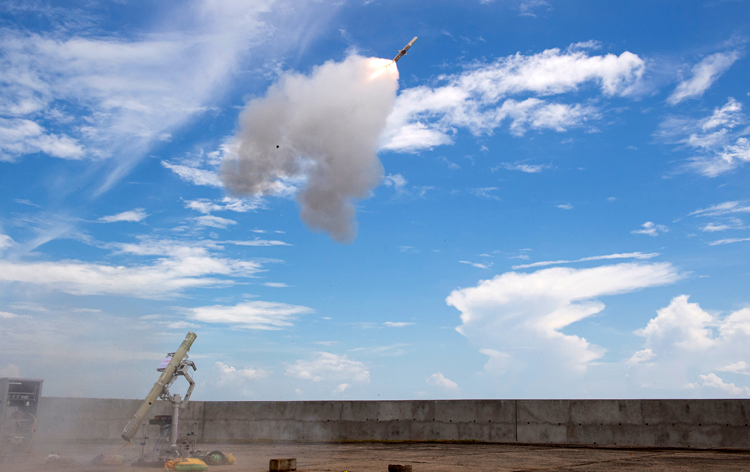
Equipped with multi-spectral sensing, the V-SHORADS is intended to improve resilience against countermeasures, ensuring effective protection against low-flying aerial threats such as helicopters, drones and close-range aircraft. The V SHORADS system forms the innermost layer of India's layered defence network. It is the last line of protection for Vital Areas and Vital Points designated by the Armed Forces. India currently employs Igla missiles, L 70 guns and Zu 23 mm guns in this role, while DRDO is developing an indigenous V SHORADS to replace and augment these legacy systems. In addition, the DAC has also cleared proposals for jet-based kamikaze drones. These unique unmanned systems are designed to deliver precision strikes against high-value targets, providing the Army with enhanced tactical flexibility in offensive operations. The procurement of these systems marks a significant step in strengthening India's layered air defence shield. They will integrate seamlessly into the broader Sudarshan Chakra network, ensuring that the country remains protected against a wide range of aerial threats and reinforcing deterrence against adversaries.
The Navy will receive multi-influence ground mines and shipborne unmanned aerial systems, while an electric-propulsion testing facility will support its transition towards advanced propulsion technologies.
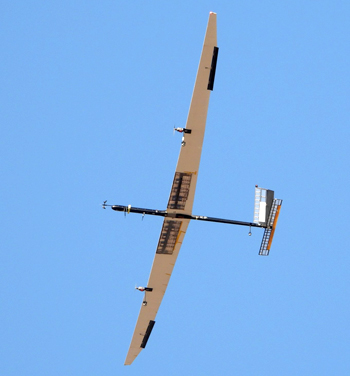
For the Indian Air Force, the fixed-wing high-altitude pseudo satellites operating in the stratosphere, will provide persistent intelligence, surveillance, reconnaissance (ISR), telecommunication and remote sensing. Their deployment will greatly expand the IAF's ability to maintain continuous situational awareness over vast areas; operating at high altitudes for extended durations, FW-HAPS platforms can function as cost-effective alternatives to satellites for continuous monitoring and data collection.
Approvals for multi-influence ground mines, naval shipborne unmanned aerial systems and a land-based testing facility for electric propulsion systems for the Indian Navy will: deny manoeuvre freedom to adversaries with the multi-influence ground mines; enhance maritime situational awareness with the shipborne UAS equipped with advanced sensors. The testing facility will support the Navy's transition towards advanced propulsion technologies, ensuring sustainable and efficient naval operations.
Fixed-wing high-altitude pseudo-satellites will strengthen the IAF's persistent ISR, communications and remote-sensing capabilities, supporting continuous monitoring over large areas.
These acquisitions collectively represent a comprehensive strengthening of India's defence posture across land, sea and air – improving battlefield survivability, strengthening air defence, and countering emerging drone threats. By focusing on indigenous technological capabilities and systems, unmanned technologies and advanced air defence and naval capabilities, the DAC has reinforced India's trajectory towards military modernisation and self-reliance in defence production under the Atmanirbhar Bharat vision.