

The insightful articles, inspiring narrations and analytical perspectives presented by the Editorial Team, establish an alluring connect with the reader. My compliments and best wishes to SP Guide Publications.

"Over the past 60 years, the growth of SP Guide Publications has mirrored the rising stature of Indian Navy. Its well-researched and informative magazines on Defence and Aerospace sector have served to shape an educated opinion of our military personnel, policy makers and the public alike. I wish SP's Publication team continued success, fair winds and following seas in all future endeavour!"

Since, its inception in 1964, SP Guide Publications has consistently demonstrated commitment to high-quality journalism in the aerospace and defence sectors, earning a well-deserved reputation as Asia's largest media house in this domain. I wish SP Guide Publications continued success in its pursuit of excellence.
India's massive CQB carbine procurement under the 'Make in India' framework and the LORA missiles, highlight deepening Indo-Israeli defence cooperation
 |
The Author is Former Director General of Information Systems and A Special Forces Veteran, Indian Army |
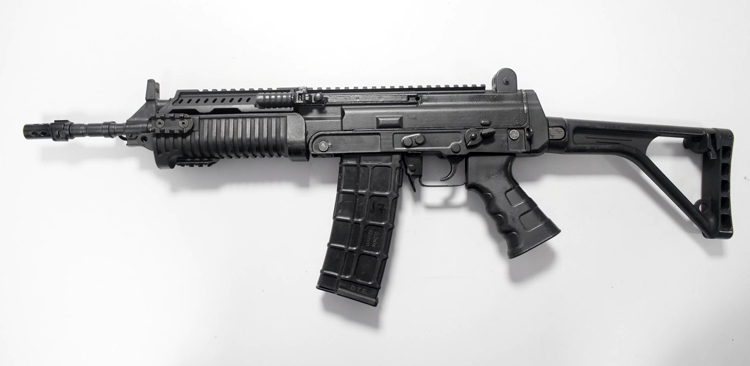
According to news reports of October 24, 2025 in the 'Jerusalem Post', the Indian Army is procuring 4,25,000 CQB carbine assault rifles from PLR Systems, a joint venture between Israel Weapons Industries (IWI) controlled by Samy Katsav through the SK Group holding company, and Adani Corporation, the owner of Haifa Port. The deal includes the purchase of rifles for ₹27.7 billion ($3.3 billion) from the same joint venture and Bharat Forge. Delivery will begin in September 2026 and end by 2028. The division of the deal between the companies includes 40 per cent (about $1.32 billion) of the deal volume for the Katsav-Adani joint venture and about 60 per cent for Bharat Forge. This is a huge deal even in Indian terms, stemming from a demand made by the Indian Ministry of Defence (MoD) in Delhi for the purchase of about 4,25,000 new 5.56mm rifles.
The Indian Army is procuring 4,25,000 CQB carbine assault rifles from PLR Systems, a joint venture between Israel Weapons Industries (IWI) & Adani Corporation, and Bharat Forge.
Lauren Dagan Amos, a researcher on India's foreign and security policy at Bar-Ilan University and a member of the Deborah Forum, says that the deal is within the framework of the 'Make in India' programme; the product must be designed and manufactured in India, with at least 50 per cent local content (or 60 per cent if not designed locally). Amos said, "This is a clear expression of the self-reliance policy in security, which is being led by the Narendra Modi government under programmes such as 'Make in India' and iDEX. The deal also illustrates Indian-Israeli cooperation in the defence field."
According to the Indian media reports, the Indian Army is procuring 4,25,000 CQB carbines through a contract awarded jointly to Bharat Forge and PLR Systems, not solely from PLR Systems. The breakdown of these 4,25,000 CQB carbines will be as follows: Bharat Forge (Kalyani Strategic Systems) will supply 60 per cent of the order (2,55,000 units); PLR Systems (joint venture between Adani Defence and IWI) will supply the remaining 40 per cent (1,70,000 units). The new 5.56x45mm carbines are intended to replace the Army's aging 9x19mm Sterling carbines, enhancing capabilities for urban warfare and counter-terrorism operations. This procurement is a significant step in the Indian Army's infantry modernisation efforts and aligns with the government's 'Make in India' and self-reliance goals for defence production. These CQB carbines are lightweight, highly manoeuvrable, and compatible with modern attachments like optical sights, tactical sights, and suppressors. With the introduction of these rifles, soldiers can expect improved accuracy, faster target engagement, and better survivability in tight urban terrain or counterterror operations.
The CQB carbine contract marks one of the largest small-arms procurements in recent years, which is part of India's ongoing push to modernise its infantry arsenal and increase indigenisation in defence procurement
Lt General Ajay Kumar, DG Infantry of Indian Army, has said that the CQB carbine contract marks one of the largest small-arms procurements in recent years, which is part of India's ongoing push to modernise its infantry arsenal and increase indigenisation in defence procurement to ensure that frontline units have lighter, modular weapons. The CQB programme focuses on providing troops with a compact, high-rate-of-fire carbine optimised for short-range engagements and urban combat. This procurement follows several other Indian small-arms modernisation efforts. In 2023, India began inducting SIG 716 rifles for frontline infantry and AK-203 assault rifles produced through the Indo-Russian joint venture at Amethi. The Army has also been expanding contracts for night vision equipment, loitering munitions, and advanced soldier systems as part of its 'Future Infantry Soldier As a System' programme. These initiatives aim to boost the self-reliance and combat readiness of India's armed forces through domestically anchored production and sustained technology partnerships.
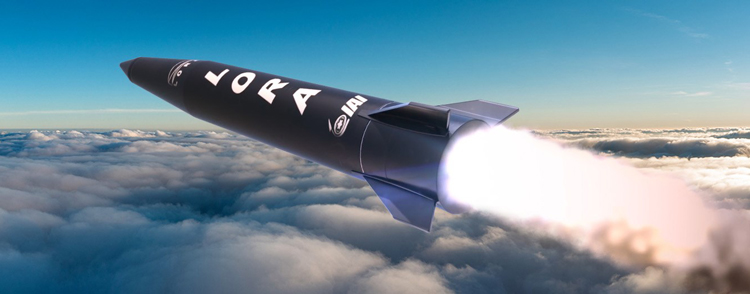
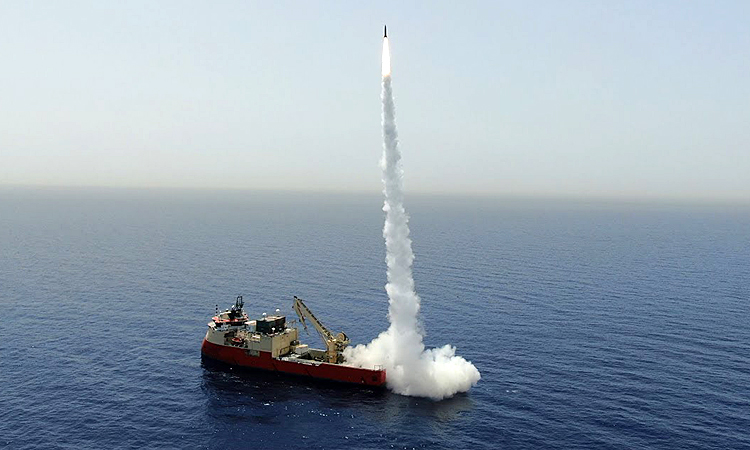
The above mentioned Jerusalem Post report further states that according to the Stockholm International Peace Research Institute (SIPRI), India was Israel's main defence export destination between 2020 and 2024, with about 34 per cent of defence exports sold there. During the war, ships transported weapons from India to Israel, while for years many Israeli companies, including Elbit Systems and IAI, have been operating production infrastructures in India. India is interested in procuring Israeli weapons systems that they do not currently have. For example, India is interested in purchasing LORA missiles from IAI. India's interest in IAI missiles stems from an escalation of tensions with Pakistan. In skirmishes in May 2025, Rampage air-to-ground missiles hit Pakistani air force bases. These missiles are jointly produced by Elbit's IMI unit, IAI's MLM plant, and Tomer. India now realises it needs precise air-to-ground missiles for long ranges and is therefore interested in the Long Range Artillery (LORA) missiles.
LORA air-to-ground missile has a range of about 400-km, with which fighter jets can hit targets without endangering themselves from advanced air defence systems.
Rampage has a range of about 250-km and the Indian Air Force (IAF) uses it on Sukhoi 30 and MiG-29 aircraft. It is very accurate, but its range is about 150-250 km, which puts Indian fighter jets at risk against Pakistani defence systems made in China. In contrast, LORA has a range of about 400-km, with which fighter jets can hit targets without endangering themselves from advanced air defence systems. LORA, developed at IAI's MLM plant, is designed to hit missile sites, military bases and air defence systems, without endangering pilots and aircraft. The missile, weighing about 1,600 kg flies at supersonic speed, and uses satellite navigation that is protected from jamming. One of its most notable advantages is the "launch and forget"; meaning it is launched to the target and does not need to be guided along the way. Its warheads are diverse and can be designed to hit soft targets or bunkers. With a range of about 400-km and a strike radius of only about ten meters, it is expected to allow India to hit any Pakistani base.