
The insightful articles, inspiring narrations and analytical perspectives presented by the Editorial Team, establish an alluring connect with the reader. My compliments and best wishes to SP Guide Publications.
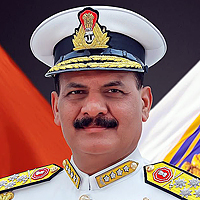
"Over the past 60 years, the growth of SP Guide Publications has mirrored the rising stature of Indian Navy. Its well-researched and informative magazines on Defence and Aerospace sector have served to shape an educated opinion of our military personnel, policy makers and the public alike. I wish SP's Publication team continued success, fair winds and following seas in all future endeavour!"

Since, its inception in 1964, SP Guide Publications has consistently demonstrated commitment to high-quality journalism in the aerospace and defence sectors, earning a well-deserved reputation as Asia's largest media house in this domain. I wish SP Guide Publications continued success in its pursuit of excellence.
India's defence modernisation is advancing through Tejas Mk-1A production, indigenous armoured vehicle manufacturing, and advanced systems development, amidst global defence dynamics.
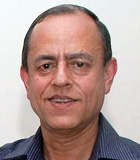 |
The Author is Former Director General of Information Systems and A Special Forces Veteran, Indian Army |
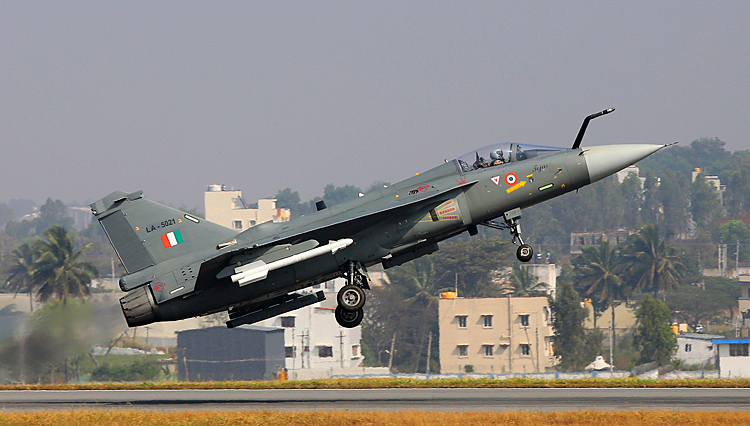
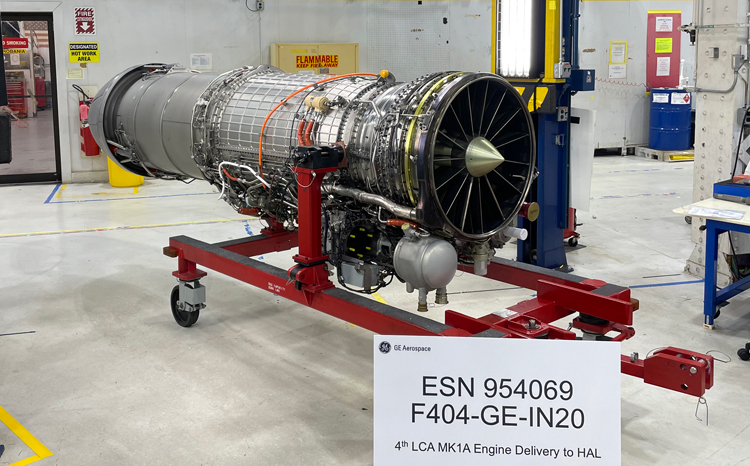
As per the media reports of November 21, 2025, Hindustan Aeronautics Limited (HAL) is set to commence deliveries of the first eight Tejas Mk-1A fighters within 24 to 36 months, marking the beginning of a structured production cycle that will gradually accelerate in the coming years. This development followed signing the engine supply agreement with General Electric (GE) on November 7, 2025. The F404-GE-IN20 engine deal, comprising 113 units, will power 97 Tejas aircraft under the ₹62,370 crore procurement approved earlier this year. The additional engines account for lifecycle replacements and maintenance support, ensuring a long-term operational readiness for the MK-1A fleet. The F404-GE-IN20 engine is an afterburning turbofan, already in use with the Tejas Mk-1. GE and HAL will implement a phased delivery of the engines to match aircraft building timelines, with the agreement incorporating provisions for spare units and mid-life replacements.
HAL is set to commence deliveries of the first eight Tejas Mk-1A fighters within 24 to 36 months, marking the beginning of a structured production cycle that will gradually accelerate in the coming years.
Tejas Mk-1A represents a considerable leap over the baseline MK-1 configuration, bringing a host of avionics, radar, and systems-level improvements. The Tejas Mk-1A is considered essential to fill the gap between MiG-21 retired squadrons and induction of future platforms like the Tejas Mk-2 and the AMCA. The steady delivery schedule is expected to ensure a continuous inflow of aircraft throughout the decade, aligning with fleet modernisation goals and squadron strength targets. The first batch of eight aircraft, spread across 24-36 months post-contract, will allow HAL to test, refine, and optimise its assembly sequence before ramping up output. Three consecutive tranches of 24 aircraft each are scheduled to roll out after months 37, 49 and 61, representing the core delivery phase of the Mk-1A programme. The final batch of 12 fighters, to be delivered between months 73 and 84, will complete the contracted order by late 2031 or early 2032; roughly seven years after signing the procurement.
The same day (November 21) came the tragic news that IAF's Tejas Mk-1A aircraft crashed at the Dubai Air Show while performing a manoeuvre, in which Wing Commander Namansh Syal piloting the fighter aircraft was killed. Visuals showed the Tejas fighter suddenly nose-diving before exploding into a fireball, sending plumes of smoke across the airfield. This incident follows the March 2024 crash of another Tejas near Jaisalmer during a training sortie, where the pilot had managed to eject safely. Aircraft accidents at airshows are not uncommon. The list in fact is enormous, as can be seen on the Internet. In the instant case however, this tragedy must be seen in backdrop of the efforts India has been putting in for marketing the Tejas Mk-1A and the Dubai Air Show 2025 had more than 150 countries showcasing their aerospace capabilities.
The Tejas Mk-1A is considered essential to fill the gap between MiG-21 retired squadrons and induction of future platforms like the Tejas Mk-2 and the AMCA.
According to Reuters, the Tejas crash in front of global arms buyers at the Dubai Airshow is the latest blow to a key national trophy, leaving the jet reliant on Indian military orders to sustain its role as a showcase of home-built defence technology. It also dampens Indian efforts of promoting Tejas exports to buyers in Africa, Southeast Asia and Latin America of Tejas's reliability and support ecosystem. What comes out of the inquiry is yet to be seen but chances of deliberate sabotage can hardly be ruled out, considering the forces involved in slowing down India's indigenous capabilities, particularly the Tejas programme. A day earlier, a video showing oil leaking from the Tejas fighter at the Dubai Air Show on social media was rubbished by India as ISI propaganda.
Currently, news is circulating about the IAF keen in procuring 114 Rafale fighter jets while Russia has reiterated it is ready to support India's future fighter aircraft requirements, offering full technology transfer for the fifth-generation Su-57 stealth fighter jet, saying there would be no limitations and that any request from the Indian side is completely acceptable - full transfer of technology, and production under 'Make in India'. To say what the IAF wants or does not want is irrelevant because decisions of strategic-level acquisitions are taken by the political authority, for example, the then Air Chief had little to say in the AgustaWestland VVIP helicopter deal, with then NSA chairing the meeting. Also, when Prime Minister Modi announced the procurement 36 Rafales at Paris, even the then defence minister was taken by surprise. India must take a decision on the Russian offer of Su-57, which obviously is the better option. But this is in the backdrop of US President Donald Trump's erratic attitude and his threats of sanctions and tariffs.
India must take a decision on the Russian offer of Su-57, which obviously is the better option.
Larsen & Toubro (L&T) has secured a major contract to produce the Indian Army's new all terrain armoured vehicle, the 'BvS10 Sindhu' at its Armoured Systems Complex in Hazira, Gujarat; L&T announced on November 19 through a regulatory filing. The contract is a joint undertaking between L&T and BAE Systems, with the latter providing technical and design support. BAE Systems Hägglunds, the original developer of the BvS10 platform, brings extensive experience in articulated vehicle technology tailored for operations in extreme conditions. Under the agreement, L&T will indigenously manufacture the BvS10 Sindhu variant in India. A comprehensive integrated logistics support package forms part of the deal. This includes provisions for initial deployment assistance, field maintenance, spare part supply, and life cycle sustainment. Such support ensures that the BvS10 Sindhu fleet remains operationally ready across its full-service life, reducing dependency on foreign support and cutting through life costs.
Larsen & Toubro (L&T) has secured a major contract to produce the Indian Army's new all terrain armoured vehicle, the 'BvS10 Sindhu'
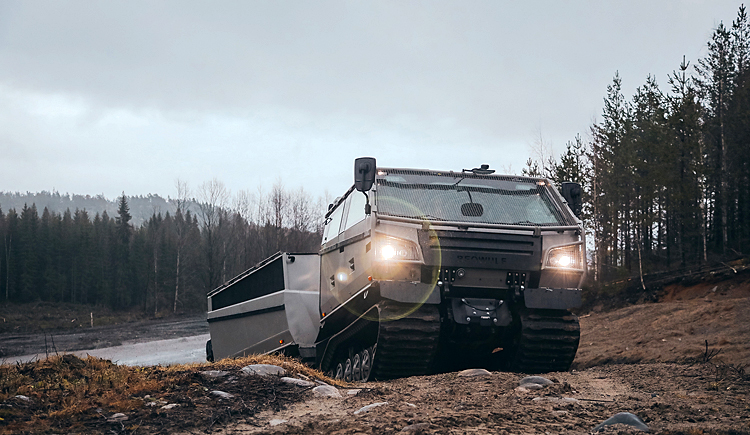
The BvS10 Sindhu is an improved and locally tailored version of the BvS10 ATV already fielded by several NATO countries. Globally, the BvS10 has been deployed by the armed forces of the UK, France, Sweden, the Netherlands, Austria, and Ukraine. Germany has also placed orders for additional units. It is designed with an articulated twin unit configuration, giving it exceptional mobility over snow, ice, sand, marshes, and rugged mountain trails. This articulation grants it superior traction and balance, enabling operations in terrains unsuitable for conventional wheeled or tracked vehicles. This ATV retains amphibious capabilities, allowing it to cross rivers or flooded regions without specialised support infrastructure; making it especially useful for operations in high altitude Himalayan valleys, the desert sectors of Rajasthan, and coastal or riverine environments.
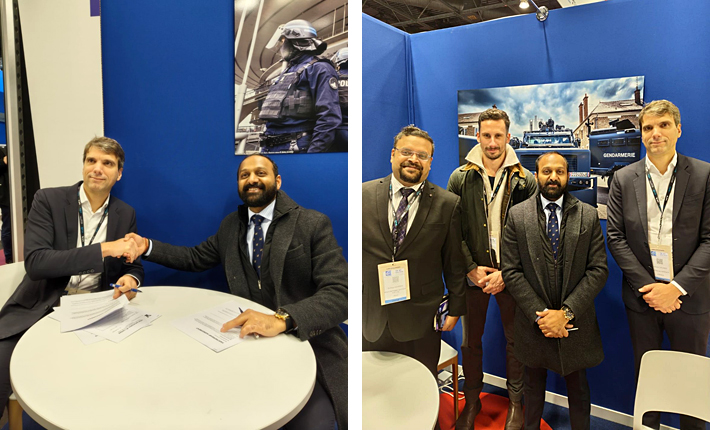
Concurrently, in a significant Indo-French defence collaboration, VEDA Aeronautics has announced a strategic partnership with METRAVIB Defence to co-develop and indigenise an advanced acoustic gunshot and drone detection system for the Indian Armed Forces. The initiative falls under the 'Make in India' framework and aims to enhance the survivability and situational awareness of the country's armoured fleet, including light tanks, Main Battle Tanks (MBTs), and future armoured platforms. The partnership builds on METRAVIB's proven expertise in acoustic localisation technologies used globally by NATO and European forces. The system employs a sophisticated array of acoustic sensors and digital signal processors to instantly detect, classify, and localise gunfire or drone noises. Once identified, the system transmits precise threat coordinates to onboard battle management systems, enabling rapid counter-action by the vehicle's crew or automated defensive subsystems. Under this collaboration, VEDA Aeronautics will take the lead in local integration, adaptation, and production of the system to suit Indian operational and environmental conditions.