The insightful articles, inspiring narrations and analytical perspectives presented by the Editorial Team, establish an alluring connect with the reader. My compliments and best wishes to SP Guide Publications.
"Over the past 60 years, the growth of SP Guide Publications has mirrored the rising stature of Indian Navy. Its well-researched and informative magazines on Defence and Aerospace sector have served to shape an educated opinion of our military personnel, policy makers and the public alike. I wish SP's Publication team continued success, fair winds and following seas in all future endeavour!"

Since, its inception in 1964, SP Guide Publications has consistently demonstrated commitment to high-quality journalism in the aerospace and defence sectors, earning a well-deserved reputation as Asia's largest media house in this domain. I wish SP Guide Publications continued success in its pursuit of excellence.
India's NavIC programme is facing numerous challenges, including satellite failures, delays, operational shortcomings, strategic implications for national security, and wider concerns surrounding ISRO's execution, resource management, and technology transfer policies
 |
The Author is Former Director General of Information Systems and A Special Forces Veteran, Indian Army |
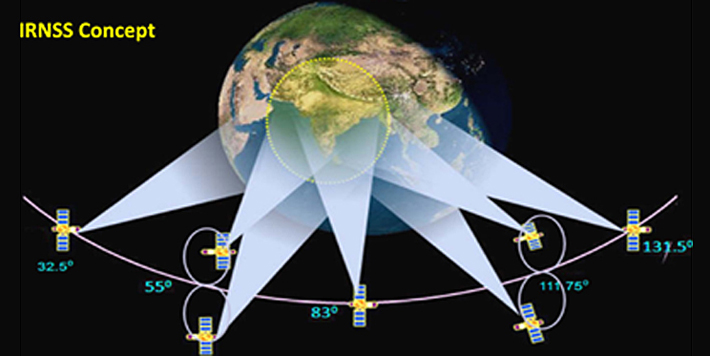
The Indian Regional Navigation Satellite System (IRNSS) was considered necessary because access to foreign government-controlled global navigation satellite systems is not guaranteed in hostile situations, During the 1999 Kargil Conflict, the US switched off its Global Positioning System (GPS), which forced vessels of the India Navy to fall back, not blockade Pakistan's Karachi harbour. India approved the project in May 2006.
IRNSS, with an operational name of NavIC (acronym for Navigation with Indian Constellation) is an autonomous regional satellite navigation system that provides accurate real-time positioning, velocity and timing (PVT) services. It covers India and a region extending 1,500 km (930 mi) around it, with plans for further extension up to 3,000 km. NavIC offered two levels of service, standard positioning service (SPS), open to civilian use and interoperable with GNSS, and a restricted service (RS), an encrypted channel for authorised users including the military, in L1 (1575.42 MHz, in use since the second generation), L5 (1176.45 MHz) and S Band (2498.028 MHz). NavIC was designed to offer a similar level of reliability to the United States' GPS, Russia's GLONASS, and Europe's Galileo. The system is meant to provide a fully independent, indigenous navigation capability.
Due to failure of on-board atomic clocks of the first-generation satellites and launch delay of the second-generation satellites, in March 2026, only three satellites of the constellation were providing navigation data, below a minimum number of four satellites required for an accurate position
The total cost of the NavIC project was expected to be ₹14.2 billion ($168 million), with the cost of the ground segment being ₹3 billion ($35 million), each satellite costing ₹1.5 billion ($18 million) and the PSLV-XL version rocket costing around ₹1.3 billion ($15 million). The planned seven rockets would have involved an outlay of around ₹9.1 billion ($108 million). However, the necessity for two replacement satellites, and PSLV-XL launches, altered the original budget, with the cost rising to ₹22.46 billion ($266 million), Later, the Department of Space (DoS) in its 12th Five Year Plan (FYP) (2012–17) increased the number of satellites in the constellation from 7 to 11 to extend coverage.
Originally designed as a seven-satellite system with three atomic clocks each, which was achieved with the first generation of IRNSS satellite launches spanning 2013-2018. But failure of on-board atomic clocks prompted the Indian Space Research Organisation (ISRO) to adopt indigenous atomic clocks, developed by the Space Application Centre, Ahmedabad, for its second generation of NVS satellites. However, due to failure of on-board atomic clocks of the first-generation satellites and launch delay of the second-generation satellites, in March 2026, only three satellites of the constellation were providing navigation data, below a minimum number of four satellites required for an accurate position.
As of March 2026, four of the eight functional satellites, IRNSS-1A, IRNSS-1C, IRNSS-E, IRNSS-1G are being used only for one-way broadcast messaging service and the three satellites IRNSS-1B, IRNSS-1L and IRNSS-01 providing PNT service. IRNSS-1D was decommissioned and the satellites, IRNSS-1H and NVS-02 failed to reach desired orbit. Now ISRO is planning to launch NVS-03, NVS-04 and NVS-05 by September 2027. NavIC-based trackers are compulsory on commercial vehicles in India.
The critical IRNSS-1F satellite's final atomic clock stopped functioning on March 13, 2026, after completing its 10-year mission life. Currently, only three satellites (IRNSS-1B, IRNSS-1L, and the second-generation NVS-01) remain capable of providing PNT services, falling short of the required minimum. The reduced constellation limits the ability of the Indian Armed Forces to use NavIC for secure, real-time mapping, logistics, and operational planning, creating a reliance on foreign systems like GPS or GLONASS.
The reduced constellation limits the ability of the Indian Armed Forces to use NavIC for secure, real-time mapping, logistics, and operational planning, creating a reliance on foreign systems like GPS or GLONASS
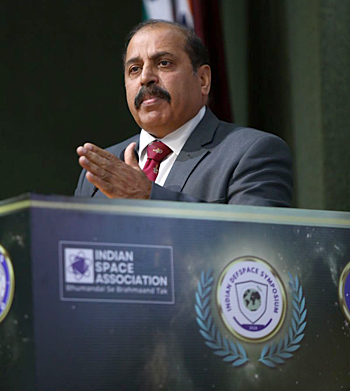
Speaking recently at the DefSpace Symposium, former IAF Chief Air Chief Marshal R.K.S. Bhadauria said NavIC will be remembered more for its failures and promises that were not delivered more than anything. The failure of indigenous NavIC forces reliance on foreign navigation systems, which can be denied, spoofed, or degraded during conflicts. Replacement launches have faced delays, and the NVS series rollout has been slow to address the aging constellation. ISRO is focusing on second-generation NVS satellites with indigenous rubidium atomic clocks, but full operational stability is not expected immediately. This is a sad state of affairs. The consistency of failure is pathetic and should not be ignored, which probably is at multiple levels – policy, synchrony of teams, execution, potential sabotage. The government's deal with Starlink, which was already adopted by Bangladesh, has its own security implications.
Terrorists and criminal groups have already begun exploiting Starlink technology to maintain high-speed, secure communication in remote areas where traditional networks are unavailable. The portability and lack of dependence on local infrastructure make it a double-edged sword. According to reports, groups like Jama'at Nasr al-Islam wal Muslimin (JNIM) and ISWAP are already using Starlink for real-time battlefield coordination and to evade security forces in regions like the African Sahel. Also, Islamic State-affiliated units are using use Starlink-enabled uplinks to upload high-quality recruitment videos and maintain encrypted messaging channels.
Significantly, a Parliamentary Standing Committee report on ISRO transferring technology to the private sector has set off an angry debate. The committee found that ISRO's commercial arm NewSpace India Limited (NSIL) has signed 100 technology transfer agreements covering 61 technologies, many at fees below ₹10 lakh; some for ₹6,000, and a few transferred at no cost at all. The committee called these prices "disproportionately low relative to their commercial potential".
An article in 'Swarajya' published on March 31, 2026 titled 'Taxpayer Funded Technology Gathering Dust In ISRO Labs Is The Real Waste', cites social media outrage over taxpayer money subsidising private profit calling for scrutiny; technology locked inside a research institution is potential, not value. It becomes value only when somebody manufactures it, builds a supply chain around it, certifies it, finds customers for it, and sells it - that somebody cannot be ISRO.
ISRO is focusing on second-generation NVS satellites with indigenous rubidium atomic clocks, but full operational stability is not expected immediately
The same committee report that flagged cheap technology transfers also documented that DoS has 2,817 vacant positions across its centres and units. It managed to utilise only 78 per cent of its Revised Estimates allocation for 2025–26 as of January 2026. The allocation for Chandrayaan-4 was slashed from ₹150 crore at the Budget Estimate stage to ₹21 crore at Revised Estimates because the agency could not spend fast enough. The Venus Orbiter Mission received ₹50 crore and managed to spend ₹5 crore only.
ISRO is stretched thin on its core mandate of designing and flying space missions. Asking it to also function as a manufacturing and marketing operation for industrial products is not a serious proposition. Every hour an ISRO scientist spends worrying about commercial pricing is an hour not spent on the next satellite or the next launch vehicle. If the technology must be transferred from ISRO, what should be its price? But should the transfer fee be considered a return on public investment?
Finally, reports suggest that Iran has quietly acquired a high-resolution Chinese satellite, significantly enhancing its ability to monitor military movements across West Asia and effectively target US forces in the region, while India's NavIC has gone defunct.