The insightful articles, inspiring narrations and analytical perspectives presented by the Editorial Team, establish an alluring connect with the reader. My compliments and best wishes to SP Guide Publications.
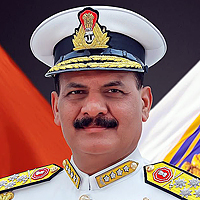
"Over the past 60 years, the growth of SP Guide Publications has mirrored the rising stature of Indian Navy. Its well-researched and informative magazines on Defence and Aerospace sector have served to shape an educated opinion of our military personnel, policy makers and the public alike. I wish SP's Publication team continued success, fair winds and following seas in all future endeavour!"

Since, its inception in 1964, SP Guide Publications has consistently demonstrated commitment to high-quality journalism in the aerospace and defence sectors, earning a well-deserved reputation as Asia's largest media house in this domain. I wish SP Guide Publications continued success in its pursuit of excellence.
The series of aggressive posturing, regime change operations and verbal duels with sovereign leaders at various multilateral platforms indicates that the long held notions about sovereign equality of nations has little meaning in Trump's world view
 |
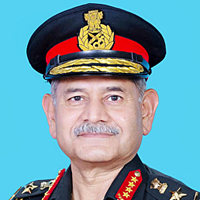
The Author is former Chief of Staff of a frontline Corps in the North East and a former helicopter pilot. He earlier headed the China & neighbourhood desk at the Defence Intelligence Agency. He retired in July 2020 and held the appointment of Addl DG Information Systems at Army HQ. |
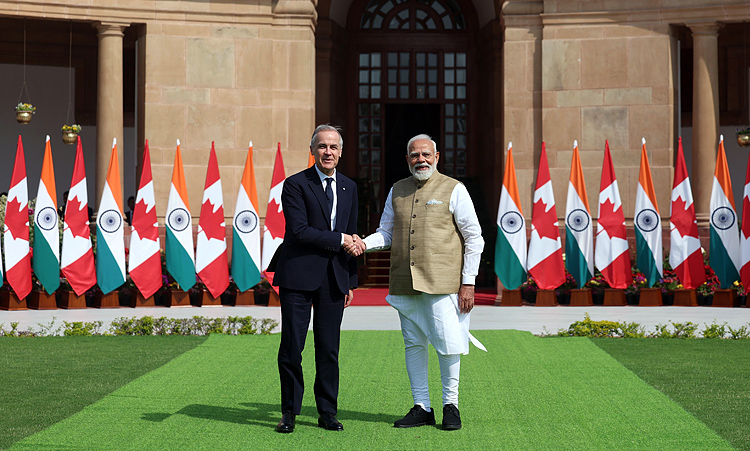
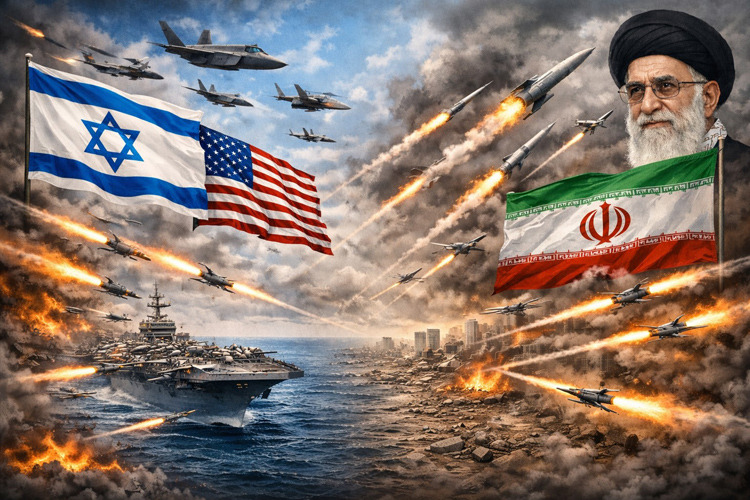
Canadian Prime Minister Mark Carney arrived in Mumbai on February 27, 2026 on a pivotal four-day visit to India, aiming to strengthen trade relations and expand partnerships across key sectors, including defence and AI. Barely 24 hours into his visit, Israel and the US launched a coordinated strike codenamed "Operation Epic Fury" across Iran targeting the top leadership of the country including the Ayatollah and the IRGC which later revealed to be largely successful. Iran state media confirmed on Sunday, March 1, 2026 that their Supreme Spiritual Leader Ayatollah Ali Khamenei was killed as were many top IRGC commanders in the first wave of air and missile strikes.
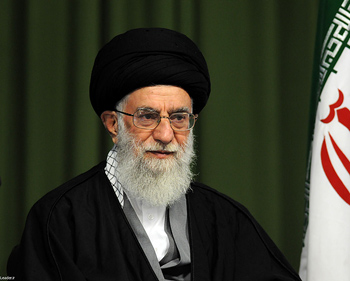
Iran responded within hours by firing ballistic missiles and drones at US assets and allies across the region, targeting Israel, Bahrain, Kuwait, Qatar, the United Arab Emirates and Jordan. The exchange has since only escalated, virtually closing the Strait of Hormuz through which about 20 per cent of global oil passes, as do LNG from Qatar. The US Fifth Fleet headquarters is on the wrong side of the strait, in Bahrain.
Prime Minister Carney wouldn't be surprised with the turn of events, though he may have been a little startled by the timing. Regime change operations by the US have been taken to new levels. Carney himself has been targeted, so he would understand the situation better than any other leader of the 'Free World'. President Donald Trump reportedly called the Canadian Prime Minister and directly demanded that he resign within 48 hours, warning of severe economic consequences if he refused. The demand was linked to Canada's decision to maintain higher interest rates independently of US Federal Reserve policy.
Israel and the US launched a coordinated strike across Iran targeting the top leadership of the country including the Ayatollah and the IRGC
Carney firmly rejected the demand, stating publicly that Canada is a sovereign nation and its government is chosen by Canadian voters, not by foreign leaders. Canada's Foreign Minister delivered a strong message in Washington, calling the demand an unprecedented violation of democratic sovereignty. As we read this piece, Trump is mulling over new punitive tariffs on Canada, recalibrate long existing defence pacts and revisit regulations covering the world's longest undefended international borders stretching 8,891 km.
Barely two months back, in the early hours of January 3, 2026, the US military had conducted "Operation Absolute Resolve," a high-stakes raid in Caracas that ended with Venezuelan President Nicolás Maduro and his wife, Cilia Flores, in US custody. Was Maduro "captured," "abducted," or "kidnapped"? The choice of words isn't just about semantics. It's about whether you believe the US is enforcing justice (to bring a "wanted drug lord" to justice, in Maduro's case) or engaging in "international vandalism."
Iran responded by firing ballistic missiles and drones at US assets and allies across the region, targeting Israel, Bahrain, Kuwait, Qatar, the United Arab Emirates and Jordan
Within hours, Venezuelan interim President Delcy Rodríguez had delivered a defiant address denouncing the US attack and declaring, "There is only one president in this country, and his name is Nicolás Maduro Moros." Immediately after Maduro was put on a New York bound ship, President Trump had bragged that Delcy had agreed to help US forces run her country after Maduro was removed. Calling the US operation "an unprecedented military aggression," Rodríguez said it made clear that the goal is a regime change that would allow the US to seize Venezuela's "energy, mineral and natural resources. This is the true objective, and the world and the international community must know it."
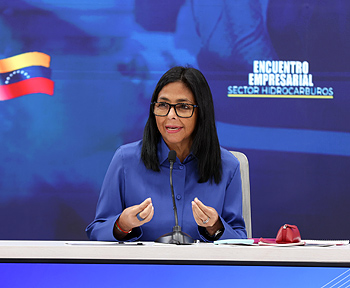
Venezuela has the world's largest proven oil reserves and therefore on the crosshairs of successive US administrations over decades since the days of Hugo Chavez. Trump's bluff has been called and the US oil giants, especially ExxonMobil CEO Darren Woods told Trump Venezuela is "uninvestable." Of course, the CEO's blunt assessment angered Trump who threatened to cut Exxon out of any future investment in the country. But the operation about drugs was just an alibi, beyond doubt.
Control over oil has been the lynchpin of American power since WW II, especially after the petrodollar system was brought in through an 'oil for security' deal between the Saudi King and President Nixon in August 1974. The 50 years old informal agreement was allowed to 'lapse' without renewal in August 2024 by Saudi Crown Prince Mohammed bin Salman, popularly referred to as MBS. In late 2023, China had signed a local currency swap agreement with the Saudi Central Bank at a size of 50 billion yuan ($6.97 billion) or 26 billion Saudi riyals, valid for three years. That is facilitating oil trade in Yuan which is being swapped by the kingdom through Chinese contracts to build new mega-cities and tech parks. That predictably has put the US on the edge.
The exchange has since only escalated, virtually closing the Strait of Hormuz through which about 20 per cent of global oil passes, as do LNG from Qatar
Trump has said he is seeking ownership over Greenland, a semi-autonomous territory of NATO ally Denmark and wants "immediate negotiations" to acquire it for national security reasons. His repeated demands to take control of the territory have been rejected by Greenland's leaders, and by Denmark.
Trump has been pushing for regime change on the communist-led Caribbean island Cuba over the last two months, using economic and diplomatic pressure. Days back, Trump reiterated his stance that Cuba is "a failing nation" teetering on collapse and has suggested the United States could take over Cuba, but on amicable terms.
The series of aggressive posturing, regime change operations and verbal duels with sovereign leaders at various multilateral platforms as well as in White House bilateral meetings, laced with personal abuse and expletives, indicates that the long held notions about sovereign equality of nations as enshrined in Article 2 of the UN Charter has little meaning or traction in Trump's world view.
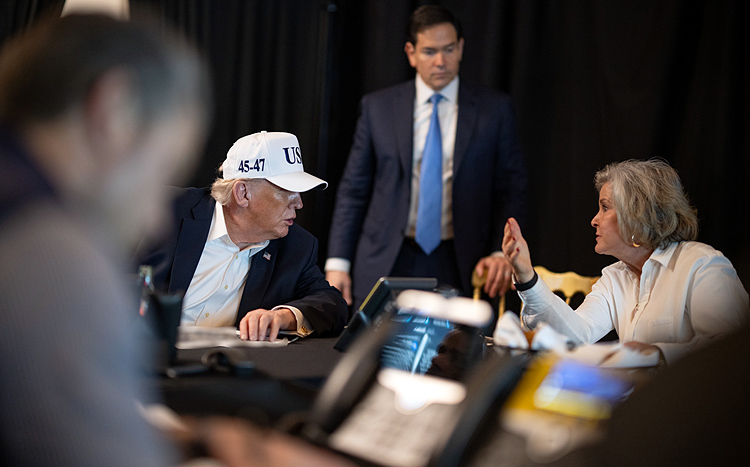
A century earlier, "Lebensraum" became a geopolitical goal of the German Empire in World War I (1914–1918), as the core element of territorial expansion. The most extreme form of this ideology was promoted and initiated by the Nazi Party, especially under Adolf Hitler and provided justification for the German territorial expansion into Central and Eastern Europe. Lebensraum was a leading motivation of Nazi Germany to initiate World War II, and it would continue this policy until the end of the conflict.
Are we witnessing this familiar trend once again? Can the President of the United States hire and fire leaders of sovereign nations? Should countries be forced to align themselves with US commercial interests or else be prepared for regime change operations, covert or overt?
Meanwhile, with global oil and gas trade under stress, flights disrupted and world leaders hyperventilating with speculation about the next post on Trump's 'Truth Social', the world may be bracing for a protracted period of instability and reset
The situation in the Middle East may continue to be volatile and simmer for long since the spiritual leader of the Shias worldwide has just been eliminated by US bombing. Iranians born after 1979 often wondered why their parents and grandparents shouted "Death to America." Now they know and there are no easy ways to calm. A rumoured succession plan to elevate the late Ayatollahs' son, Mojtaba, more hardliner than his father, may pour cold waters on Trump's plan. Meanwhile, with global oil and gas trade under stress, flights disrupted and world leaders hyperventilating with speculation about the next post on Trump's 'Truth Social', the world may be bracing for a protracted period of instability and reset.
Prime Minister Carney had in his address delivered at the World Economic Forum's Annual Meeting January 20, 2026 in Davos emphasised the end of the rules-based international order and a rupture in the world order. He talked about the end of a pleasant fiction and the beginning of a harsh reality, where geopolitics, where the large, main power, geopolitics, is submitted to no limits, no constraints.
Middle power leaders like Mark Carney, Brazilian President Lula DaSilva and Indian Prime Minister Narendra Modi alongside big power leaders like Russian President Putin and Chinese President Xi Jinping will have to assert their leverages and try to bring the world back from the brinks of another painful world war.