
The insightful articles, inspiring narrations and analytical perspectives presented by the Editorial Team, establish an alluring connect with the reader. My compliments and best wishes to SP Guide Publications.
"Over the past 60 years, the growth of SP Guide Publications has mirrored the rising stature of Indian Navy. Its well-researched and informative magazines on Defence and Aerospace sector have served to shape an educated opinion of our military personnel, policy makers and the public alike. I wish SP's Publication team continued success, fair winds and following seas in all future endeavour!"

Since, its inception in 1964, SP Guide Publications has consistently demonstrated commitment to high-quality journalism in the aerospace and defence sectors, earning a well-deserved reputation as Asia's largest media house in this domain. I wish SP Guide Publications continued success in its pursuit of excellence.
Recent developments in India's missile programmes are impacting defence preparedness and the strategic choices shaping the country's future deterrence capabilities
 |
The Author is Former Director General of Information Systems and A Special Forces Veteran, Indian Army |
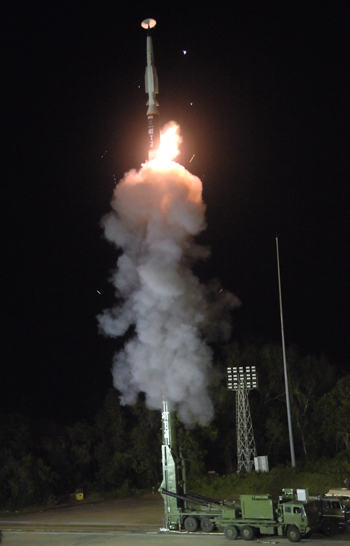
According to an April 26, 2026 report in foreign media BrahMos production in India has slowed by 50 per cent, delaying deliveries to the Indian Navy, adversely affecting readiness of frontline warships and defence exports. This comes when India completed $375 million worth BrahMos exports delivery to the Philippines in 2025, and Indonesia signed a deal in March 2026 worth $200 million for importing BrahMos.
BrahMos production in India has slowed by 50 per cent, delaying deliveries to the Indian Navy, adversely affecting readiness of frontline warships and defence exports.
Following India's BrahMos strikes in Pakistan during Operation 'Sindoor', numerous countries are in advanced stages of negotiations or have expressed interest in acquiring the BrahMos system, given its ability to be launched from multiple platforms (land, sea, air) and its high speed (Mach 2.8 to 3.0). These include: Vietnam, Malaysia, Singapore, Thailand, Brunei in Southeast Asia; Egypt, UAE, Saudi Arabia, Qatar, Oman in Middle East and Africa; Chile, Brazil, and Argentina in Latin America.
This slowdown in BrahMos missile production is attributed to mass staff transfers across the BrahMos Aerospace set up. At least 56 employees, including master technicians, system engineers, senior technicians, assistant managers, senior system managers, executive officers, and senior executives, were abruptly re-assigned across multiple BrahMos Aerospace facilities; shifting experienced staff from Hyderabad, the main integration complex, to Lucknow and Pilani (Rajasthan) plus additional transfers from Lucknow to Pilani, Nagpur to Pilani, and New Delhi to Pilani, with employees ordered to report by April 13, 2026.
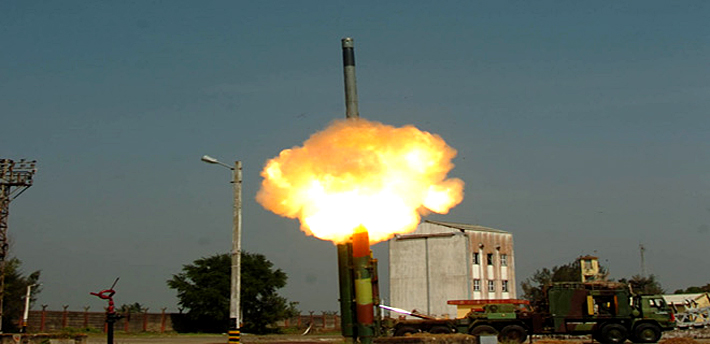
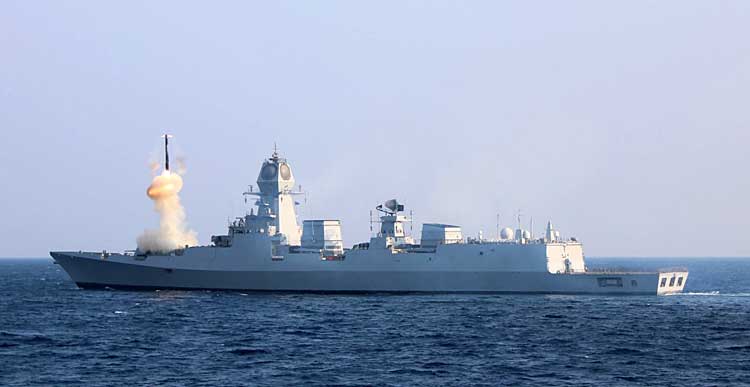
The immediate adverse impact is felt in Hyderabad and Nagpur, where sudden removal of veteran technical experts is creating a skills vacuum across critical missile assembly and systems integration lines. Moreover, BrahMos Aerospace has reportedly informed the Indian Navy of potential multi-year delays in missile deliveries. Navy's BrahMos orders include a March 2024 follow-on order for 220 BrahMos-ER extended-range ship-launched variants. That contract alone is valued at more than ₹23,000 crore (approximately $6.05 billion). These extended-range variants are intended for frontline warships including the Visakhapatnam-class and Kolkata-class destroyers, both of which form the spearhead of India's high-end maritime strike and air-defence architecture. The Indian Navy urgently wants the BrahMos ER, but the Ministry of Defence (MoD) has yet to clear its procurement.
This slowdown in BrahMos missile production is attributed to mass staff transfers across the BrahMos Aerospace set up.
Speculation is that rapid expansion of BrahMos production to Lucknow and Pilani (Rajasthan) has political reasons; these states are ruled by the same political party as at the Centre. But this raises broader questions whether rapid industrial expansion without calibrated workforce transition planning can undermine the very strategic scaling objectives it was designed to achieve. For a programme central to India's maritime deterrence posture, production stability is itself a strategic asset, and organisational disruption can become operational vulnerability. The BrahMos issue is not simply how fast the missile flies, but whether the industrial system behind it can maintain the tempo required for deterrence, exports, and sustained naval power projection. The government needs to address this issue on an immediate basis.
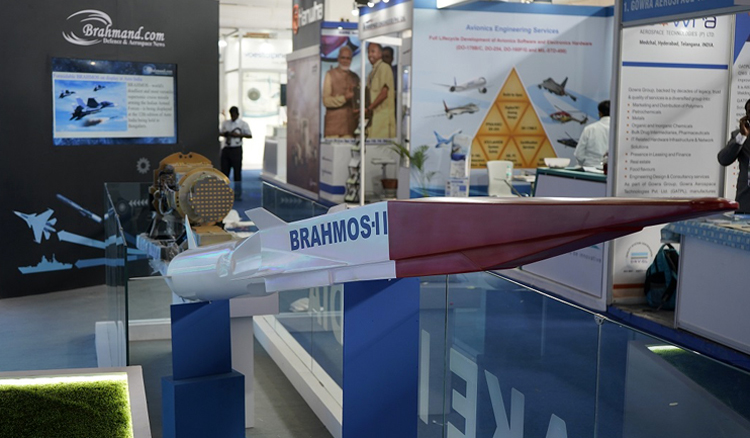
Concurrent to the above, another report of May 2, 2026 cites India's decision to scale back the BrahMos-II hypersonic missile development. This is viewed as a reassessment of cost-effectiveness within its evolving strike doctrine; deploying $12 million munitions against conventional targets undermines scalable deterrence architecture. The reassessment follows operational validation during Operation Sindoor, where existing supersonic and stand-off munitions achieved penetration of layered air defence systems, reshaping Indian threat modelling and procurement priorities across the Indo-Pacific theatre.
The BrahMos issue is not simply how fast the missile flies, but whether the industrial system behind it can maintain the tempo required for deterrence, exports, and sustained naval power projection.
The report says that senior defence technologists involved in India's hypersonic roadmap have reportedly emphasised that cost-per-kill ratios must align with operational realities rather than technological prestige. This recalibration carries immediate implications for South Asian escalation dynamics, as hypersonic deployment timelines intersect with nuclear deterrence thresholds, compressing decision cycles and potentially destabilising crisis management frameworks between India and Pakistan.
But this is an out of context naïve argument because India's hypersonic missile programme, particularly the domestically developed Long-Range Hypersonic Anti-Ship Missile (LR-AShM), has been successfully tested and validated to engage targets at ranges over 1,500 km including one in a May 2026 test-firing. These systems are designed for high-speed, low-altitude maritime strikes, with future variants under development aimed at extending capabilities to roughly 3,500 km. These missiles, often referred to as "Mach-8 monsters," are designed to travel at speeds exceeding Mach 5+ (over 5 times the speed of sound). Developed by the Defence Research and Development Organisation (DRDO), these missiles are designed to neutralise enemy warships and aircraft carriers, strengthening naval sea-denial capability.
With the need to catch up with China's hypersonic capabilities, should we scale back the BrahMos-II hypersonic missile development or boost it with indigenous scramjet capabilities?
The second reason for India recalibrating its hypersonic programme has been mentioned in the report as friction with Russia over transfer-of-technology for critical scramjet propulsion systems. Here again, this issue never came up since BrahMos Aerospace was established on February 12, 1998, following an inter-governmental agreement signed in Moscow between India and Russia; a joint venture between India's DRDO and Russia's NPO Mashinostroyenia (NPOM).

The fact is that if there is an undercurrent of India-Russia friction, overt diplomatic camaraderie notwithstanding, India must blame itself for leaning more towards the US. India stopped importing Russian crude under threat of US sanctions, because of which Russia is now not supplying oil to India on concessional rates as earlier. Moreover, Russia's repeated offers of Su-57E fighter jets under 'Make in India' with full transfer of technology has not been adequately reciprocated by India, aiming instead for additional 114 French Rafale fighter jets despite Dassault refusing to share the technology of the core software. This again is out of fear of US sanctions despite the fact that the US needs India as much, if not more. The same US fear has made India opt for dollar-trade, debunking trade in local currencies, while BRICS (with China and Russia major partners) prefer de-dollarisation. India's support to the US and Israel in the US-Israel war on Iran and cossetting its relations with Iran has further aggravated the friction.
Russia's repeated offers of Su-57E fighter jets under Make-in-India with full transfer of technology has not been adequately reciprocated by India, aiming instead for additional 114 French Rafale fighter jets despite Dassault refusing to share the technology
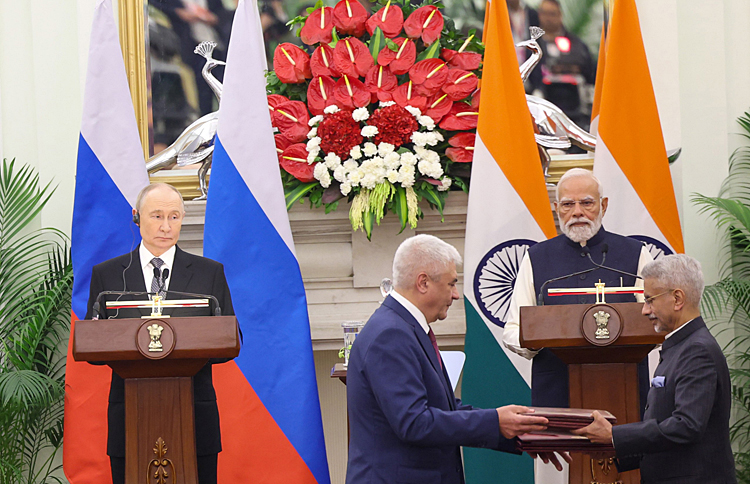
Little wonder, no defence deal with Russia was announced when Russian President Vladimir Putin visited India on December 4–5, 2025, for the 23rd India-Russia Annual Bilateral Summit, coinciding with the 25th Anniversary of India-Russia Strategic Partnership. India needs to review its foreign policy – siding with an unreliable US vis-à-vis Russia which has always stood by India. There no denying that the US wants to strategically kill Russia, but that is utopian.
External Affairs Minister S. Jaishankar has replaced the slogan of strategic autonomy with the semantics of multi-alignment but continues to kowtow to Washington and Beijing. India's focus at SCO remains at terrorism, which means little since the US and China back Pakistan. With America's declining global standing in the current geopolitical paradigm, the Russia-India-China (RIC) Dialogue must be energised, especially with India accepting China's demand to keep the border issue separate from progressing bilateral relations. But India remains chary of RIC again fearing the Donald Trump Administration.
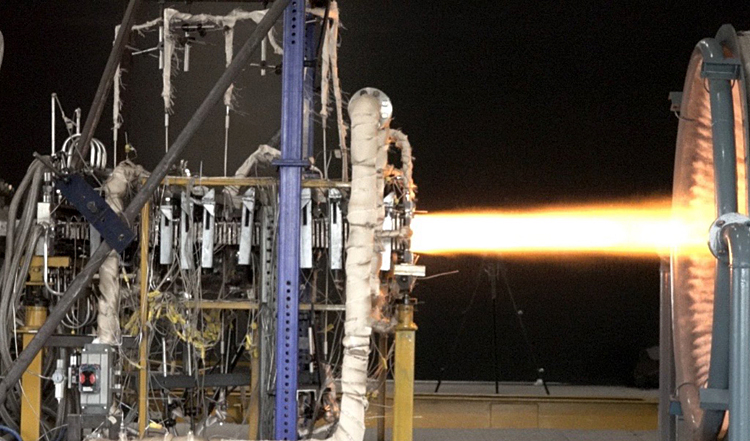
Finally, on May 9, 2026, the DRDO announced successful long-duration test of an actively cooled full-scale scramjet combustor; test conducted at the Hyderabad-based Defence Research and Development Laboratory (DRDL), with the engine achieving run-time of 20 minutes. This places India at the forefront of hypersonic capabilities. But with the need to catch up with China's hypersonic capabilities, should we scale back the BrahMos-II hypersonic missile development or boost it with indigenous scramjet capabilities?