
The insightful articles, inspiring narrations and analytical perspectives presented by the Editorial Team, establish an alluring connect with the reader. My compliments and best wishes to SP Guide Publications.

"Over the past 60 years, the growth of SP Guide Publications has mirrored the rising stature of Indian Navy. Its well-researched and informative magazines on Defence and Aerospace sector have served to shape an educated opinion of our military personnel, policy makers and the public alike. I wish SP's Publication team continued success, fair winds and following seas in all future endeavour!"

Since, its inception in 1964, SP Guide Publications has consistently demonstrated commitment to high-quality journalism in the aerospace and defence sectors, earning a well-deserved reputation as Asia's largest media house in this domain. I wish SP Guide Publications continued success in its pursuit of excellence.
Once deployed across all the Army, Navy and Air Force, it will form a crucial part of India's defence shield, protecting our borders and strengthening India's strategic deterrence
 |
The Author is Former Director General of Information Systems and A Special Forces Veteran, Indian Army |
ET-LDHCM, which stands for Extended Trajectory-Long Duration Hypersonic Cruise Missile, is a completely indigenous missile developed under Project 'Vishnu', which aims to build 12 different types of hypersonic systems, including attack missiles like the ET-LDHCM and defensive interceptors that can shoot down incoming enemy missiles mid-air; greatly increase India's attack and strategic deterrence capabilities, especially in reaction to threats from China and Pakistan. Many small and medium Indian companies and private defence firms worked together with the Defence Research and Development Organisation (DRDO) scientists to make this happen, boosting our technological capabilities.
ET-LDHCM, which stands for Extended Trajectory-Long Duration Hypersonic Cruise Missile greatly increase India's attack and strategic deterrence capabilities, especially in reaction to threats from China and Pakistan
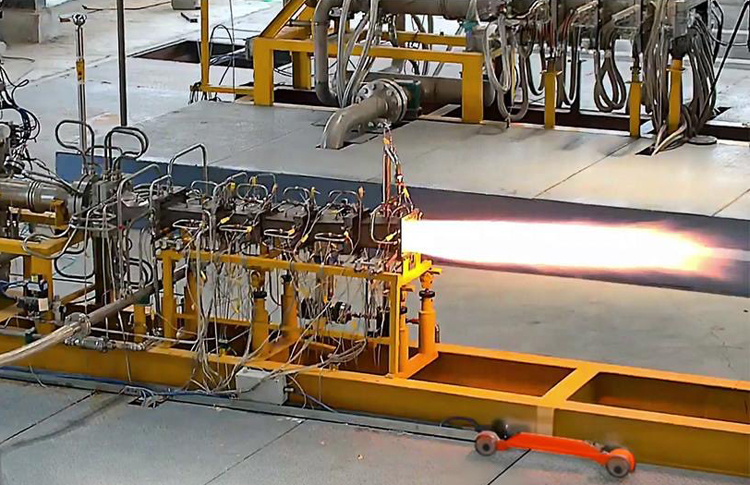
The heart of the ET-LDHCM is a scramjet engine, which sucks oxygen directly from the air around it as it flies. In April 2025, the DRDO ran this engine continuously for 1,000 seconds during ground tests, proving it works under extreme conditions. The engine operates at temperatures exceeding 2,000 degrees Celsius, hot enough to melt steel. Building a missile that can survive such extreme heat required incredible engineering. The ET-LDHCM is constructed with special heat-resistant materials and thermal barrier coatings developed jointly by DRDO and the Department of Science and Technology. These coatings act like a heat shield, protecting the missile's body and sensitive electronics inside, even when the outer surface is glowing red hot from friction with air.
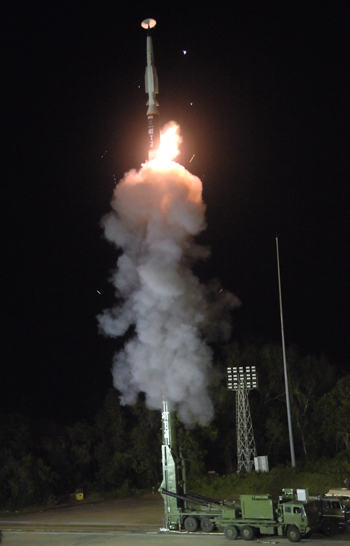
On July 14, 2025, the DRDO successfully tested the ET-LDHCM on a test range along India's eastern coast, during which it met all the laid down parameters. This is a missile that would already hit the target by the time it is detected on enemy radar because it travels at a speed of Mach 8; implying it travels at roughly 9,800 km/h. It can reach Karachi in less than 10 minutes if launched from Delhi, and can attack targets deep inside China and Pakistan at a strike range of 1,500 km. The missile can carry explosive warheads weighing between 1,000 and 2,000 kg, which is enough to destroy major military installations, command centres, or heavily fortified bunkers.
On July 14, 2025, the DRDO successfully tested the ET-LDHCM on a test range along India's eastern coast, during which it met all the laid down parameters
Unlike older ballistic missiles that go high up into space and come down following a predictable arc, the ET-LDHCM stays low, hugging the terrain like a supersonic bird. More importantly, it can change direction mid-flight. This makes it nearly impossible for enemy radar systems to track and for air defence systems to shoot down. Even advanced defence shields like China's S-400 or America's THAAD would struggle to intercept it. By the time these systems detect the missile and calculate its path, the ET-LDHCM has already changed course and is seconds away from impact.
An impressive feature of the ET-LDHCM is its flexibility in launch platforms. The missile is designed for multi-platform launches from land, sea, or air, giving the Indian Armed Forces unprecedented versatility. On land, it can be launched from mobile truck-mounted launchers that can quickly move to different locations, making them hard to target. At sea, it can be fired from warships and submarines, allowing the Indian Navy to strike enemy targets from safe distances in the Indian Ocean. From the air, fighter jets like the Su-30 MKI and Rafale fighter jets. This triple-launch capability means that whether protecting our borders on land, securing our coastlines, or projecting power from the air, the ET-LDHCM gives our forces a weapon that can respond quickly to any threat from any direction.
This is a missile that would already hit the target by the time it is detected on enemy radar because it travels at a speed of Mach 8; implying it travels at roughly 9,800 km/h
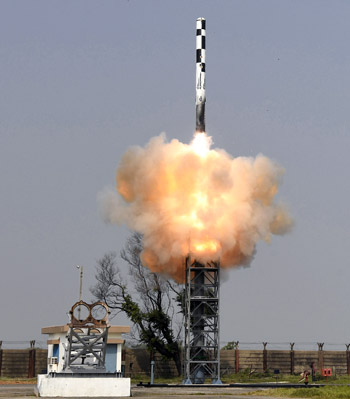
The BrahMos until now was India's fastest and most powerful cruise missile. But BrahMos uses a ramjet engine, which is different from the ET-LDHCM's scramjet. A ramjet also breathes air from the atmosphere, but it first slows down the incoming air before burning fuel with it. The BrahMos ramjet works at supersonic speeds around Mach 2.8, covering about 450 km. However, ramjets cannot handle speeds beyond Mach 5 because the incoming air becomes too hot and creates too much pressure when slowed down. The ET-LDHCM's scramjet, on the other hand, burns fuel with air that is still moving at supersonic speed without slowing it down. This is difficult to achieve but it allows the missile to reach Mach 8 and travel over 1,500 kilometres. In simple terms, while BrahMos is fast and proven, the ET-LDHCM is almost three times faster, flies more than three times farther, and belongs to an entirely new technological generation.
An impressive feature of the ET-LDHCM is its flexibility in launch platforms
The third test of the Combustor was conducted on January 9, 2026, where the engine was fired for over 12 minutes at DRDL's Scramjet Connect Pipe Test (SCPT) Facility. The ET-LDHCM is expected to become fully operational by 2030, after further testing and refinement. Once deployed across all the Army, Navy and Air Force, it will form a crucial part of India's defence shield, protecting our borders and strengthening India's strategic deterrence. The missile's speed and stealth capabilities would make it a game changer, making adversaries realise that India now possesses the ability to strike swiftly and decisively if provoked. It is also a big boost in self-sufficiency, reducing dependence on foreign technology and imports.