

The insightful articles, inspiring narrations and analytical perspectives presented by the Editorial Team, establish an alluring connect with the reader. My compliments and best wishes to SP Guide Publications.

"Over the past 60 years, the growth of SP Guide Publications has mirrored the rising stature of Indian Navy. Its well-researched and informative magazines on Defence and Aerospace sector have served to shape an educated opinion of our military personnel, policy makers and the public alike. I wish SP's Publication team continued success, fair winds and following seas in all future endeavour!"

Since, its inception in 1964, SP Guide Publications has consistently demonstrated commitment to high-quality journalism in the aerospace and defence sectors, earning a well-deserved reputation as Asia's largest media house in this domain. I wish SP Guide Publications continued success in its pursuit of excellence.
Jio is deploying 20–22 earth stations across India to ensure all data remains within national jurisdiction without routing through foreign gateways
 |
The Author is Former Director General of Information Systems and A Special Forces Veteran, Indian Army |
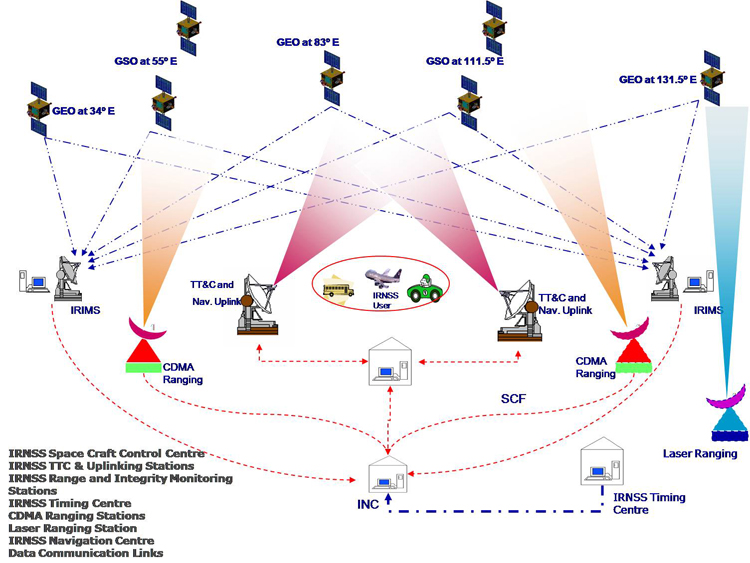
The Indian Regional Navigation Satellite System (IRNSS) programme, called NavIC, facing numerous challenges, including satellite failures, delays, operational shortcomings, strategic implications for national security, and wider concerns surrounding ISRO's execution, resource management, and technology transfer policies, was covered in these columns in April this year.
It was also pointed out that indigenous constellations are necessary because access to foreign government-controlled global navigation satellite systems is not guaranteed in hostile situations. India adopting the Starlink cover has been in the news, despite the fact that Starlink already covers Bangladesh and Starlink-linked communication equipment has been recovered in India's northeast, all of which has implications.
Although Starlink received initial technical/GMPCS licenses, its final commercial rollout in India is stalled over security, data sovereignty, local interception norms, and concerns over unsanctioned satellite terminals operating in conflict zones.
India has granted core technical and space authorizations to Starlink, but final commercial clearance is pending. In July 2025, IN-SPACe, authorised Starlink to operate the Gen1 low Earth orbit constellation over India for 5-years. The Department of Telecommunications (DoT) gave Starlink the Global Mobile Personal Communication by Satellite (GMPCS) license, and Internet Service Provider (ISP) Category-A status.
SpaceX has already established initial on-the-ground infrastructure, including a centralised hub in Mumbai and plans for 10 physical gateways. Final commercial rollout was slowed down mid-2026 by security and intelligence agencies; data sovereignty and how SpaceX intends to comply with local interception norms.
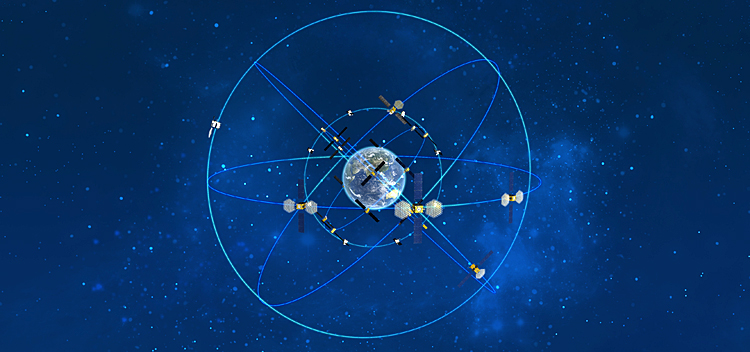
Most importantly, reports have indicated that unsanctioned Starlink terminals have been operating inside Iran. In addition, already Pakistani terrorists in Jammu and Kashmir (J&K) have been using satellite phones linked to China's BeiDou Navigation Satellite System (BDS) that allows cross-border coordination while bypassing local telecom networks.
The latest news is that India's space regulator IN-SPACe has green-lighted Reliance Jio's proposal to deploy approximately 1,600 low Earth orbit (LEO) satellites at an altitude of about 650-km above the Earth, for broadband and mobile services, according to news reports of July 17, 2026. The proposed system offers fixed satellite broadband, cellular backhaul, and direct-to-device connectivity, and 4.5 to 5 terabits per second pan-India. The estimated cost of the project is between $10 to 15 billion. Commercial rollout is expected in two to three years. However, for the project to kick off final spectrum allocation and filings for international orbital slots via the International Telecommunication Union. It is important to note that Jio focuses its entire 4.5–5 terabits constellation throughput directly over the Indian subcontinent. It offers the highest capacity planned by any operator in the region.
IN-SPACe approved Reliance Jio's proposal for an indigenous LEO constellation (~1,600 satellites at 650 km altitude) costing $10–15 billion, which focuses its entire 4.5 to 5 Tbps throughput directly over the Indian subcontinent.
Reliance Jio is deploying 20 to 22 dedicated earth stations across India. These stations will manage its upcoming fleet and anchor partner networks, ensuring no data ever has to route through foreign gateways. Jio's Direct-to-Device (D2D) model is built to disrupt traditional telecom infrastructure by turning satellites into "cell towers in the sky," removing the physical barriers of remote geography. The network beams standard commercial cellular frequencies directly to existing mobile phones and laptops. Consumers will not need a specialized dish or terminal like Starlink. Phones will automatically hand over traffic between traditional ground-based mobile towers and the LEO satellite network when moving into rural, forested, or mountainous dead zones. Because the system operates entirely separate from terrestrial towers, it provides backup mobile data and calling capabilities during natural disasters such as cyclones, floods, or landslides.
Jio plans to integrate space connectivity natively with its existing mobile towers (cellular backhaul) and retail channels. Jio historically forces aggressive, hyper-affordable consumer pricing in India. Starlink operates as a premium, standalone global service. Consumers must purchase or lease proprietary, high-cost terminal dishes to access the satellite network directly. It has over 10,000 satellites (Active globally) placed 550-km above the Earth in LEO, offering 600 Gigabits per second (Gbps). Fully operational globally, Starlink is awaiting final India deployment clearances. Although Starlink distributes its massive bandwidth globally across a shifting mesh network (Inter-satellite laser links), its current approved capacity limit dedicated specifically to India is significantly lower at 600 Gbps.
Unlike Starlink—which requires expensive proprietary dishes—Jio's system uses standard commercial frequencies to connect directly to unmodified smartphones, seamlessly switching between ground towers and satellites in dead zones.
Reliance Jio's planned LEO satellite constellation directly challenges Elon Musk's Starlink. While Starlink currently dominates global skies, Jio's new indigenous project, approved by IN-SPACe, aims to beat it locally on capacity, regulatory backing, and structural integration with India's mass telecom market. At the same time, Reliance Jio's planned rollout is through a mix of international launch partnerships, heavy sovereign regulatory support, and a cellular-integrated Direct-to-Device (D2D) network that beams connectivity straight to standard unmodified smartphones. This dual approach bypasses the need for consumer satellite dishes while ensuring the infrastructure remains entirely under Indian jurisdiction.
Finally, the question is will New Delhi clear Starlink cover for India, despite all the security implications bowing to US pressure, as an interim arrangement till the Reliance Jio constellation becomes operational or block Starlink and go directly for Reliance Jio, providing the requisite acceleration? Prudence demands that India should go directly for the Reliance Jio constellation. Hopefully, good sense will prevail.