
The insightful articles, inspiring narrations and analytical perspectives presented by the Editorial Team, establish an alluring connect with the reader. My compliments and best wishes to SP Guide Publications.

"Over the past 60 years, the growth of SP Guide Publications has mirrored the rising stature of Indian Navy. Its well-researched and informative magazines on Defence and Aerospace sector have served to shape an educated opinion of our military personnel, policy makers and the public alike. I wish SP's Publication team continued success, fair winds and following seas in all future endeavour!"

Since, its inception in 1964, SP Guide Publications has consistently demonstrated commitment to high-quality journalism in the aerospace and defence sectors, earning a well-deserved reputation as Asia's largest media house in this domain. I wish SP Guide Publications continued success in its pursuit of excellence.
Indian Army is moving ahead with the cautious adoption of logistics drones and retaining the traditional Animal Transport Units operationally, given the high-altitude threats from China
 |
The Author is Former Director General of Information Systems and A Special Forces Veteran, Indian Army |
Advancements in defence technologies and emergence of drones on the battlefield have resulted in calls for reducing the manpower of the Indian Army. At one stage, the government wanted to slash the Army's manpower by 1,00,000. Then regular recruitment in the Indian Military was completely stopped in order to facilitate the short-term 'Agnipath' concept; to avoid giving any pension to 'Agniveers' not retained after completion of their short-term 5-year tenure. As of July 2024, the Army faced significant manpower deficiencies, including a shortfall of over one lakh soldiers and a 16.71 per cent shortage in the officer cadre. The situation is exacerbated with the continuing standoff with China all along the Line of Actual Control (LAC) with some 50,000 troops on each side facing each other. Given the indications from Beijing, despite the India-China boundary talks, this standoff is unlikely to lower, especially since China holds all the aces.
According to recent reports in the media, the Ministry of Defence (MoD) is mulling retaining up to 50 per cent Agniveers, providing pension to next of kin (NOK) in case the Agniveer dies, and medical treatment and allowance for treatment of injury to Agniveers. All this is more of jugad without acknowledging that medical treatment is only applicable to those who contribute to the Ex-Servicemen Contributory Health Scheme (ECHS), which Agniveers do not. Besides, the expenditure on other government services is by far greater since Non-Functional Upgradation (NFU) allowance is admissible to them, which the Indian Armed Forces are not.
The Ministry of Defence (MoD) is mulling retaining up to 50 per cent Agniveers, providing pension to next of kin (NOK) in case the Agniveer dies, and medical treatment and allowance for treatment of injury to Agniveers
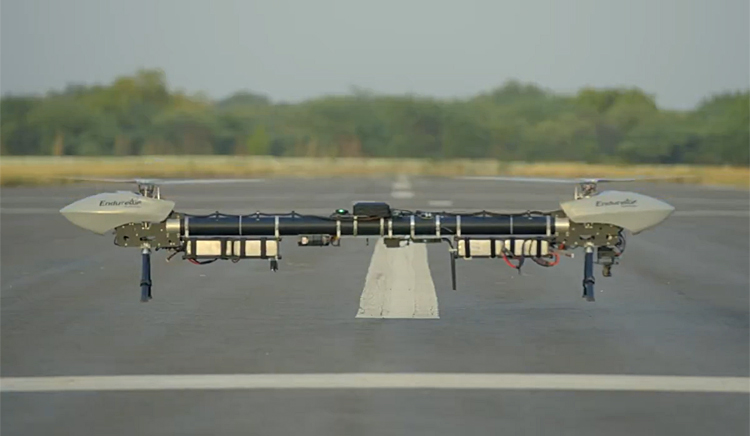
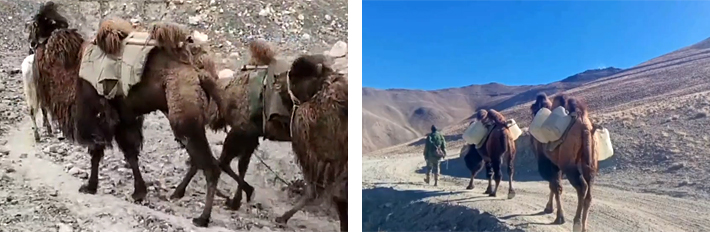
The Indian Army has been experimenting with double-humped camels and even yaks in the difficult high-altitude terrain along our northern borders, which has been reported in these columns earlier from time to time. Similarly, the Army has also experimented and inducted robots and unmanned ground vehicles (UGVs) for logistics tasks. Logistics drones in the Indian Army are unmanned aerial vehicles (UAVs) designed to deliver essential supplies like food, ammunition, and medical equipment to remote forward posts, especially in challenging mountainous terrain. They are meant to replace traditional methods like mules and porters, enabling faster, more efficient, and cost-effective last-mile delivery in difficult border areas. These drones can operate day and night, in various weather conditions, and at high altitudes, with specific variants designed for different operational ranges.
Logistics drones are built to carry payloads between 20-80 kg depending on the variant and can operate at altitudes up to 18,000 feet, with the ability to fly at least 500 meters above ground level.They are designed for rugged terrain, including dusty, wet, and windy conditions, to ensure continuous replenishment for troops at high-altitude posts. These drones utilise a combination of a Man Portable Ground Control Station (MPGCS) and a Remote Video Terminal (RVT) for control and monitoring. They are equipped with day video cameras and night thermal sensors. The drones are designed to be less noisy than manned aircraft, which helps with stealth in sensitive operational areas. An example of logistics drones is the Sabal 20 Logistics Drone; an electric unmanned helicopter being inducted by the Indian Army. Logistics drone ensure a continuous supply chain to front-line soldiers, improving their readiness, significantly reducing the time and manpower required for supply missions compared to traditional methods, especially at altitudes where travel is difficult and time-consuming.They are more cost-effective than manned rotary and fixed-wing aircraft and have fewer maintenance issues.
Logistics drones in the Indian Army are unmanned aerial vehicles (UAVs) designed to deliver essential supplies like food, ammunition, and medical equipment to remote forward posts, especially in challenging mountainous terrain
However, according to latest inputs, the Indian Army has deferred disbanding of the Animal Transport Units (ATUs) till the next decade. This is because the Army has substantial troops and formations guarding the borders in the unpredictable high altitude and terrain. Comprising of mules, horses, donkeys and dogs, the ATUs are there to stay at least till the beginning of the next decade, according to unnamed sources in the media. "The ATUs will continue at least till 2032" said a source, adding that the disbanding of ATUs based on a 2016 report submitted by a Committee of Experts (CoE) constituted by the Ministry of Defence under the Chairmanship of veteran Lt General D.B. Shekatkar, in December 2016. The CoE was to recommend measures to enhance combat capability and rebalance defence expenditure of the armed forces. The proposal was to disband the ATUs with the help of infrastructure and logistics arrangements, but it did not work out. The recent flash floods and avalanches which washed off the roads and bridges made movement for the helicopters and other means impossible, "thus this shift in the logistics may not be feasible, at least in the coming years," emphasised another source.
The Indian Army holds 12 to 15 Animal Transport Battalions with each battalion comprising 850 mules, he said. Mule Battalions are divided into two categories: General Service and Mountain Artillery and with the Mule of the MA expected to carry around 145 kgs and those in the GS to carry around 72.5 kgs.
The Indian Army has deferred disbanding of the Animal Transport Units (ATUs) till the next decade. Halting and reversing the disbandment of ATU's is sensible because there is little scope of thinning out the standoff along the LAC.
Halting and reversing the disbandment of ATU's is sensible because there is little scope of thinning out the standoff along the LAC. Were this to even happen in some measure, there is no guarantee when the PLA will reinforce it again. Moreover, we must cater for future offensive plans by China, For example, China is constructing the second highway (G-695 expressway) which is planned to touch Galwan, Hot Springs and Pangong Tso by 2035. China would like to provide depth to this expressway before it reaches the LAC by attempting to capture more of Ladakh. We also need to examine whether the planned infrastructure to replace logistics drones would be sufficient to allow disbanding of the ATUs, also taking into account how the enemy within (the .5 front) will target our drones to dislodge logistics, looking at what has unfolded from the recent Delhi and Nowgam blasts – the vast terrorist ecosystem embedded in India.