

The insightful articles, inspiring narrations and analytical perspectives presented by the Editorial Team, establish an alluring connect with the reader. My compliments and best wishes to SP Guide Publications.

"Over the past 60 years, the growth of SP Guide Publications has mirrored the rising stature of Indian Navy. Its well-researched and informative magazines on Defence and Aerospace sector have served to shape an educated opinion of our military personnel, policy makers and the public alike. I wish SP's Publication team continued success, fair winds and following seas in all future endeavour!"

Since, its inception in 1964, SP Guide Publications has consistently demonstrated commitment to high-quality journalism in the aerospace and defence sectors, earning a well-deserved reputation as Asia's largest media house in this domain. I wish SP Guide Publications continued success in its pursuit of excellence.
India's indigenous MITHYA electronic warfare system represents another step towards strengthening the survivability of its strategic missile arsenal while reducing dependence on imported technologies
 |
The Author is Former Director General of Information Systems and A Special Forces Veteran, Indian Army |
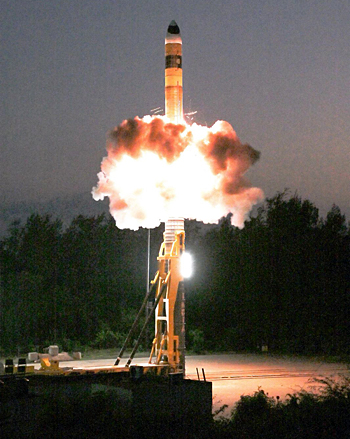
Instead of physically shooting down missile swarms, electronic warfare (EW) systems protect platforms such as aircraft, ships and ground vehicles from missile attacks by disrupting, deceiving or blinding the electromagnetic (EM) sensors and guidance systems of incoming missiles. EW operates non-kinetically within the EM spectrum.
MITHYA is a self-powered system, deployable during flight, and designed to jam, spoof, and mask hostile radars
EW systems use an integrated suite of sensors, jammers and countermeasures to protect against the two primary types of guided missiles:
EW systems also harden friendly communications and radar systems through frequency hopping and spread-spectrum technologies so that enemy attacks cannot disable the defender's targeting or navigation systems.
Coverage and operational range of EW systems generally fall into three main categories, depending on the mission and equipment:
India has been importing specialised EW systems to guard against missile attacks, but has also been making efforts to develop indigenous systems as protective shields against missile attacks. India has bought the Russian S-400, which utilises advanced Russian tracking and EW capabilities to counter hostile missiles. India has also been procuring pod-based EW systems from countries such as Israel, France and Russia to protect its frontline fighter aircraft against guided missile locks.
The project reflects India's recognition that modern strategic warfare now demands active countermeasures, not just missile performance
But India is now prioritising indigenous EW suites to avoid the risk of technological denial by foreign OEMs and vendors. The Indian Navy is using the indigenous 'Shakti' EW system, which is installed on warships such as INS Visakhapatnam, to intercept, classify and jam hostile anti-ship missile threats. Similarly, the Indian Air Force (IAF) is integrating the advanced 'Talisman' Airborne Defence Suite onto its Su-30 MKI and MiG-29K fleets to protect aircraft against modern missiles and complex air-defence networks.
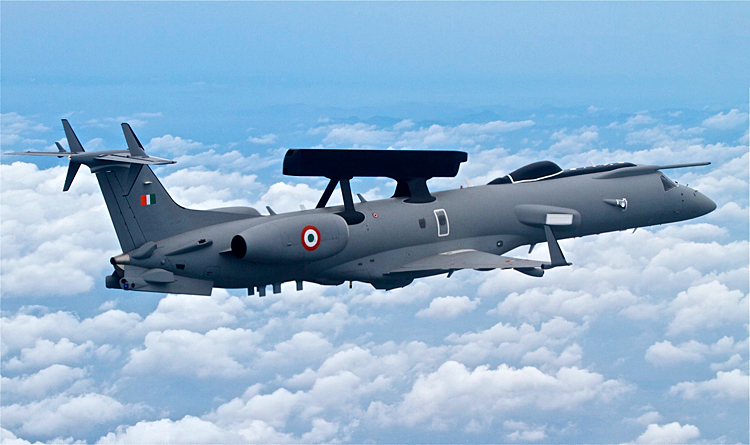
In the same pursuit of indigenous EW systems, India is also developing the 'MITHYA' EW System, designed specifically to protect its own strategic missile arsenal by helping it actively jam and evade advanced enemy Ballistic Missile Defence (BMD) networks. According to news reports dated June 4, 2026, the development of MITHYA marks a major leap in survivability and deterrence.
Operationally, the integration of MITHYA will enhance India's ability to maintain a credible second-strike capability, a cornerstone of its nuclear doctrine
MITHYA is a self-powered system, deployable during flight, and designed to jam, spoof and mask hostile radars, ensuring India's long-range missiles remain credible against evolving threats. Tailored for strategic missile platforms, the system is being designed to counter increasingly advanced ballistic missile-defence networks deployed by adversaries, which pose a challenge to the survivability of India's deterrent arsenal. The project reflects India's recognition that modern strategic warfare now demands active countermeasures, not just missile performance, to ensure penetration of layered defence shields.
For being self-powered, operating independently of the missile's primary power supply, MITHYA incorporates a lithium-ion secondary battery with a dedicated battery-management system, enabling resilience during critical mission phases. This ensures that the EW package remains functional even under the extreme conditions of launch and flight, including violent acceleration, vibration and thermal stress. A key feature of MITHYA is its deployable antenna architecture, which allows it to function as an expendable electronic warfare package. Once activated during flight, the system can dynamically jam, spoof or mask hostile radar systems, thereby complicating interception attempts during the missile's most vulnerable operational windows.
Its success will likely influence India's future missile development, embedding survivability features as standard rather than optional
This capability mirrors global trends, where nations such as Russia have integrated decoys and EW suites into their strategic missiles to bypass advanced air-defence networks. MITHYA is reportedly linked to the 'A5C' platform, believed to be associated with advanced variants of the Agni-V missile series. This suggests that MITHYA is intended to complement India's premier long-range strategic missile ecosystem, enhancing its ability to penetrate sophisticated defences.
Engineers are currently testing dummy units and pyro assemblies to validate the lithium-ion battery-management system and deployment mechanisms, ensuring operational reliability before live trials. By embedding advanced electronic warfare systems within its missile arsenal, India is not only reducing reliance on external solutions but also ensuring long-term resilience in its deterrence posture. This effort complements other indigenous projects in radar, sensors and missile guidance, creating a layered ecosystem of survivability. Operationally, the integration of MITHYA will enhance India's ability to maintain a credible second-strike capability, a cornerstone of its nuclear doctrine.
This development also signals India's entry into the next phase of strategic warfare, where survivability is as critical as range and payload
In the long term, MITHYA is expected to evolve into a family of electronic warfare solutions adaptable across multiple missile platforms. Its success will likely influence India's future missile development, embedding survivability features as standard rather than optional.
Strategically, MITHYA represents a decisive step in India's response to the growing sophistication of Chinese and Pakistani missile-defence programmes. By equipping its missiles with active countermeasures, India is reinforcing the credibility of its nuclear deterrent, ensuring that adversaries cannot rely on interception systems to neutralise its strike capability. This development also signals India's entry into the next phase of strategic warfare, where survivability is as critical as range and payload.