The insightful articles, inspiring narrations and analytical perspectives presented by the Editorial Team, establish an alluring connect with the reader. My compliments and best wishes to SP Guide Publications.

"Over the past 60 years, the growth of SP Guide Publications has mirrored the rising stature of Indian Navy. Its well-researched and informative magazines on Defence and Aerospace sector have served to shape an educated opinion of our military personnel, policy makers and the public alike. I wish SP's Publication team continued success, fair winds and following seas in all future endeavour!"

Since, its inception in 1964, SP Guide Publications has consistently demonstrated commitment to high-quality journalism in the aerospace and defence sectors, earning a well-deserved reputation as Asia's largest media house in this domain. I wish SP Guide Publications continued success in its pursuit of excellence.
The IAF is looking at revamping its transport aircraft fleet to meet modern needs and is looking at the MTA to become its main workhorse
 |
The Author is Former Director General of Information Systems and A Special Forces Veteran, Indian Army |
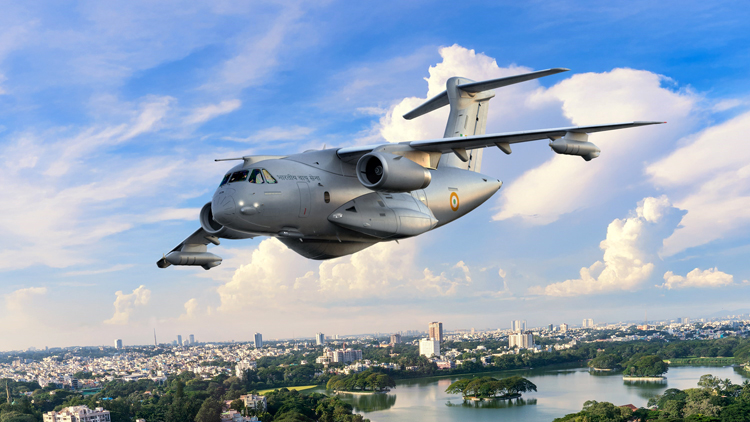
According to recent reports, the Defence Procurement Board clears acquisition of 60 x Medium Transport Aircraft (MTA) for the Indian Air Force (IAF). The plan is to procure 12 aircraft in fly-away condition and 48 to be manufactured in India under 'Make in India', providing a major boost for domestic aerospace manufacturing and tactical airlift capability. The MTA acquisition is to replace the IAF's ageing fleet of over 100 Antonov An-32s, with potential to complement Il-76s.
The MTA acquisition is to replace the IAF's ageing fleet of over 100 Antonov An-32s, with potential to complement Il-76s.
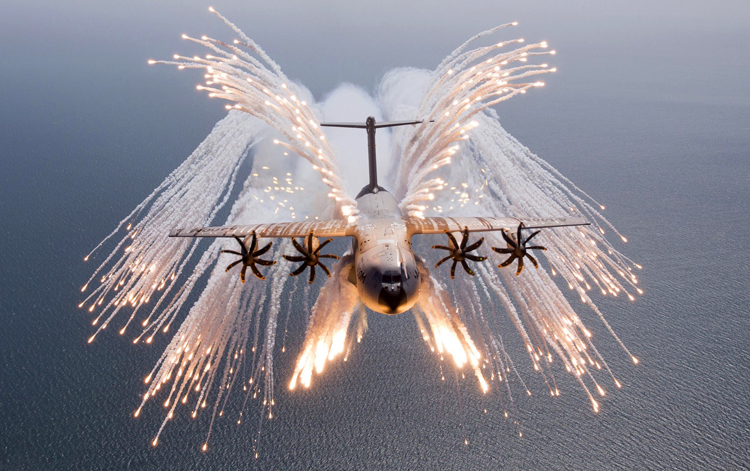
The three main contenders for the MTA programme are –
The IAF wants the MTA to be capable of undertaking operations at high altitudes, and be able to land on and take off from unprepared runways like India's Advanced Landing Grounds (ALGs).
The current transport fleet summary of the IAF comprises of the following: 11 x Boeing C-17 Globemaster III having 77-tonne payload capacity for strategic/heavy lift; 17 x Ilyushin IL-76 having 40-tonne payload capacity for heavy lift; 12 x Lockheed C-130J having 20-tonne payload capacity for tactical/special operations; 100 x Antonov AN-32 having 6.7-tonne payload capacity for tactical transport; under induction Airbus C-295MW having 9.5-tonne payload capacity for tactical transport.
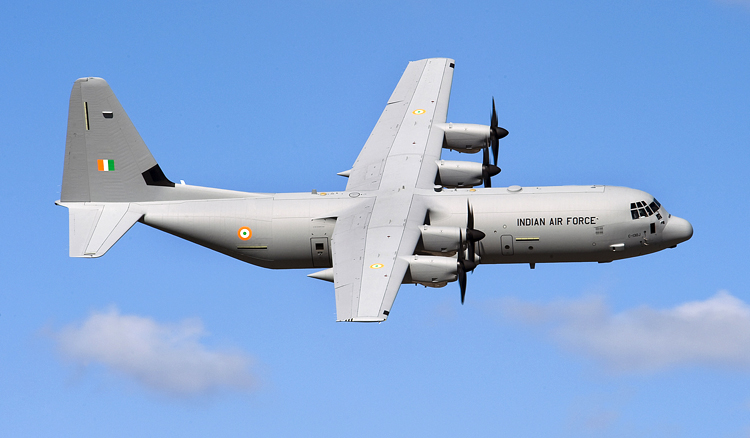
According to sources, the IAF is looking at revamping its transport aircraft fleet to meet modern needs. Instead of operating multiple aircraft of different weight categories, it is looking at the MTA to become its main workhorse. The IAF wants the MTA to be capable of undertaking operations at high altitudes, and be able to land on and take off from unprepared runways like India's Advanced Landing Grounds (ALGs) in Ladakh and the Northeast, taking into account the capacity of the aircraft. While the C-130J of the IAF has landed at the ALG at Daulat Beg Oldie (DBO), which is at 17,700 feet in Ladakh, the certified landing of the Embraer aircraft is only 14,000 feet and its trial landing has not been done at DBO, which Embraer officials argue it can. Airbus contends its competition for the MTA programme is that its aircraft can carry heavy loads over longer distances and can fly up to a maximum altitude of 40,000 feet.
China is rapidly enhancing its forward airfields along the Indian border by building, upgrading, and hardening at least 36 new or expanded air bases, heliports, and dual-use, high-altitude airports in Tibet and Xinjiang.
We must acknowledge that China's infrastructure buildup against India, which accelerated after the 2017 Doklam incident, is designed to reduce response times and strengthen China's ability to maintain a sustained conflict in the high-altitude battlefield. China is rapidly enhancing its forward airfields along the Indian border by building, upgrading, and hardening at least 36 new or expanded air bases, heliports, and dual-use, high-altitude airports in Tibet and Xinjiang. Key improvements include adding over 70 hardened aircraft shelters to protect combat aircraft (J-10C, J-11B), extending runways for larger planes, and strengthening air defence networks to improve operational survivability. As for high-altitude transportation, airfields, such as at Tingriat over 14,100 feet, are being built to support heavy transport and advanced drone operations, including WZ-10 and CH-5 systems. China's strategy for enhanced survivability and deployment includes a 'cluster' approach where multiple nearby bases allow for rapid deployment of forces and increased flexibility if one base is neutralised. Many facilities serve both commercial and military purposes, allowing for rapid mobilisation of troops and equipment.
More significant is the fact that China's infrastructure development along its western border is to enhance its ability to project military power along its western frontier. One of the most visible elements of China's infrastructure investments in Tibet and Xinjiang has been the construction and upgradation of airports and heliports. New and upgraded air facilities significantly enhance the PLA's ability to move personnel and equipment in the region via air, which is particularly important given the unforgiving terrain of both Xinjiang and Tibet. They also offer the PLA additional platforms from which to launch airborne surveillance and reconnaissance missions, as well as strikes and counter-strikes in the event of a conflict. The airpower buildup taking place on China's western frontier is sweeping in scale. Based on analysis of satellite imagery and other open-source material, 'China Power' has identified 37 airports and heliports within Tibet and Xinjiang that have been newly constructed or upgraded since 2017. At least 22 of these are identifiable as military or dual-use facilities or are expected to be once they are completed. The pace of this activity sped up significantly during the India-China standoff in 2020, when China began constructing seven new air facilities and initiated upgrades at seven others.
New and upgraded air facilities significantly enhance the PLA's ability to move personnel and equipment in the region via air.
Finally, in the above backdrop, we need to examine the pace of our air infrastructure development against China – developing new ALGs and upgrading the ones that are existing. The Zorawar Light Tank is 25-tonne and the Future Infantry Combat Vehicle (FICV) would also be around the same weight. The Tata Kestrel or WhAP is also between 22.5 to 26-tonne. Decision for the MTA should take into account that we would need to transport these to forward locations in specific situations.