

The insightful articles, inspiring narrations and analytical perspectives presented by the Editorial Team, establish an alluring connect with the reader. My compliments and best wishes to SP Guide Publications.

"Over the past 60 years, the growth of SP Guide Publications has mirrored the rising stature of Indian Navy. Its well-researched and informative magazines on Defence and Aerospace sector have served to shape an educated opinion of our military personnel, policy makers and the public alike. I wish SP's Publication team continued success, fair winds and following seas in all future endeavour!"

Since, its inception in 1964, SP Guide Publications has consistently demonstrated commitment to high-quality journalism in the aerospace and defence sectors, earning a well-deserved reputation as Asia's largest media house in this domain. I wish SP Guide Publications continued success in its pursuit of excellence.
India's ongoing efforts to strengthen airborne surveillance, intelligence gathering, and long-range airpower projection are improving real-time battlefield awareness, operational endurance, and overall deterrence in an increasingly contested regional security environment
 |
The Author is Former Director General of Information Systems and A Special Forces Veteran, Indian Army |

On July 3, 2025, the Defence Acquisition Council (DAC), chaired by Defence Minister Rajnath Singh, approved the procurement of three advanced ISTAR aircraft under a broader modernisation package valued at over ₹1.05 lakh crore. Following this approval, the Defence Research and Development Organisation (DRDO) has reportedly finalised the Bombardier Global 6500 business jet as the designated platform for India's new Intelligence, Surveillance, Target Acquisition, and Reconnaissance (ISTAR) programme to boost the country's surveillance capabilities, according to news reports of December last year. Technically, the Bombardier Global 6500 offers superior specifications that align with India's deep-sensing requirements.
Following a comprehensive evaluation process that prioritised endurance and high-altitude performance, the Global 6500 was chosen over its competitors to meet the urgent operational requirements of the IAF, with delivery expected within five years of the contract signing.
The selection process witnessed a competitive standoff between the Bombardier Global 6500 and the Gulfstream G550, both of which are renowned for their adaptability in military roles. The Gulfstream G550 has long been a preferred choice for special missions globally, serving as the backbone for airborne warning systems in countries like Israel and Italy. However, the production line for the G550 was closed in 2021, which raised concerns regarding long-term maintenance and the availability of spare parts.
By selecting the Bombardier Global 6500, a modern, long-range aircraft, which will host indigenous sensors, India is moving to bridge critical gaps in its electronic and optical intelligence gathering along volatile borders
This obsolescence factor played a crucial role in tilting the decision in favour of the newer Bombardier platform, ensuring that the IAF's fleet remains sustainable for decades to come. Certified in 2019, the Bombardier Global 6500 jet aircraft is powered by Rolls-Royce Pearl 15 engines and boasts an impressive endurance of up to 18 hours. This allows the aircraft to loiter for extended periods over high-altitude theatres such as the Himalayas or the Indian Ocean without needing mid-air refuelling. With a service ceiling exceeding 51,000 feet and a payload capacity of over 2,800 pounds, the jet provides a stable and spacious environment for DRDO's complex array of radars and sensors.
The new ISTAR programme will boost the ability of the Indian Air Force (IAF) to monitor the battlefields in real-time. By selecting the Bombardier Global 6500, a modern, long-range aircraft, which will host indigenous sensors, India is moving to bridge critical gaps in its electronic and optical intelligence gathering along volatile borders. The new ISTAR project is being executed under the 'Buy Global' category, which allows for the purchase of the foreign flying platform while mandating that the sensitive sensor suite and intelligence systems be developed and integrated domestically.
The indigenous development aspect of this programme is being led by the Centre for Airborne Systems (CABS), a premier laboratory under the DRDO. The aircraft will be modified to act as airborne nerve centres, equipped with Synthetic Aperture Radar (SAR) and Ground Moving Target Indicator (GMTI) systems capable of tracking mobile threats even through cloud cover. In addition, the onboard Artificial Intelligence (AI) units will process data instantly to identify targets and share a common operational picture with ground stations, fighter jets, and naval units. The new ISTAR aims to secure a decisive information advantage, ensuring that commanders possess comprehensive situational awareness to effectively deter potential threats.
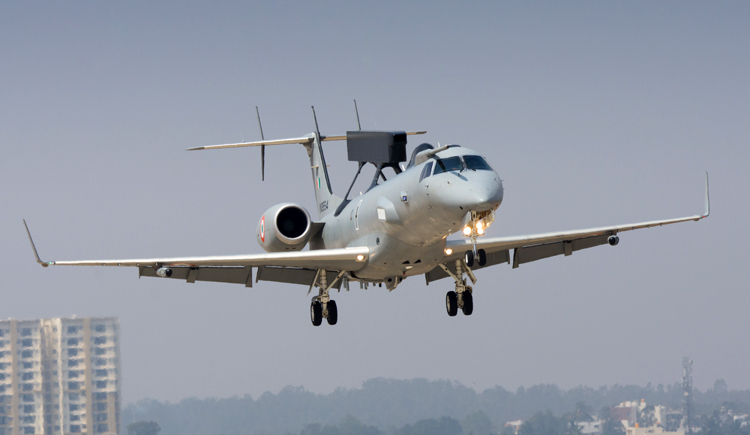
According to news reports of January 27, 2026, the Indian Air Force has given the Final Operational Clearance (FOC) to the DRDO's NETRA Airborne Early Warning and Control system. Development of NETRA commenced as a strategic imperative to bolster India's aerial surveillance capabilities, integrating indigenous sensors for detecting airborne and maritime threats over 360 degrees. The system mounts active electronically scanned array radars, electronic support measures, and communication suites on the EMB-145 airframe, enabling real-time battle management for controllers aboard and on the ground. Trials spanned several years, with the Indian Air Force actively participating in evaluations that validated mission systems including software-defined radios and radar warning receivers. By 2023, the third aircraft completed acceptance trials in Initial Operational Clearance (IOC).
The FOC granted now confirms that all three Embraer EMB-145-based platforms, delivered in Initial Operational Clearance configuration, now meet stringent operational standards following extensive trials. It marks the culmination of nearly two decades of effort since project sanction in 2004, overcoming challenges like radar integration and endurance enhancements. The two operational NETRA MK-1 aircraft, alongside a DRDO-IAF testbed, have already logged significant flying hours, proving reliability in diverse scenarios.
According to reports of January 27, 2026, the Indian Air Force has given the Final Operational Clearance (FOC) to the DRDO's NETRA Airborne Early Warning and Control system
NETRA's radars offer detection ranges exceeding 200-km, with provisions for network-centric warfare (NCW) integration. Operators benefit from glass cockpits displaying fused sensor data, facilitating command of fighter sweeps and surface strikes even in contested airspace. NETRA enhances the IAF's situational awareness amid rising threats along northern and western borders, reducing dependence on imported platforms. Future iterations include NETRA MK-2 on Airbus A321 airframes, cleared in 2025 for six units at a cost of ₹19,000 crore. These will feature gallium nitride-based AESA radars for 300–360-degree coverage, with collaborations involving Airbus Defence and Space.
On January 19, 2026, the DAC approved the acquisition of six Multi-Role Tanker Transport (MRTT) aircraft for the IAF at a cost of ₹517 crore ($1.1 billion). This would help boost the IAF's long-range airpower projection, enabling aerial refuelling, necessary in high-intensity warfare. This is all the more important due to India's security environment along the Line of Actual Control (LAC) with China and the volatile western frontier with Pakistan, where extended-range air operations, sustained combat air patrols, and deep-strike endurance increasingly determine escalation dominance.
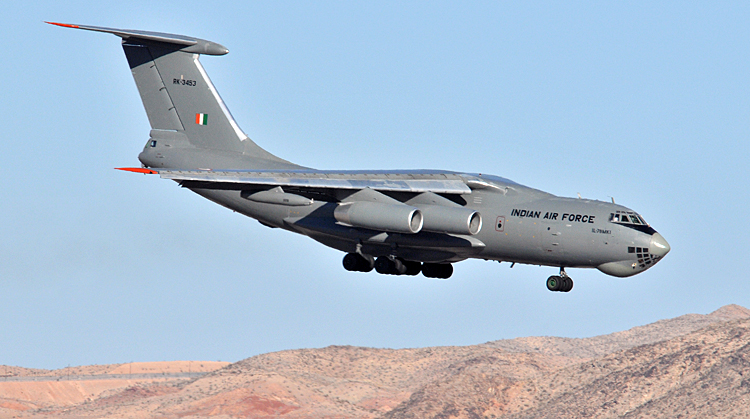
The Air Chief, Air Chief Marshal V.R. Chaudhari had said in an interview last year, “Mid-air refuellers will allow the IAF to conduct operations that were previously unimaginable, transforming our force from defensive to expeditionary, Hindustan Aeronautics Limited (HAL) has entered into an MoU with Israel Aerospace Industries (IAI) to convert civil (passenger) aircraft into Multi Mission Tanker Transport (MMTT) aircraft in India, according to the IAF. This acquisition will address the IAF's ageing IL-78MKI fleet, whose declining availability, limited compatibility with modern fighters, and supply-chain fragility under Western sanctions on Russia is constraining operational planning.
Collectively, the MRTT acquisition represents not merely fleet modernisation but a recalibration of India's deterrence posture, aligning airpower endurance with the strategic depth
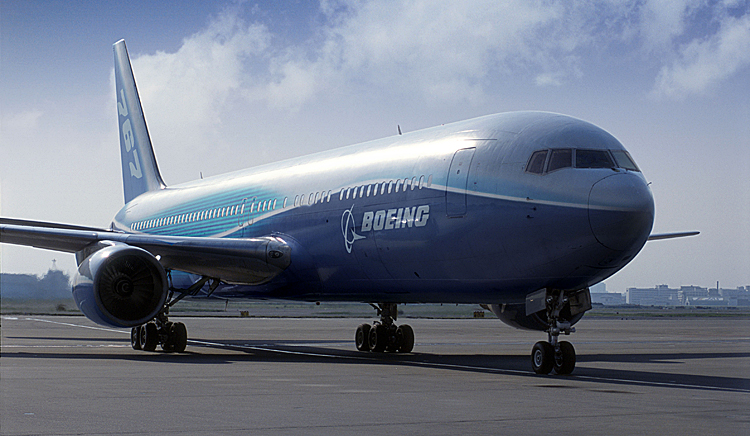
The decision to convert pre-owned Boeing 767 airliners into Multi-Mission Tanker Transports (MMTT) represents a pragmatic convergence of fiscal realism, industrial policy, and operational necessity within India's defence planning framework. Cleared under an Acceptance of Necessity in late 2025, the programme leverages a government-to-government agreement with Israel, positioning HAL and IAI as central nodes in the conversion ecosystem. The converted 767 MMTTs will integrate both boom and probe-and-drogue refuelling systems, enabling seamless compatibility across India's heterogeneous fighter and transport fleet. With a fuel capacity exceeding 90 tonnes, the platform can refuel up to eight fighters simultaneously, dramatically increasing sortie endurance and mission persistence during high-intensity operations. Beyond refuelling, the aircraft's multi-role configuration supports 50 tonnes of cargo, medical evacuation missions, and future integration of electronic warfare and indigenous datalink systems.
Collectively, the MRTT acquisition represents not merely fleet modernisation but a recalibration of India's deterrence posture, aligning airpower endurance with the strategic depth required to compete in an increasingly contested Indo-Pacific battlespace.