
The insightful articles, inspiring narrations and analytical perspectives presented by the Editorial Team, establish an alluring connect with the reader. My compliments and best wishes to SP Guide Publications.

"Over the past 60 years, the growth of SP Guide Publications has mirrored the rising stature of Indian Navy. Its well-researched and informative magazines on Defence and Aerospace sector have served to shape an educated opinion of our military personnel, policy makers and the public alike. I wish SP's Publication team continued success, fair winds and following seas in all future endeavour!"

Since, its inception in 1964, SP Guide Publications has consistently demonstrated commitment to high-quality journalism in the aerospace and defence sectors, earning a well-deserved reputation as Asia's largest media house in this domain. I wish SP Guide Publications continued success in its pursuit of excellence.
India is accelerating its drive for UAV and missile self-reliance through major partnerships signalling a rapidly maturing indigenous unmanned systems ecosystem
 |
The Author is Former Director General of Information Systems and A Special Forces Veteran, Indian Army |
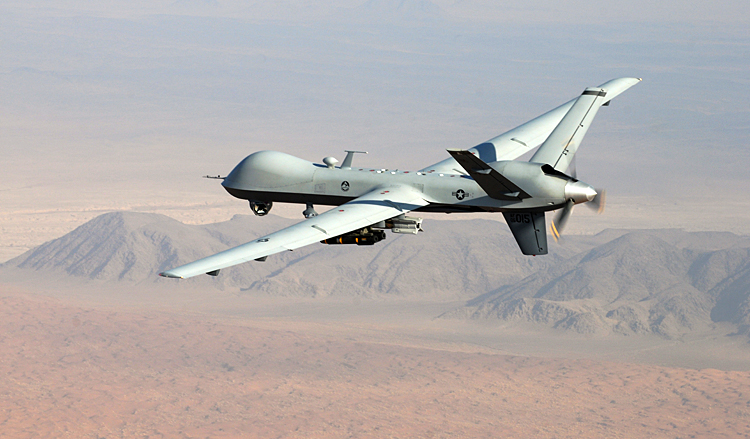
On October 31, 2025, a landmark partnership was announced between Larsen & Toubro (L&T) and US aerospace leader General Atomics Aeronautical Systems Inc (GA-ASI), with this collaboration aimed at jointly manufacturing advanced combat-proven drones in India. This marks a pivotal step toward India's goal of self-reliance in unmanned aerial systems (UAS) and unmanned combat capability. The announcement came shortly before the Ministry of Defence (MoD) was expected to issue a major tender worth about ₹30,000 crore for the acquisition of 87 x Medium Altitude Long Endurance (MALE) drones. This programme will allow Indian defence firms to partner with foreign original equipment manufacturers (OEMs) to bid for production, elevating India's indigenous capability in the UAV domain.
India's UAV development spans four decades plus, beginning with the DRDO's Lakshya programme in the 1980s. Designed as a high-speed target aircraft capable of Mach 0.8 flight, it pioneered India's early expertise in small gas-turbine engines through the PTAE-7. Lakshya's technological impact nurtured a generation of engineers skilled in propulsion and control systems. This was succeeded by Nishant in the 1990s; a tactical surveillance UAV employing catapult launch and parachute recovery. Meanwhile, Israel's Searcher and Heron UAVs entered Indian service, filling surveillance gaps and setting new performance benchmarks for endurance and payload capacity.
A landmark partnership was announced between Larsen & Toubro (L&T) and General Atomics Aeronautical Systems Inc (GA-ASI) aimed at jointly manufacturing advanced combat-proven drones in India
Rustom-I followed in the early 2000s as an advanced prototype featuring conventional take-off and landing capabilities. It paved the way for Rustom-II, later renamed TAPAS (Tactical Aerial Platform for Advanced Surveillance), which became India's most ambitious indigenous MALE programme. TAPAS integrates modern flight control systems, EO/IR payloads and satellite links—though challenges remain in propulsion reliability, flight duration and sensor integration. Parallel to TAPAS, the Aeronautical Development Establishment (ADE) has launched initiatives such as the ARCHER and Single Engine Twin Boom (SETB) UAVs, signalling a new approach grounded in modular design and private sector collaboration.
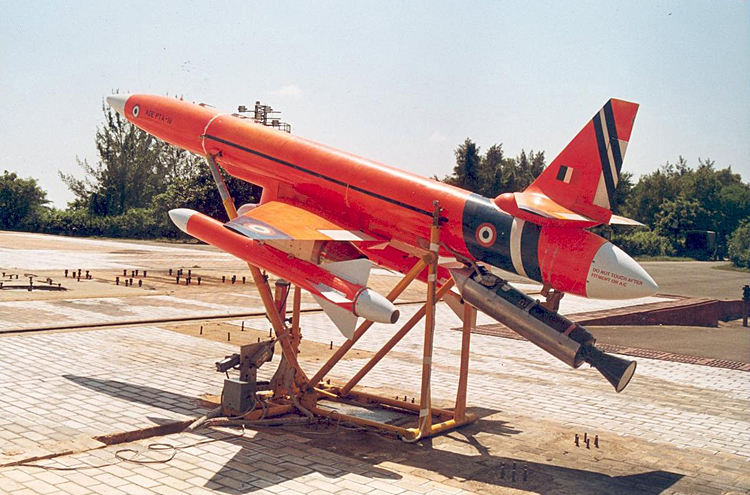
Through the above-mentioned L&T–General Atomics partnership, India is expected to produce variants of the MQ-series UAVs, including the battle-tested MQ-9 Reaper. These platforms have demonstrated unmatched endurance, precision strike capabilities and sensor integration across global combat theatres, from the Middle East to Eastern Europe. According to industry sources, the procurement of 87 MALE drones will adopt a two-vendor model, with production divided 64:36 between two Indian firms. This approach is to ensure the establishment of dual domestic manufacturing lines, strengthening supply chain resilience while accelerating delivery timelines. It also opens scope for exports in the future, as India positions itself as a competitive UAV producer.
Through the L&T–General Atomics partnership, India is expected to produce variants of the MQ-series UAVs, including the battle-tested MQ-9 Reaper
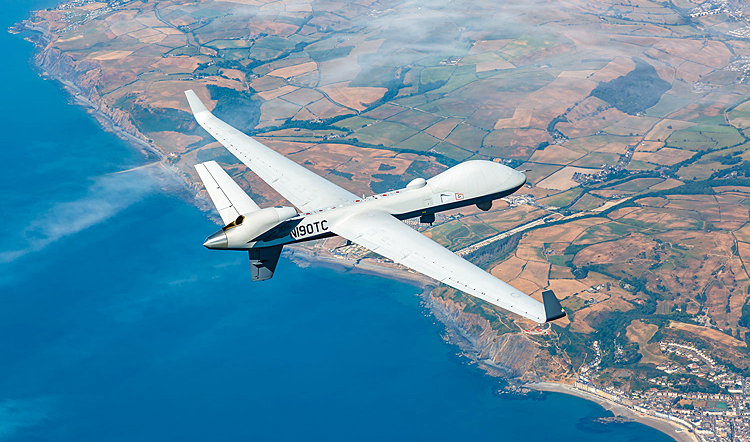
The manufacturing plan complements India's separate government-to-government deal with the US for 31 x MQ-9B Predator drones, classified as High Altitude Long Endurance (HALE) systems. The Predator fleet will enhance surveillance over the Indian Ocean and border regions. However, deliveries are projected only around 2029–2030, prompting the government to fast-track domestic production of MALE-class drones. Significantly, the India navy has been looking for jet-powered drones to cover the expanse of the Indian Ocean in real time; MQ-9B Predator drones are not jet-powered and many of them have been shot down by the Houthi.
According to reports, Israeli aerospace firms (longstanding partners in India's UAV ecosystem) are preparing to join the tender through joint ventures (JVs) with Indian defence companies. Notably, India is to manufacture two of the world's most advanced long-range missile systems; the 'Air Lora' quasi-ballistic missile and the 'Ice Breaker' smart cruise missile, in collaboration with Israel. Israel has agreed to a complete transfer of missile technology. The transfer will empower Bharat Electronics Limited (BEL) and Hindustan Aeronautics Limited (HAL) to manufacture these weapons in India.
The manufacturing plan complements India's separate government-to-government deal with the US for 31 x MQ-9B Predator drones, classified as High Altitude Long Endurance (HALE) systems
According to news reports of November 11, 2025, DroneAcharya Aerial Innovations Limited has achieved a significant milestone by securing a contract worth ₹7.12 crore from the Indian Army for the supply of First Person View (FPV) drones. The order, sanctioned by the Ministry of Defence (MoD) is part of the Army's ongoing efforts to integrate advanced unmanned systems into tactical operations. The contract encompasses both digital and analogue FPV drone variants, designed for high-precision missions and extensive operational flexibility. DroneAcharya was the only company to successfully qualify through the Army's exhaustive technical and field evaluations, which involved intensive trials under demanding operational conditions. The FPV drones delivered under this contract feature secure real-time video transmission channels and precise payload delivery capabilities. Incorporating dual safety mechanisms, electronic and mechanical, these drones prioritise reliability and mission assurance. The systems also include optimised optics and safety protocols to support both training environments and active tactical deployments.
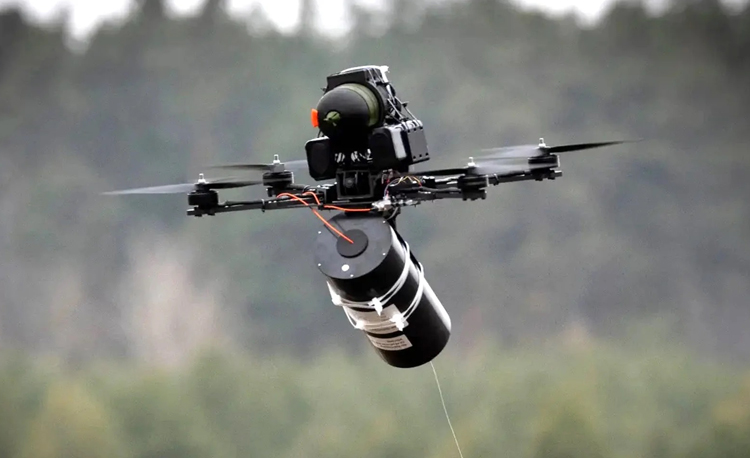
The delivery schedule for the entire consignment has been fixed within a four-month timeframe, underscoring the company's manufacturing readiness and supply-chain efficiency. The project will reinforce DroneAcharya's production standards and operational commitments to time-bound defence contracts, a critical factor in India's Make in India defence manufacturing framework. From a strategic perspective, this order significantly enhances DroneAcharya's standing within the Indian defence technology ecosystem. The FPV drone have been rapidly gaining importance in modern battlefield applications. By securing this deal, DroneAcharya underscores India's maturing capability in indigenous unmanned systems manufacturing, aligning with the country's strategic vision of technological self-reliance and operational superiority in the defence sector.