
The insightful articles, inspiring narrations and analytical perspectives presented by the Editorial Team, establish an alluring connect with the reader. My compliments and best wishes to SP Guide Publications.

"Over the past 60 years, the growth of SP Guide Publications has mirrored the rising stature of Indian Navy. Its well-researched and informative magazines on Defence and Aerospace sector have served to shape an educated opinion of our military personnel, policy makers and the public alike. I wish SP's Publication team continued success, fair winds and following seas in all future endeavour!"

Since, its inception in 1964, SP Guide Publications has consistently demonstrated commitment to high-quality journalism in the aerospace and defence sectors, earning a well-deserved reputation as Asia's largest media house in this domain. I wish SP Guide Publications continued success in its pursuit of excellence.
If executed well, it could redefine India's aerospace industry for decades, enabling India to achieve true aerospace self-reliance, as well as giving the IAF a strategic edge
 |
The Author is Former Director General of Information Systems and A Special Forces Veteran, Indian Army |
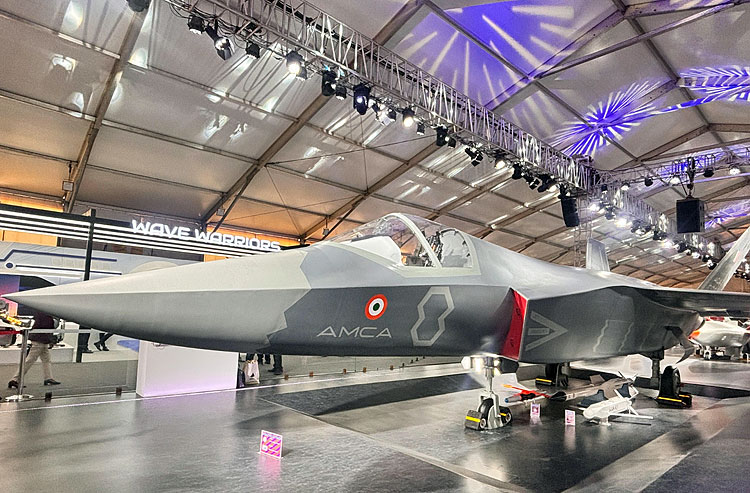
India's Advanced Medium Combat Aircraft (AMCA) programme, an ambitious 5th generation stealth fighter, is a critical defence aviation project for creating a long-term aerospace capability. Work on AMCA began several years ago. However, the programme gained fresh momentum after the Expression of Interest (EoI) by Aeronautical Development Agency (ADA), under the Department of Defence Research and Development (DR&D) within the Ministry of Defence (MoD), on June 18, 2025, aimed at shortlisting Indian companies for prototype development, prototyping, flight testing, and certification of the AMCA. The EoI invited 'reputed' Indian companies which are compliant with Indian laws and are experienced in the Aerospace and Defence sector.
Out of seven bidders, the government shortlisted three private firms on February 3, 2026: Tata Advanced Systems, Larsen & Toubro (L&T), and Bharat Forge; each bringing strength in large-scale manufacturing and systems integration. The surprise was that Hindustan Aeronautics Limited (HAL) was not chosen among three bidders. This marks the first time the state-run aircraft manufacturer will play no role in one of India's most critical military aviation programmes. HAL's bid, partnered with two smaller firms, reportedly failed to satisfy the essential requirements -details of which are not disclosed. The contract is anticipated to be awarded within the next few months.
Out of seven bidders, the government shortlisted three private firms - Tata Advanced Systems, Larsen & Toubro (L&T), and Bharat Forge, each bringing strength in large-scale manufacturing and systems integration
There is speculation that this marks India's full-throttle turn towards privatisation, which should have happened long back. But this may not be the case. HAL's exclusion perhaps has more to do with its capacity and pending orders, in addition to delayed deliveries for whatever reasons. But evaluation of the bidders would have entailed practical criteria, including technical expertise, manufacturing capability, financial strength, and existing order books. HAL already holds firm orders for over 180 LCA Tejas Mk1 fighters, and expects a similar number of Tejas Mk2 orders. Adding AMCA to this workload could stretch timelines and dilute focus.
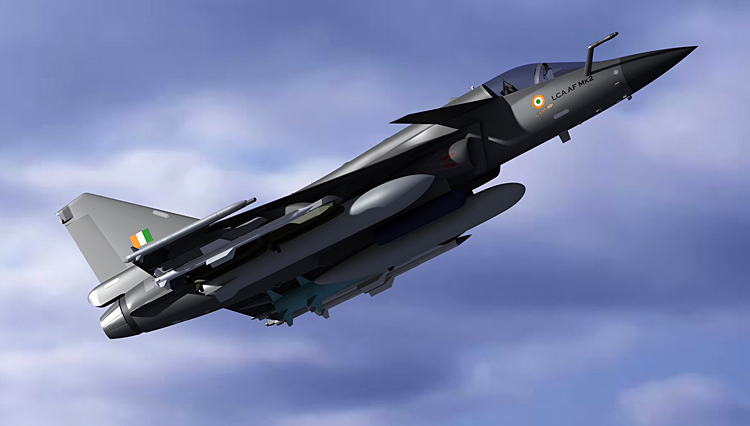
The uppermost concern is that none of the three bidders has built a combat aircraft before. But the AMCA does not depend on the manufacturer for design leadership. The ADA, which already has the experience of developing the LCA Tejas series, leads the AMCA design effort. The plan follows the standard DRDO–private sector model. Under this approach, government agencies handle design, while industry handles production; reducing the execution risk to manageable levels.
This marks the first time the state-run aircraft manufacturer HAL will play no role in one of India's most critical military aviation programmes
We must acknowledge that private sector response is much faster because of their work culture, compared to the governmental defence industry. Large defence programmes always face delays and roadblocks. India saw this clearly during the Tejas Mk2 development phase. Private companies usually respond faster to such challenges. They take quicker decisions and adjust supply chains more efficiently. This agility matters in a complex programme like AMCA. For this reason, private-sector leadership could help maintain momentum.
AMCA requires advanced manufacturing capability that does not fully exist in India today. Facilities for stealth composites, precision machining, and systems integration must be built from scratch, as no current manufacturer owns this complete capability. The company that builds these facilities will emerge as a major aerospace force in India. The AMCA programme is to be executed in two phases. Phase one will use an existing fourth-generation-class engine. Phase two will feature a more advanced version with a new indigenous engine.
The timeline for the AMCA remains ambitious: the first prototype is slated for its maiden flight in 2029, full development by 2034, and entry into production by 2035
The timeline for the AMCA remains ambitious: the first prototype is slated for its maiden flight in 2029, full development by 2034, and entry into production by 2035. This urgency stems from regional security dynamics, particularly China's deployment of J-20 fifth-generation fighters, the rollout of J-35 stealth aircraft—which Pakistan eyes for acquisition—and tests of purported sixth-generation platforms like J-36 and J-50.
In 2024, the Cabinet Committee on Security (CCA) had sanctioned AMCA's design and prototype development at an estimated cost of ₹15,000 crore. The Indian Air Force's modernisation blueprint calls for around 120 stealth fighters, equivalent to six squadrons, operational from 2035 onwards. These aircraft will anchor future air combat capabilities.
As of today, no consortium has complete AMCA capability. They will need to hire talent, partner with specialists, and build new facilities, which will take time and strong financial backing. From a manufacturing perspective, the government has taken a bold decision, which was very warranted. AMCA demands patience, funding, and steady political support. Within the next three to four months, the government will select a lead consortium. After that, details on factory locations, timelines, and investments will emerge. AMCA remains a challenging programme, which is an operational necessity. If executed well, it could redefine India's aerospace industry for decades; enabling India to achieve true aerospace self-reliance, as well as giving the IAF a strategic edge.