The insightful articles, inspiring narrations and analytical perspectives presented by the Editorial Team, establish an alluring connect with the reader. My compliments and best wishes to SP Guide Publications.
"Over the past 60 years, the growth of SP Guide Publications has mirrored the rising stature of Indian Navy. Its well-researched and informative magazines on Defence and Aerospace sector have served to shape an educated opinion of our military personnel, policy makers and the public alike. I wish SP's Publication team continued success, fair winds and following seas in all future endeavour!"

Since, its inception in 1964, SP Guide Publications has consistently demonstrated commitment to high-quality journalism in the aerospace and defence sectors, earning a well-deserved reputation as Asia's largest media house in this domain. I wish SP Guide Publications continued success in its pursuit of excellence.
India's proposed acquisition of 114 additional Rafale fighters would represent one of the largest combat aircraft procurements in its history and significantly enhance the Indian Air Force's operational strength. However, questions over technology transfer, production timelines and long-term strategic autonomy continue to dominate the debate.
 |
The Author is Former Director General of Information Systems and A Special Forces Veteran, Indian Army |
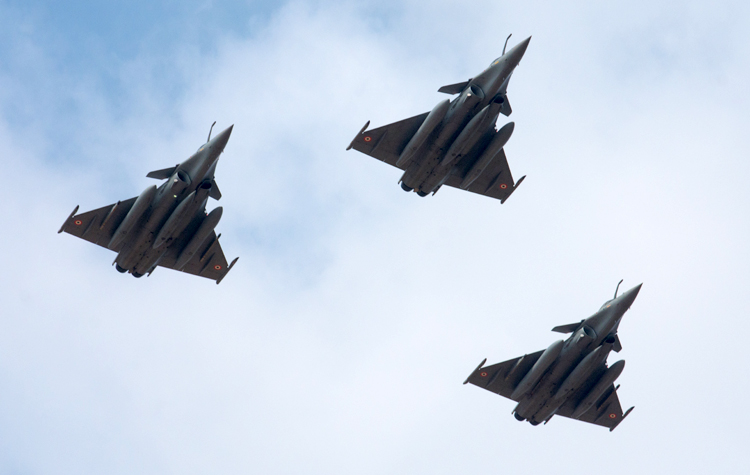
India has formally issued the Letter of Request (LoR) to France for the acquisition of 114 Rafale fighter jets in a government-to-government deal valued at approximately ₹3.25 lakh crore, according to news reports dated June 1, 2026. The Defence Acquisition Council (DAC), headed by Defence Minister Rajnath Singh, had cleared the proposal over four months ago.
The Indian Air Force (IAF) and Navy have already ordered 62 Rafale aircraft, and the new order will raise the total to 176
The news report quotes Ministry of Defence (MoD) sources as saying that 94 of the Rafale jets will be manufactured in India jointly by Dassault Aviation and an Indian company, while the remainder will be delivered directly from France. The French government is expected to respond to the LoR within two to three months. Negotiations are anticipated to conclude within a year, paving the way for the contract being signed.
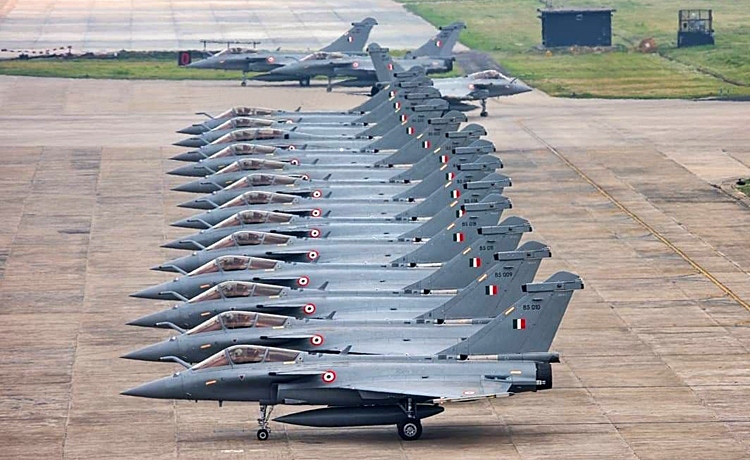
The Indian Air Force (IAF) and Navy have already ordered 62 Rafale aircraft, and the new order will raise the total to 176. With the Navy's stated intent to induct 31 more, India's Rafale fleet could exceed 200 aircraft in the coming years. The IAF's fighter squadron strength has dwindled to 29 squadrons, against the authorised strength of 42, creating a major capability gap considering the dual-front threat India faces. Induction of the 4.5-generation-plus Rafales is a vital measure to bridge the IAF's criticality gap.
India is expected to push for extensive Interface Control Documents (ICDs) and technical arrangements during the CNC stage
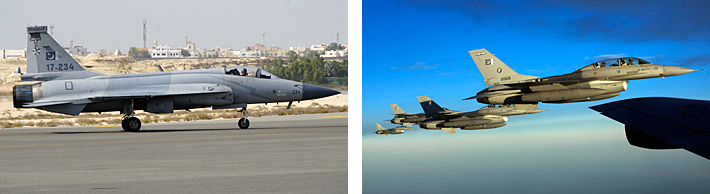
Pakistan Air Force (PAF) operates 20 combat squadrons—estimated to comprise 400–450 combat aircraft. These frontline squadrons include the JF-17 Thunder, co-developed with China, making up the bulk of the modern multi-role fleet; F-16 Fighting Falcon aircraft in various configurations (A/B/C/D) sourced from the US; the Chengdu J-10C advanced 4.5-generation Chinese multi-role fighter; Mirage III and Mirage V aircraft—older French-origin types being phased out; and F-7PG Chinese-built interceptors.
China's People's Liberation Army Air Force (PLAAF) and the PLA Navy (PLAN) operate 70–80 aviation brigades, collectively fielding more than 1,800 fighter aircraft. Each aviation brigade typically consists of four subordinate squadrons with 32–44 aircraft, depending on the specific model and mission. PLAAF is projected to reach approximately 50 tactical fighter squadrons by 2030, with roughly 10 squadrons of fifth-generation stealth aircraft. In addition, PLAN Aviation operates several brigades of carrier-capable and land-based strike fighters.
This would make India one of the largest Rafale operators in the world, with the IAF equipped with a fleet of F3R, F4 and F5 Rafales
IAF Chief Air Chief Marshal A.P. Singh visited France for four days commencing June 1, 2026. His engagements included meetings with senior French military officials and visits to Dassault Aviation and MBDA, the European missile consortium that supplies the IAF with the Meteor, MICA and SCALP missiles. His visit coincided with India finalising the LoR, expected to be dispatched shortly. Once France responds to the LoR, the process will advance to the Contract Negotiation Committee (CNC) stage, where commercial, contractual and production terms will be discussed before final approval by the Cabinet Committee on Security, headed by Prime Minister Narendra Modi.
Under the new plan, the IAF is expected to procure 88 single-seat and 26 twin-seat Rafale fighters. Of these, only 18 aircraft are likely to arrive in fly-away condition, while the remaining jets would be manufactured in India jointly by Dassault Aviation and an Indian company. India is not seeking access to the Rafale's sensitive source codes. Instead, India is expected to push for extensive Interface Control Documents (ICDs) and technical arrangements during the CNC stage, allowing integration of indigenous weapons and systems onto the Rafale platform over time, including the Astra BVRAAM, future variants of the BrahMos-NG missile and other domestically developed systems. Is this a sweet pill or will this happen only time will show.
French officials have indicated an interest in establishing a maintenance, repair and overhaul (MRO) facility, potentially in Hyderabad, to support the M88 engines powering the Rafale fleet. However, to allow digital integration of the jets with Indian weapons, radars and sensors, Dassault will need to make changes to the software of the onboard computing system to enable seamless command, weapons and data transmission.
Most importantly, the source codes for the aircraft's core software would remain under French control
French media reports indicate that France is preparing a comprehensive Rafale package to include F4 upgrades for the IAF fleet, going beyond the 114 additional Rafale deal. The package is also expected to upgrade the 35 Rafale F3R-standard jets already in service with the IAF to the latest F5 configuration, bringing the bulk of the IAF's Rafale fleet to a common advanced baseline.
Also, at least 24 of the additional 114 Rafales being ordered could be of the future Rafale F5 standard, which is expected to enter service after 2030. However, these 24 Rafale F5 aircraft would be manufactured in France, not in India. This would make India one of the largest Rafale operators in the world, with the IAF equipped with a fleet of F3R, F4 and F5 Rafales.
The French media report indicates that upgrading the IAF's Rafale F3R fighters to the F4 standard would enhance avionics, sensors, weapons integration, connectivity and maintenance architecture. The RBE2 AESA radar of the F3R would receive new operational modes, including Synthetic Aperture Radar, Ground Moving Target Indicator and Tracking, enabling it to generate high-resolution radar imagery at long ranges and track moving ground targets with greater precision. The Front Sector Optronics system would also be upgraded with a new-generation infrared search-and-track sensor, improving passive detection of low-observable and low-signature targets, including stealth aircraft. The F4 helmet-mounted display enables the pilot to cue weapons and sensors simply by looking at the target, reducing reaction time considerably. In addition, the cockpit features larger, high-resolution side displays, improving data fusion and situational awareness in multi-domain missions.
With such a massively costly deal, why didn't we bargain enough for full technology transfer?
'Make in India' production is expected to commence only from 2030. Moreover, the last delivery of the 114 Rafales is unlikely before 2038. Most importantly, the source codes for the aircraft's core software would remain under French control, implying that France will have the upper hand in every future upgrade. With such a massively costly deal, why didn't we bargain enough for full technology transfer?
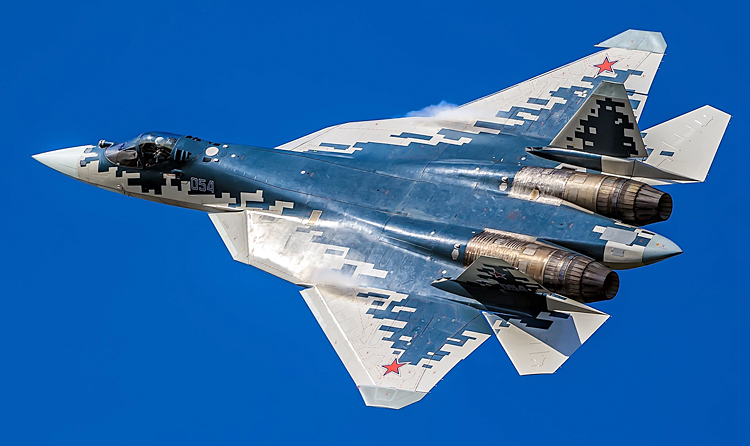
Russian President Vladimir Putin has renewed his offer of the Su-57E (described as being better than the Rafale and costing half as much) with 100 per cent transfer of technology (ToT) under 'Make in India'. A prominent 2025 study by the French Institute of International Relations (IFRI), which included senior veteran French Air Force officers as part of the study group, concluded that the combat survivability of 4.5-generation Rafale fighters against next-generation peers such as the Russian Su-57 and Chinese J-20 would be significantly challenged. The study concluded that non-stealth platforms such as the Rafale could face severe attrition within three days in high-intensity combat scenarios. The irony is that India will unlikely take Putin's offer for fear of US sanctions; or keep Russia engaged in negotiations till US President Donald Trump exits the scene.
A most disturbing issue is not only the excessive delay in production of the LCA Tejas Mk1A, but also that 199 test reports for parts supplied for the indigenous fighter are fraudulent, impacting its security and quality control.