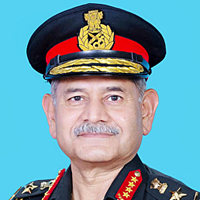
The insightful articles, inspiring narrations and analytical perspectives presented by the Editorial Team, establish an alluring connect with the reader. My compliments and best wishes to SP Guide Publications.
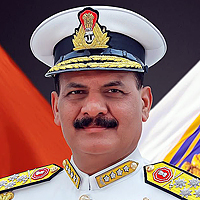
"Over the past 60 years, the growth of SP Guide Publications has mirrored the rising stature of Indian Navy. Its well-researched and informative magazines on Defence and Aerospace sector have served to shape an educated opinion of our military personnel, policy makers and the public alike. I wish SP's Publication team continued success, fair winds and following seas in all future endeavour!"

Since, its inception in 1964, SP Guide Publications has consistently demonstrated commitment to high-quality journalism in the aerospace and defence sectors, earning a well-deserved reputation as Asia's largest media house in this domain. I wish SP Guide Publications continued success in its pursuit of excellence.
Looking towards the 6th generation jet, while still developing the 5th generation AMCA, aligns with India's long-term air power strategy, the intent being to be at the forefront of future aerospace technology rather than just a consumer
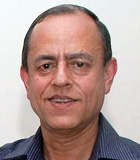 |
The Author is Former Director General of Information Systems and A Special Forces Veteran, Indian Army |
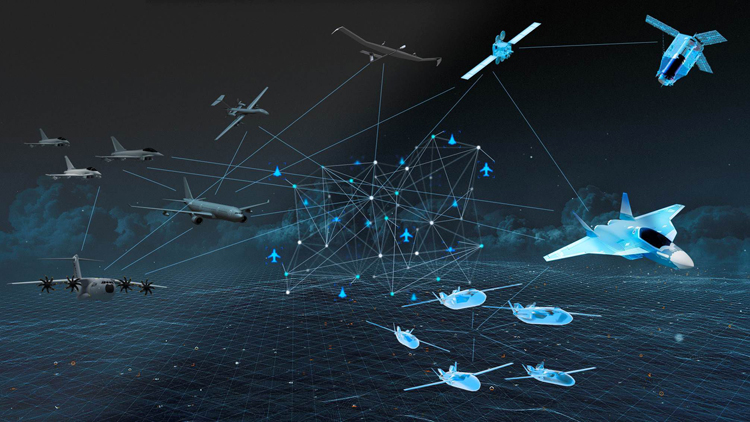
The Chief of Defence Staff (CDS) General Anil Chauhan recently informed the Parliamentary Standing Committee on Defence that India is exploring partnerships to join a global consortium for developing sixth-generation fighter aircraft to avoid lagging in future air combat, aiming for advanced capabilities beyond fifth-gen platforms. India is evaluating joining either the GCAP (UK-Italy-Japan) or FCAS (France-Germany-Spain) programmes, focusing on artificial intelligence (AI)-driven, manned-unmanned teaming capabilities, while also developing the indigenous Advanced Medium Combat Aircraft (AMCA). This is in backdrop of recognising that true 6th-gen platforms are still under development globally. General Chauhan noted that while other nations, including China, claim 6th-gen progress, these capabilities are likely still in the development stage.
India is evaluating joining either the GCAP (UK-Italy-Japan) or FCAS (France-Germany-Spain) sixth-generation fighter aircraft programmes
These jets are expected to act as command posts for controlling UAVs/drones, incorporate high-level artificial intelligence, networking, advanced data analytics, and improved stealth technology. By looking towards the 6th generation jet, while still developing the 5th generation AMCA, aligns with long-term air power strategy, with an optimistic view of induction by the mid-2030s; the intent being to be at the forefront of future aerospace technology rather than just a consumer.
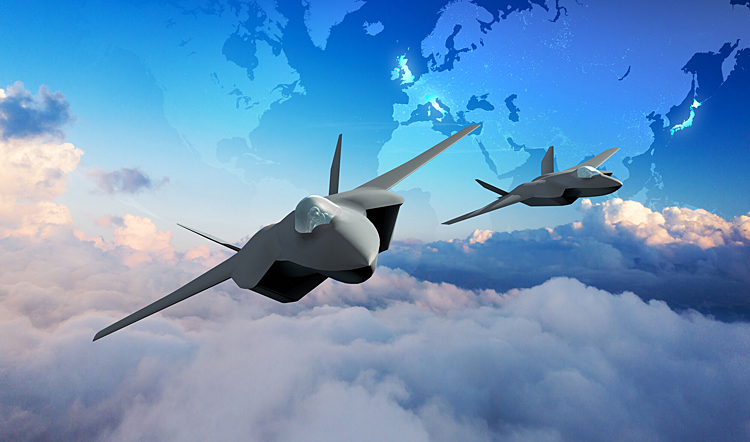
Naturally there are apprehensions about the gap between aspiration and capability, especially with regard to the timeline of 2030s for fielding the 6th generation fighter jet; at a time when the schedule of fielding the AMCA remains ambiguous. Moreover, the last of the Rafales of the 114 jets under the yet to be signed $39-40 billion deal are unlikely to be delivered before 2038. While India remains committed to locally developing the AMCA, this programme is still in its incipient developmental stages, with timelines that extend well into the next decade and even beyond. Critical technologies — stealth materials, advanced engines, sensor fusion and others — are nowhere near being realised indigenously. Hence, the complexity, cost and timelines associated with sixth-generation technologies – from AI, advanced propulsion and unmanned-unmanned teaming – make international collaboration increasingly unavoidable. The CDS also emphasised that decisions would be guided by strategic autonomy, access to technology and long-term industrial benefits. But the hard truth is that even in the case of the 114 additional Rafales being procured, technology of the inner software is not being transferred to India.
While India remains committed to locally developing the AMCA, this programme is still in its incipient developmental stages, with timelines that extend well into the next decade and even beyond
India's continued dependence on imported engines underscores strategic dependence. The proposed partnership aims to leverage Safran's expertise in advanced materials, turbine technology and design processes, while building domestic capability that would take considerable time. The bottom-line is that despite decades of effort, India still requires external assistance for the most critical aerospace technology, highlighting both the scale of the challenge and the cost and time involved in this endeavour.
According to a report in the media, a cross-section of Indian aviation industry officials argued that showcasing such advanced concepts without first consolidating the basics was not an illustration of strategic vision but a "feeble and impotent" attempt at projecting capabilities that do not yet exist domestically. The issue, they stressed, was not about thinking ahead – every major air power is already conceptualising sixth-generation platforms that integrate AI, unmanned teaming, advanced sensors, and network-centric warfare, but about demonstrable capability, not aspirational projection.
The complexity, cost and timelines associated with sixth-generation technologies – from AI, advanced propulsion and unmanned-unmanned teaming – make international collaboration increasingly unavoidable
There is no denying that India has wasted years in developing indigenous capabilities, and even today despite the sloganeering of Atmanirbhara, the indigenous content remains small and many times it is reduced to assembling products. We have also suffered avoidable delays in initiating the AMCA programme, having wasted $295 million and years on the Fifth Generation Fighter Aircraft (FGFA) programme, before exiting it.
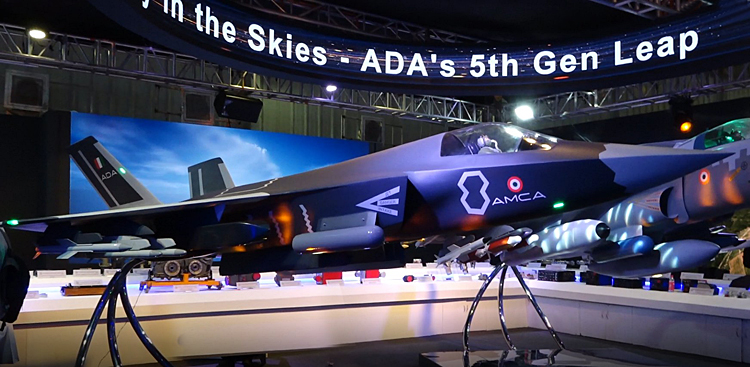
But the fact is that India does need a 6th-generation fighter jet as soon as possible to counter escalating threats to national security, accentuated by the ongoing US-Israel war on Iran. Can India do this on its own? The straight answer is no, to avoid another disaster like the FGFA. Therefore, a partnership in a European sixth-generation fighter programme has become necessary, to avoid lagging behind global standards of technology in the aerospace industry.
The current regional security environment leaves no room for complacency, driving an urgent need for state-of-the-art aerial combat capabilities. According to open-source intelligence (OSINT), China is already fielding fifth-generation platforms like the J-20 and J-35, and are reportedly conducting flight tests for distinct sixth-generation prototypes (such as the J-36 and J-50). However, not much time should be wasted in evaluating and joining the GCAP or the FCAS. Most important is that India must have a substantial voice in the aircraft's core requirements, structural design, and weapons integration.
Despite decades of effort, India still requires external assistance for the most critical aerospace technology
The quantum of technical contribution by India would remain unknown, but India will certainly be interested in placing a large order for the sixth-generation fighter even though individual cost of the jet is projected to cost upwards of €100 million. This strength should be used to demand 100 per cent transfer of technology (ToT). For that matter, India should convey to France that the deal for 114 Rafales costing $29-30 billion will only be inked with 100 per cent ToT, especially when only the last few will be 5th generation jets. Beyond India's capital investment into the sixth-generation fighter programme and large procurement of these jets, India's expanding defence industrial base offers valuable expertise in software, systems integration, and complementary technologies.
One view is that with Rafales already on the IAF's inventory; India may prefer joining the French-led FCAS programme; especially since it would also accommodate carrier-based operations for the navy. However, these should not override other considerations. Besides, there is also a need to balance the resources for the AMCA programme (which aims for a 5.5 gen fighter) with the sixth-generation jet programme, especially if the AMCA is not going to be wholly indigenous, as is being projected.
Finally, looking at US President Donald Trump's propensity to run riot with global supply chains, India should be prepared for delays in aerospace programmes having foreign participation. Moreover, European affiliations and attitudes may change after Donald Trump exits the scene.