

The insightful articles, inspiring narrations and analytical perspectives presented by the Editorial Team, establish an alluring connect with the reader. My compliments and best wishes to SP Guide Publications.
"Over the past 60 years, the growth of SP Guide Publications has mirrored the rising stature of Indian Navy. Its well-researched and informative magazines on Defence and Aerospace sector have served to shape an educated opinion of our military personnel, policy makers and the public alike. I wish SP's Publication team continued success, fair winds and following seas in all future endeavour!"

Since, its inception in 1964, SP Guide Publications has consistently demonstrated commitment to high-quality journalism in the aerospace and defence sectors, earning a well-deserved reputation as Asia's largest media house in this domain. I wish SP Guide Publications continued success in its pursuit of excellence.
The ongoing West Asia conflict underscores how this modern warfare is triggering global economic disruption, reshaping alliances, and risking a prolonged, Vietnam-like quagmire with far-reaching consequences
 |
The Author is former Chief of Staff of a frontline Corps in the North East and a former helicopter pilot. He earlier headed the China & neighbourhood desk at the Defence Intelligence Agency. He retired in July 2020 and held the appointment of Addl DG Information Systems at Army HQ. |
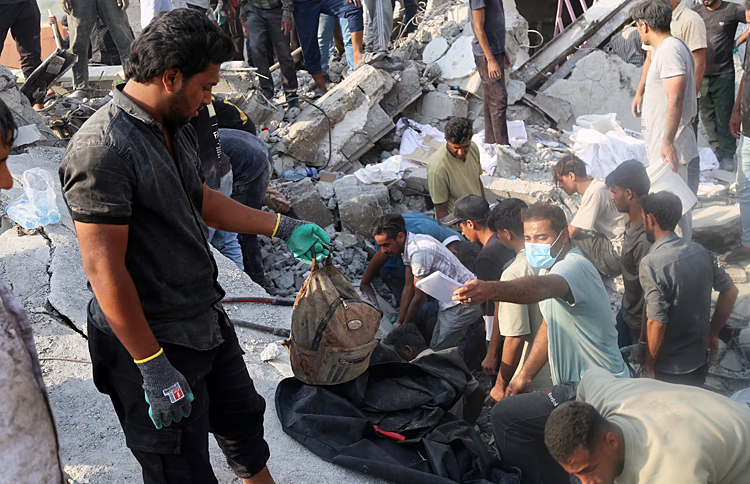
One of the most memorable and most poignant moment of my recent visit to Vietnam was the few hours I spent at 'The War Remnants Museum' in Saigon, now renamed the Ho Chi Minh City after its legendary revolutionary leader who spearheaded the gruelling decades long guerrilla war to force the Americans to humiliatingly withdraw. I also visited the intricate underground tunnels of Cu Chi which tested the American soldier to the core, vaporising their will to fight. To understand the US invasion of Vietnam, and contextualise its devastating impact on the country's civilians, this remarkable and deeply moving museum is an essential visit. Many of the atrocities documented here are already well publicised.
The indiscriminate use of advanced stand-off weapons and AI-enabled targeting is redefining "collateral damage" in modern warfare
Much of the disturbing photography of war atrocities come from US sources, including the images of the My Lai massacre of March 16, 1968 where more than 500 unarmed South Vietnamese civilians were brutally killed by US soldiers. Some of the images on show are very upsetting, in particular photos of widespread destruction from US napalm bombs and the horrific toxic effects of Agent Orange on Vietnamese citizens. Over 3 million Vietnamese were killed and more maimed for life. The genetic disorder caused by these chemical agents continues to this day with horrific disfigurement of children born in the region. All because the American government feared that the success of communist march into South Vietnam would have 'Domino Effect', spreading communist ideology to the rest of the region and the wider world.
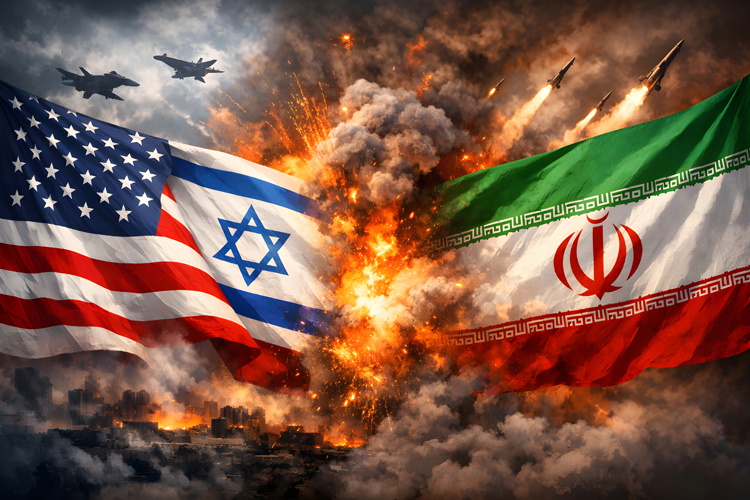
But why talk about Vietnam when the theatre of war today is West Asia? Well, one reason is that on February 28, 2026, during the opening hours of the assault on Iran, a missile struck a girls' school located in the city of Minab, southern Iran, killing more than 150 school girls amongst dozens of others, reminding the world of the horrors of Mai Lai. The indiscriminate bombing campaign by Israel and the US through stand-off munitions including bombs, missiles and rockets, reportedly using Artificial Intelligence (AI) tools without much human interface or supervision bares new tools of atrocities on humanity, often dismissed by the US leadership as "Collateral Damage". No accountability, no remorse and in fact a brazen 'gong ho' attitude to threaten more of the same, all on the pretext of a potential danger to the US from a possible development of a nuclear weapon by Iran, even though its own Director of National Intelligence (DNI) Tulsi Gabbard has explicitly ruled it out in assessments and testimonials.
The closure of the Strait of Hormuz represents not just a regional crisis but a systemic shock to the global "real economy"
In a dangerous and ominous turn, Israel and the US continue to target Iranian nuclear facilities, hugely escalating chances of a radiation fall-out that can seriously engulf the entire region. In retaliation, Iran has struck the Dimona nuclear reactor site in Israel, hitting peripheral facilities while leaving out the core dome untouched. The ability of Iranian missiles to penetrate the layers of Iron Dome, David's sling and Arrow systems of Israel points to the limitations of much vaunted military might of Israel.
So, let us summarise the 'Collateral Damage' so far. The present conflict has created a systemic disruption across multiple global sectors, extending far beyond the battlefield. Unlike traditional financial crises driven by credit bubbles or market failures, recent global shocks, including the COVID-19 pandemic, the Russia-Ukraine war and the ongoing West Asia conflict, originate in the "real economy," disrupting the physical movement of goods, energy, people, and capital. The Strait of Hormuz, through which nearly one-fifth of global petroleum and a large portion of LNG trade flows, has been effectively shut down with dozens of oil tankers in flames and crippled by the withdrawal of war-risk insurance for shipping.
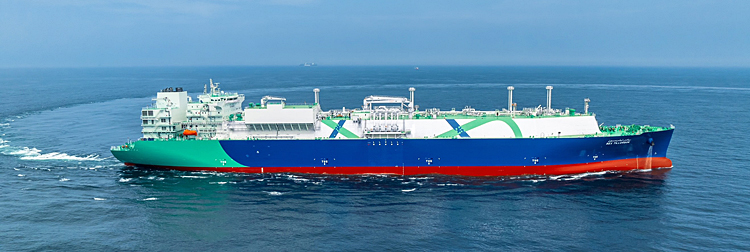
QatarEnergy, the state-owned energy company and the world's single largest LNG exporter, announced force majeure following Iranian drone strikes targeting facilities at RasLaffan and Mesaieed Industrial City. The attacks forced Qatar to halt production at a major 77-million-ton-per-year LNG facility, along with associated downstream products such as urea, polymers, methanol, and aluminium, affecting roughly 20 per cent of global LNG supply if the disruption persists. The declaration allows QatarEnergy to suspend contractual delivery obligations due to circumstances beyond its control. Several major LNG buyers, including Shell, TotalEnergies, and some Asian firms, have also declared force majeure to their customers, indicating that Qatari LNG deliveries may be disrupted.
India's economic vulnerabilities—from LPG supply to MSME viability and remittances—highlight the far-reaching domestic impact of distant conflicts
The disruption has significant implications for Europe and Asia, where countries rely heavily on Qatari LNG. Europe, in particular, has become dependent on seaborne LNG imports after reducing reliance on Russian pipeline gas, making the region vulnerable to supply shortages and price spikes. Energy markets have already reacted, with oil prices shooting up 20 per cent amid concerns over Middle Eastern energy infrastructure and shipping routes. Such disruptions immediately affect global supply chains, energy prices, and trade confidence, producing ripple effects across industries and economies worldwide.
The 'Collateral Damage' to India is slowly playing out in real life despite our diplomatic tight-rope walking and our steadfast oil imports from Russia withstanding relentless American pressures. The domestic LPG supply remains vulnerable as disruptions tighten imports, and restaurants and PGs shutting down as commercial LPG cylinders vanish into the black market. The fertiliser output shall be severely impacted. Rising war-risk premiums are emerging as a key pressure point for exporters and shipping lines amid the conflict. Our plastic-processing sector is facing shutdowns as polymer prices surge up to 70 per cent. The spike in petrochemical costs and supply uncertainty is making operations unviable for MSMEs across states. Plastic-based packaging used by textile exporters has seen prices double in the short term. Darjeeling's premium first flush tea crop is at risk due to shortages of commercial LPG. Fuel curbs could disrupt processing during the most valuable harvest period, threatening exports and revenues. Not to forget, the uncertainty that confronts the over nine million Indian diaspora working in the region, mostly at the bottom of the pyramid. Remittances from the Gulf which accounted for roughly 40 per cent of the total is under threat.
At the global arena, this war is delivering some very unintended consequences. The already testy and frayed trans-Atlantic relationship has hit a new bottom as President Trump gets increasingly frustrated that its 'Western Allies' in the NATO are hesitant to joining his war and help in opening the Hormuz Strait. Even though 22 countries led by the UK, France, Germany, Italy, the Netherlands and Japan effective March 19, 2026 have signalled willingness to join the efforts to keep merchant shipping pass through the Strait of Hormuz, these are mere statements without deploying a single naval platform in the region. Western Europe is racing to reopen natural gas supply lines from Russia, closed since the Ukraine war broke out in February 2022. The blowing up of Nord Stream II by suspected American-Ukrainian clandestine underwater sabotage operations on September 26, 2022 will now be viewed through a different prism.
The war is accelerating a geopolitical shift, with Russia re-emerging as both an energy supplier and a potential security partner in West Asia
The West Asian oil oligarchies are increasingly realising the flip side of total dependence on American security umbrella, the "Oil for Security" petrodollar arrangement that has ruled the world for the past five decades. Oil and gas refining and loading terminals across the UAE, Qatar, Bahrain, Kuwait and Saudi Arabia are in flames as Iran intensifies its missile and drone barrages under dwindling stockpile of pricey American interceptor air defence missiles and destruction of key THAAD and AN/TPY phased array air defence radars. Back-channels are at work, looking at Russia for help.
Even before the first strikes of February 28, 2026 set the West Asia in flames, the US was fighting a bruising economic war with its largest trading partners Canada and Mexico. Four weeks into the war, the cracks are widening as President Trump continues to heap humiliations on Canadian Prime Minister Carney and Mexican President Claudia Pardo who are seen to be effectively outmanoeuvring his tariff threats.
The return of Russian oil and gas into the global supply chain, and being seen as an alternate security provider to the Gulf, may perhaps be the most striking unintended 'collateral damage' in this war, though this doesn't diminish the human costs of thousands killed and maimed in Iran and Lebanon due to indiscriminate aerial bombings by the US and Israel forces. The sharp spike in oil prices will help soar up the Russian and Iranian coffers in the long term.
As and when the situation cools down in the Middle-East, there will be a huge demand for reconstruction efforts including oil, gas, power and real estate infrastructures that have already suffered extensive damage and which are continuing to be targeted. Chinese construction firms and Indian labour may be back in business at a scale still not being comprehended enough. Similar opportunity may open up for the IT sector as there has been extensive damage to AI hyper data centres built across the region by American big tech and systematically targeted by Iran through cyber kinetic operation hitting their cooling towers. But all this has to wait for the war to get over.
Any deployment of US ground forces risks repeating the strategic and human catastrophe of Vietnam in a new and far more volatile theatre
It took 20 years of American efforts to see Afghanistan transit from Taliban to Taliban. This time it took only seven days for Iran to transit from Khamenei to Khamenei. The intended regime change operation has spectacularly backfired. Iran is not Venezuela.
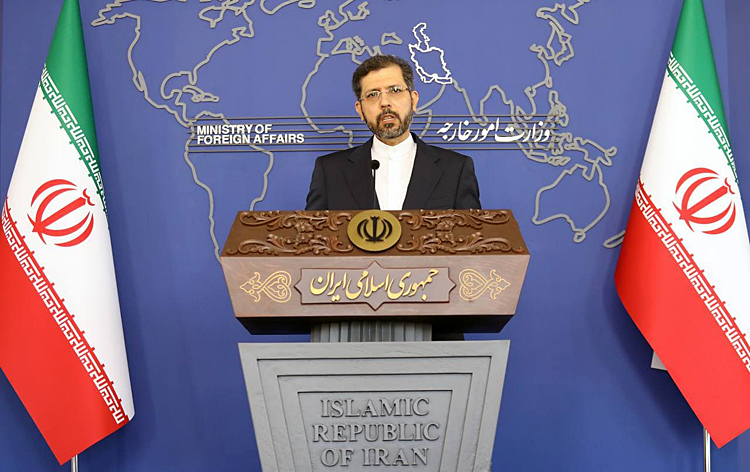
Coming back to my opening theme alluding to Vietnam, Iranian Deputy Foreign Minister Saeed Khatibzadeh has warned that the US could face another Vietnam if it deploys 'boots on the ground', i.e. ground troops in the war with Iran. Even as American amphibious naval ships purportedly carrying thousands of US Marines and special forces heads towards the Gulf, a bruising and sad re-enactment of the horrors of the war in Vietnam is a very distinct possibility. And so maybe the outcome.