The insightful articles, inspiring narrations and analytical perspectives presented by the Editorial Team, establish an alluring connect with the reader. My compliments and best wishes to SP Guide Publications.
"Over the past 60 years, the growth of SP Guide Publications has mirrored the rising stature of Indian Navy. Its well-researched and informative magazines on Defence and Aerospace sector have served to shape an educated opinion of our military personnel, policy makers and the public alike. I wish SP's Publication team continued success, fair winds and following seas in all future endeavour!"

Since, its inception in 1964, SP Guide Publications has consistently demonstrated commitment to high-quality journalism in the aerospace and defence sectors, earning a well-deserved reputation as Asia's largest media house in this domain. I wish SP Guide Publications continued success in its pursuit of excellence.
Engine supply delays severely affect indigenous fighter programmes, worsening the Indian Air Force's operational deficit—which currently stands at ∼29 active fighter squadrons against an authorised strength of 42 needed for a two-front threat.
 |
The Author is Former Director General of Information Systems and A Special Forces Veteran, Indian Army |
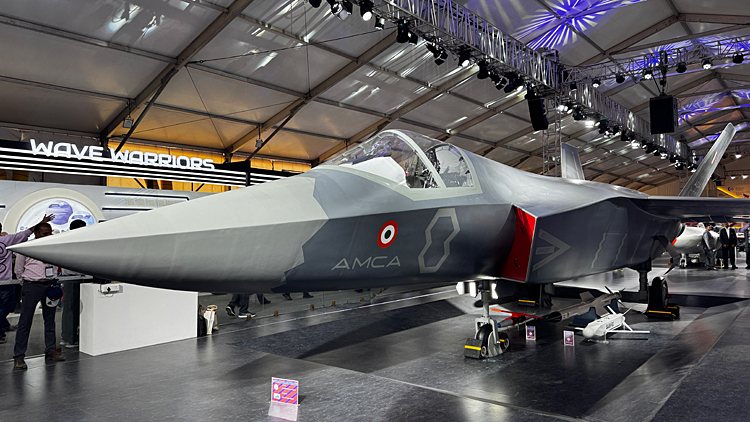
India's Advanced Medium Combat Aircraft (AMCA) project has encountered a significant hurdle in its engine acquisition process. Negotiations with General Electric (GE) for the F414 engines, which are intended to power the AMCA MK-1 prototypes, have stalled due to a steep increase in quoted prices.
Negotiations with General Electric for F414 engines powering India's AMCA Mk-1, Tejas Mk-2, and TEDBF have stalled after GE increased prices to over ₹200 crore per unit (a ~300 per cent escalation) and requested ₹6,000 crore to build an Indian assembly line.
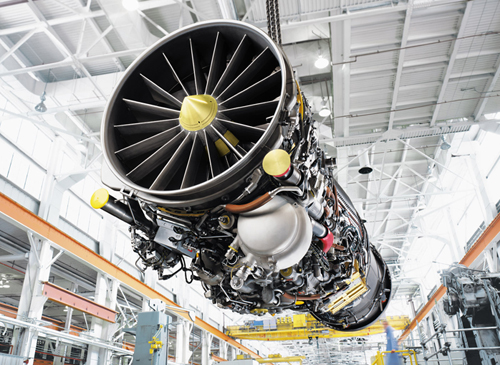
Initial estimates placed the cost of each F414 engine at around ₹70–80 crore, but GE has now demanded prices exceeding ₹200 crore per unit, representing a nearly 300 per cent escalation. This price surge has become the principal sticking point in commercial discussions. While technical negotiations have been completed, including agreements on technology transfer frameworks, the financial terms remain unresolved. GE has also sought an investment of approximately ₹6,000 crore to establish a dedicated assembly and manufacturing line in India, which would cater to future requirements of the Tejas Mk-2, AMCA production batches, and the Twin-Engine Deck-Based Fighter (TEDBF). Is this by design, engineered by America's Donald Trump Administration, while the US actions even before looked delaying the LCA project in deliberate fashion, to make India more dependent on the US.
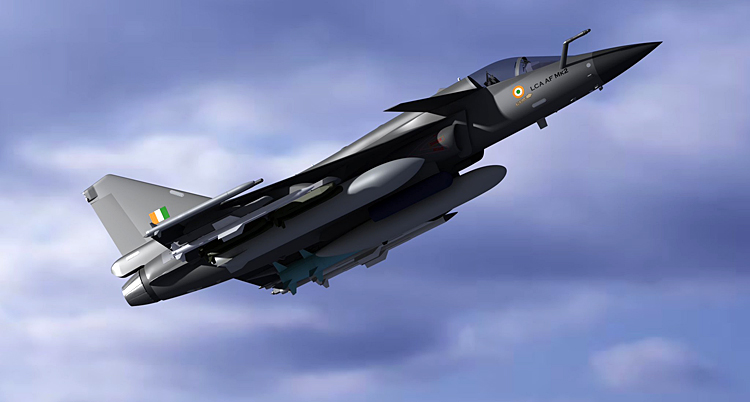
Modernisation plans of the Indian Air Force (IAF) are heavily dependent on the AMCA programme. The prototype phase alone requires 15x F414 engines for five flying prototypes. Beyond this, India's long-term requirement for the engine is projected to exceed 200 units, covering the Tejas Mk-2 and TEDBF programmes. This dependence gives GE considerable leverage, as changing the engine at this stage would be extremely difficult due to the AMCA's airframe design already being frozen around the F414.
China has intensified deployments of its fifth-generation J-20 'Mighty Dragon' stealth fighters at airbases targeting India, giving the PLA Air Force a stealth edge over non-stealth IAF assets while India's AMCA remains at least a decade away.
GE has cited that delays are compounded by global supply chain disruptions, inflationary pressures, and shortages of aerospace-grade materials, but that may not be all. GE Aerospace supplies the F414 engine to several nations globally, either directly for their indigenous aircraft programmes or via the export of US-manufactured military jets. Major aircraft powered by the F414 engines include the Boeing F/A-18E/F Super Hornet, Boeing EA-18G Growler, Saab JAS 39E/F Gripen (Sweden), KAI KF-21 Boramae (South Korea), Tejas Mk2 & AMCA (prototypes India), and NASA X-59 QueSST. Australia, Kuwait and Brazil operate aircraft supplied by the US powered by F414 engines. Currently, Indonesia is on track to receive the F414 engine through its planned adoption and involvement with South Korea's KF-21 fighter programme. So, it is a question of who GE prioritises for supply of these aero-engines, and will obviously go by the directions of what the US Administration wants.
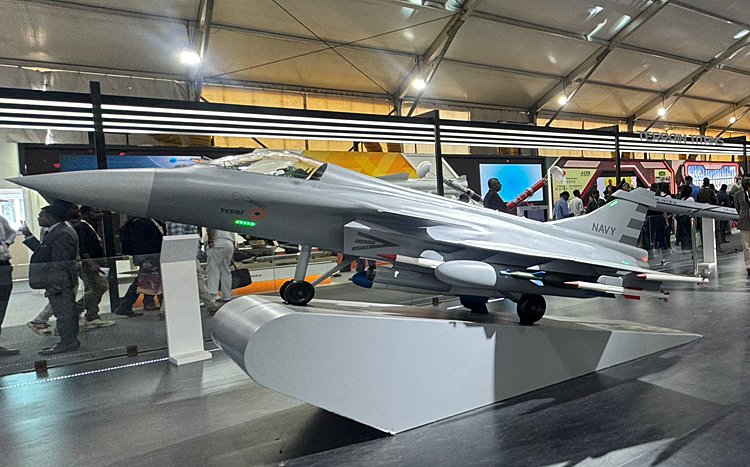
The IAF faces a current shortfall of 13 fighter squadrons, operating roughly 29 operational squadrons against an authorised strength of 42 squadrons; 42 operational fighter squadrons required to manage a two-front conflict scenario. The deficit is planned to be bridged over time through indigenous manufacturing programmes like the HAL Tejas (including Tejas Mk1A and Mk2 variants) alongside ongoing considerations for multi-role fighter aircraft (MRFA) acquisitions. Factors like delayed supply of F414 engines has badly affected the modernisation programme of the IAF: the LCA Tejas production, Tejas Mk-2, AMCA and the TEDBF included.
While analysts estimate China could field nearly 1,000 J-20s by 2030, Beijing is also rapidly advancing flight tests on its third 6th-generation fighter configuration—potentially putting it ahead of Western 6th-gen programmes.
The above needs to be viewed in the backdrop that China has stepped up operational deployments of its frontline J-20 'Mighty Dragon' stealth fighter jets at airbases which are ranged against India. The J-20 has significant stealth characteristics which enable it to dominate contested airspace. Satellite imagery of early July 2026 shows at least 12 Chinese J-20 stealth fighter jets are facing India. On July 9, seven J-20s were positioned on the tarmac at Hotan, a dual-use (civil and military) airbase in the Xinjiang Uyghur Autonomous Region; 389-km from Leh and 245-km northeast of the IAF airfield at Daulat Beg Oldie (DBO) north Ladakh. Another set of imagery shows four J-20s on the flightline at Damxung airbase, part of the Tibetan Lhasa prefecture; 344-km northwest of Tawang in Arunachal Pradesh. With a miniscule radar signature, on account of its advanced stealth shaping, the J-20 retains a significant edge over the IAF's current generation of fighter jets, including the French-built Dassault Rafale, which are non-stealth platforms. India currently does not operate any stealth fighters with the AMCA at least a decade away from entering squadron service, assuming requisite aero-engines supply and key technologies onboard are successfully validated in an extensive flight-test programme.
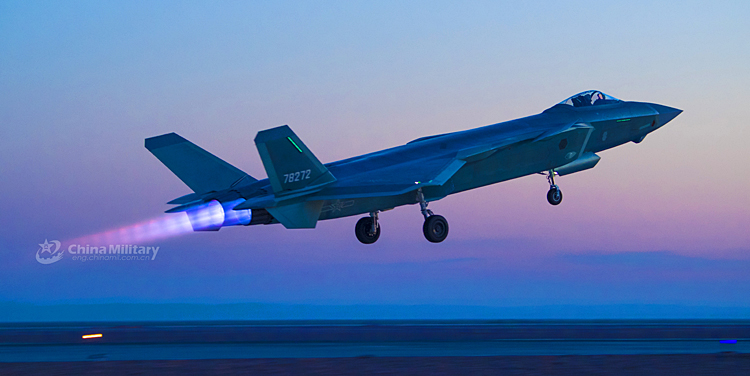
China's J-20 numbers have grown steeply. The UK-based Royal United Services Institute (RUSI) projects China could field around 1,000 J-20s by 2030. China is already showcasing unprecedented progress on the sixth-generation fighter through its third major configuration. In October 2025, the second prototype introduced a revised configuration with diverterless supersonic air intakes, side-by-side landing gear and redesigned exhausts that might improve stealth and manoeuvrability. The latest aircraft appears to retain many of those changes, while introducing a modified nose section, suggesting continued refinement of the design as testing progresses. Flight testing of the new sixth generation fighter has continued to progress unprecedentedly quickly, and has led analysts to project that it will enter service around the year 2030 or earlier. This will place China over a decade ahead of the most advanced sixth-generation fighters like the US Air Force F-47.
Former French Navy Rafale pilot Pierre-Henri Chuet was placed under judicial investigation in Paris for unauthorized trips to China, raising grave concerns that tactical and operational intelligence on the Rafale platform may have been compromised to China
Separately, India is in the process of procuring 114 additional Rafale fighter jets for the IAF at an estimated a cost of about ₹25 lakh crore, as was covered in these columns on June 12, 2026. India did not acknowledge its losses of fighter aircraft and denies that the losses included a Rafale fighter jet in Operation 'Sindoor'. But the fact that India was forced to ground its Rafale fleet after the first wave, did indicate that the IAF did lose a Rafale fighter jet.
It has now emerged that Pierre-Henri Chuet, former French Navy Rafale pilot (having dual citizenship of France and Canada) who flew Super Étendard and Rafale M fighters from the French aircraft carrier Charles de Gaulle, travelled to China in 2018 and 2019 while still serving, without notifying his chain of command, assisted by a South African intermediary.
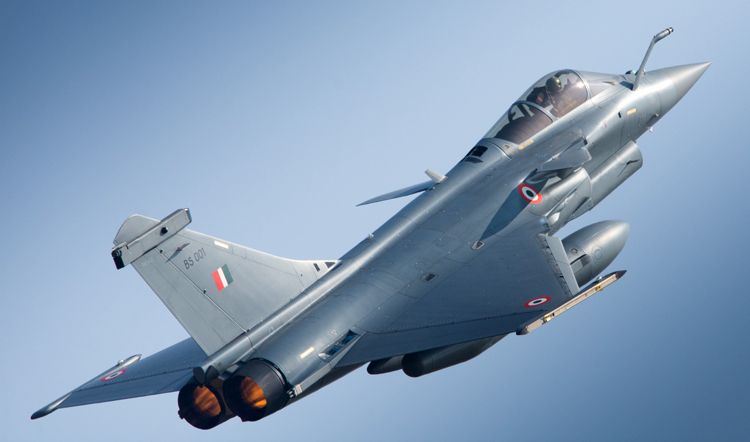
Chuet has been placed under formal investigation and judicial supervision in Paris for intelligence sharing activities benefiting China. Chuet's carrier aviation experience would be particularly valuable to China; having three aircraft carriers, with a fourth under construction. PLA's newest 'Fujian' is configured for catapult-assisted take-offs and arrested landings. Charles de Gaulle currently is the only active CATOBAR carrier in the French Navy, and its aircraft complement includes Dassault Rafale (M) among others.
Most importantly, Chuet would have shared each and every detail of the Rafale fighter jets, and advised how to down them; that's how China helped Pakistan shoot down the IAF Rafale. France will naturally want to not share what intelligence Chuet shared with China, since that could affect future sales of Rafale fighter jets. But India can hardly afford to ignore the consequences.