The insightful articles, inspiring narrations and analytical perspectives presented by the Editorial Team, establish an alluring connect with the reader. My compliments and best wishes to SP Guide Publications.
"Over the past 60 years, the growth of SP Guide Publications has mirrored the rising stature of Indian Navy. Its well-researched and informative magazines on Defence and Aerospace sector have served to shape an educated opinion of our military personnel, policy makers and the public alike. I wish SP's Publication team continued success, fair winds and following seas in all future endeavour!"

Since, its inception in 1964, SP Guide Publications has consistently demonstrated commitment to high-quality journalism in the aerospace and defence sectors, earning a well-deserved reputation as Asia's largest media house in this domain. I wish SP Guide Publications continued success in its pursuit of excellence.
India's dependence on foreign fighter engines remains a strategic vulnerability, with GE supply delays, costs and technology-transfer concerns affecting Tejas and future combat-aircraft programmes.
 |
The Author is Former Director General of Information Systems and A Special Forces Veteran, Indian Army |
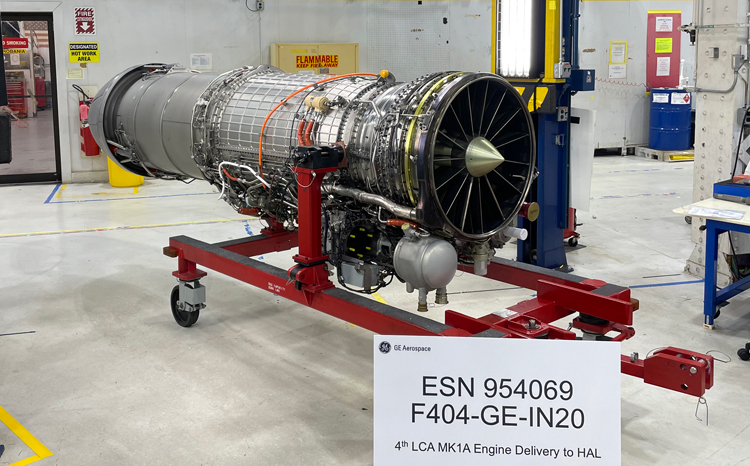
It needs no intelligence to decipher that the US has been systematically undermining India's LCA Tejas programme, especially through the delayed supply of GE aero engines; excuses of supply-chain disruptions being cover-ups. India had ordered a total of 212 aero engines from GE Aerospace for its Tejas fighter programmes, comprising an initial order of 99 F404 engines in 2021 and a subsequent order for 113 F404/F414 engines in November 2025. To date, GE has delivered only 7 of these engines to Hindustan Aeronautics Limited (HAL).
GE Aerospace and its joint ventures supply aero engines to over 120 countries, including for the militaries of Australia, India, Malaysia, Singapore, South Korea and the US (its largest client) and European militaries. In addition, GE Aerospace also supplies aero engines for commercial airlines of the Middle East, North America and Europe.
GE Aerospace has delivered only seven engines against India's reported order of 212 engines for the Tejas fighter programmes, according to the article.
A post on X points out the untrustworthy US, saying: "One of the 6 GE F404-IN20 engines delivered so far for Tejas Mk1A reportedly failed mandatory acceptance checks -That leaves HAL with just 5 serviceable engines -Due to GE & HAL's lackadaisical approach Tejas Mk1A is over 2 years behind schedule -GE has also sharply hiked F414 engine cost from ₹70 crore to ₹200 crore clearly displaying their disruptive intent -Such developments raise fresh questions on costs, timelines and supply-chain reliability for #India's fighter jet programme.
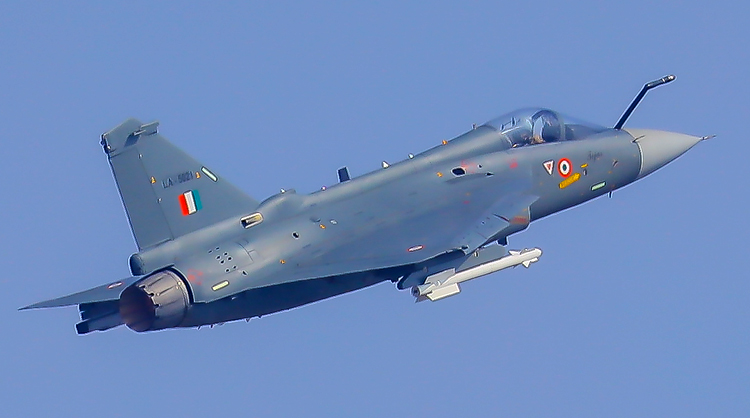
Another post on social media says: "Sabotage from the word go. US did not want India to develop its Tejas, Initial sanctions, price hike, faulty engines, substandard parts, delayed shipments......If sanctions continued, we could have our engine by now. Never trust the USA." GE has now promised to deliver 20 F404 engines in the latter half of 2026, but it has never kept its earlier promises.
Jet engines are technically very demanding. This is why only the US, UK, France and Russia have fully independent expertise to develop turbojets. Their expertise has produced technology breakthroughs like single crystal (SX) blades; turbine blades cast as one continuous, flawless crystal, enabling the blade to operate at temperatures exceeding 1,500 degrees Celsius.
Delays in GE F404 deliveries and reported increases in F414 engine costs are raising concerns over Tejas Mk1A, Tejas Mk-2 and AMCA timelines.
Arms sales are tools of geopolitical leverage. Even close US allies are not allowed to independently service and support the equipment; buyers kept in a permanent state of dependence. Spares support is decided by the US administration. The hard fact is India's fighter jet ambitions remain hobbled by persistent dependence on foreign engine suppliers. This vulnerability exposes indigenous programmes to commercial pressures and hands overseas manufacturers outsized negotiating leverage. Over the past few decades, India has license-built French, British and Russian jet engines for its jets, but never absorbed the technology to design and build its own engines.
Commercial negotiations for the GE F414 engine to power the Tejas Mk-2 and the initial variants of AMCA are stalled. Despite an earlier agreement on transfer of technology (ToT), GE Aerospace has nearly tripled the per-unit cost of the engine. In addition, GE is seeking an investment of over $800 million (₹6,000 crore) to establish a dedicated GE F414 power plant in India. This assembly and manufacturing line is to provide aeroengines for India's indigenous fighter aircraft, specifically the Tejas Mk-2 and the initial twin-engine Advanced Medium Combat Aircraft (AMCA). Hiked per-unit costs, coupled with lengthy commercial negotiations, threaten the development and induction timelines of these aircraft, which are desperately needed to maintain and restore the IAF's fighter squadron strength.
India's dependence on foreign aero-engine technology remains a strategic vulnerability, with decades of licensed production yet to result in an indigenous fighter-engine capability.
The dilemma faced by India now is that the AMCA and Tejas Mk-2 airframes have already been designed around the exact dimensions and specifications of the GE F414. Switching to another aeroengine now and modifying the airframes/designing new airframes would not only imply costly, time-consuming software overhauls, flight testing and structural adaptations, but also a further delay of 5–7 years for India's fifth-generation fighter programme that has been in the development pipeline for over a decade – so much for the blind faith in the US despite being backstabbed repeatedly.
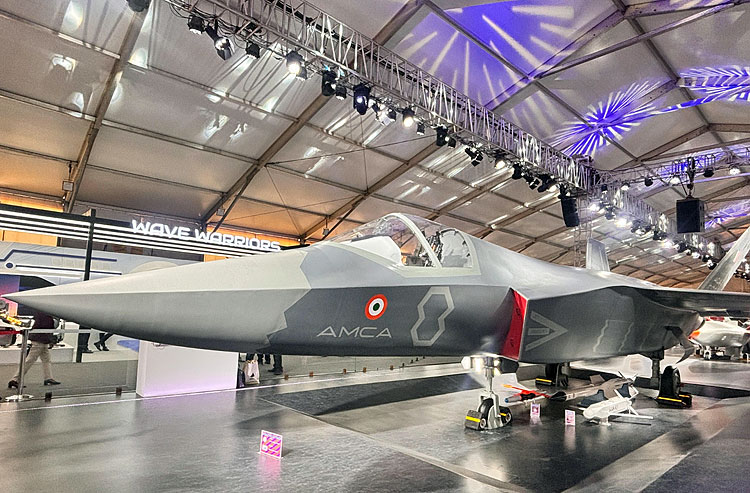
According to a news report, the DRDO and the Aeronautical Development Agency (ADA) are, however, holding preliminary talks with international aerospace companies such as Safran (France) and Rolls-Royce (UK) as a back-up. However, with the GE F404 engine already powering the LCA Mk1 and Mk1A, hasn't India put all its eggs in the American basket? Over the past few decades, India has license-built French, British and Russian jet engines for its jets, but never absorbed the technology to design and build its own engines.
India is pursuing alternative options, including cooperation with Safran and a counter-offer from Rolls-Royce involving joint development, manufacturing and full IP ownership.
In 2025, India decided to break with the US in developing fifth-generation fighter aircraft engines, announcing that French jet engine maker Safran had been selected to partner with the DRDO to co-develop a brand-new, clean-sheet, 120 kN-thrust-class jet engine with India. The engine will be developed for the AMCA Mark II which will enter service a decade from now. The DRDO considered both GE and Rolls-Royce for the fifth-generation fighter engine but ultimately chose the French engine company. A deal clincher was the fact that India would own the intellectual property for the power plant. The latest is that Rolls-Royce has made a counter-offer – a new 120 kN thrust-class engine to be jointly designed and manufactured in India, including the transfer of full IP ownership and extensive design technology to make India a primary development hub, with the first test flight in 2034 and series production in 2036.
Ultimately, only time will show the outcome of the ongoing lengthy commercial negotiations with GE Aerospace for supply of aero engines. Hope the issues are resolved soon and the stalled Tejas programme gets going.