
The insightful articles, inspiring narrations and analytical perspectives presented by the Editorial Team, establish an alluring connect with the reader. My compliments and best wishes to SP Guide Publications.

"Over the past 60 years, the growth of SP Guide Publications has mirrored the rising stature of Indian Navy. Its well-researched and informative magazines on Defence and Aerospace sector have served to shape an educated opinion of our military personnel, policy makers and the public alike. I wish SP's Publication team continued success, fair winds and following seas in all future endeavour!"

Since, its inception in 1964, SP Guide Publications has consistently demonstrated commitment to high-quality journalism in the aerospace and defence sectors, earning a well-deserved reputation as Asia's largest media house in this domain. I wish SP Guide Publications continued success in its pursuit of excellence.
Sarvam AI, one of India's newest tech unicorns, has been selected under the IndiaAI Mission to develop indigenous foundational models for public service delivery
 |
The Author is Former Director General of Information Systems and A Special Forces Veteran, Indian Army |
Bengaluru-based Sarvam AI, a full-stack generative AI startup, is focused on creating sovereign, India-centric AI. Founded in August 2023 by Vivek Raghavan and Pratyush Kumar (both formerly associated with IIT Madras's AI4Bharat), the company has rapidly evolved into one of India's newest tech unicorns.
Sarvam AI reached a $1.5 billion valuation after securing a massive $234 million Series B funding round. HCL Tech served as the lead strategic investor by acquiring a 10.5 per cent stake for $150 million. The company is also backed by Lightspeed Venture Partners, Peak XV Partners, and Khosla Ventures. Sarvam AI was selected under the India AI Mission to develop indigenous foundational models, receiving substantial compute and financial support to build AI tailored for public service delivery.
Sarvam prioritises a localised AI stack tailored for India's linguistic diversity, featuring the 'Bulbul' Text-to-Speech model (11 languages), 'Saaras' Speech-to-Text for code-mixed telephony, and 'Sarvam Vision' OCR for digitising handwritten and complex regional paper records.
Sarvam AI focuses heavily on building large language and speech models (LLMs) that natively understand India's dense cultural diversity, mixed scripts, and regional dialects. These include:
Sarvam AI recently launched Sarvam Circle, a unified partner ecosystem program to deploy enterprise-grade, secure AI into workflows. Strategic alignments include: Infrastructure & Cloud' collaborations with IBM, HP, and HCL Tech to deliver on-premise, hybrid, and secure, air-gapped sovereign data centres; Commercial Applications – partnership with Swiggy (for voice-led food commerce) and Razorpay (for agentic conversational payments).
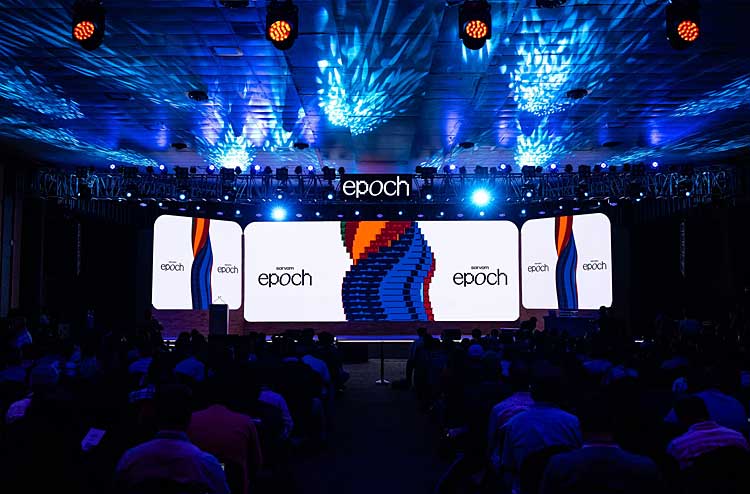
Sarvam AI says it is making a 1 trillion parameter AI model, seeking to challenge OpenAI and Anthropic. During its recent AI conference Epoch, Sarvam co-founder Pratyush Kumar said in his keynote address that the startup was building a foundational AI model with over a trillion parameters in India "We are very happy to announce that we are building a trillion-plus parameter model right here in India. We are building them from scratch to be competitive in coding, cybersecurity, simulation, science and more," he said. Parameters refer to the dataset used to train AI. The more the parameters the stronger the AI can perform. For context, Kimi K3, the largest open-weight model right now, is a 2.8 trillion parameter model. That is, with a trillion-parameter model, Sarvam may get closer to leading AI labs like Anthropic and OpenAI.
Sarvam's flagship 105B model outperforms OpenAI's GPT-5.4 Mini and Google's Gemini 3.5 Flash on Indian voice, instruction-following, and agentic tasks at a fraction of the price
Sarvam has made improvements to its flagship 105B model, when it comes to how the model works with AI agents. According to benchmarks shared by the company, Sarvam 105B is better at voice call capabilities, instruction following, and other tasks when compared to OpenAI's GPT-5.4 Mini and Google's Gemini 3.5 Flash. The 105B is 5.5 times cheaper than GPT-5.4 Mini. Sarvam 105B costs $0.80 per one million blended tokens, compared with $4.50 for GPT-5.4 Mini. Also, the Sarvam model is 11 times cheaper than Google's Gemini 3.5 Flash which costs $9 for a million blended tokens.
Saravm says that the model is being hosted in India, and is available for voice products. The company said, "If you are building a voice product today, Sarvam is the cheapest, fastest and most scalable solution," and added that competing voice offerings from ChatGPT are not currently available while Gemini is not available at comparable scale.
Sarvam also announced commercial availability of Sarvam Vision Edge, its document intelligence platform that can run locally on any device. Vision Edge is being used by the Odisha government on a research initiative to digitise and extract information from land records.
To challenge global labs like OpenAI and Anthropic, Sarvam announced it is pre-training a 1-trillion-plus parameter model from scratch in India to deliver frontier capabilities in coding, cybersecurity, and simulation.

A highlight of Epoch were the Sarvam Kaze smart glasses; first showcased during the India AI Impact Summit in February 2025. The company showed a demo video, where a visually impaired person used the glasses to get information about bus routes, how far was their stop, and how long the bus ride would be. Kaze smart glasses use cameras to recognise the bus, and then find information about its routes. Sarvam also announced a service to rent Indian phone numbers. In a demo shown during the launch, a user could rent a number within 30 seconds after sharing PAN and Aadhaar details.
Sarvam AI, OpenAI, and Anthropic represent two fundamentally different philosophies in the AI landscape: Sovereign, domain-specific AI versus Global, frontier AI. While OpenAI and Anthropic compete globally to build general-purpose Artificial General Intelligence (AGI), Sarvam AI focuses strictly on building deep-tech infrastructure tailored for India's multilingual, mobile-first ecosystem.
Sarvam AI is designed from the ground up to solve the "tokenisation problem" for Indian languages. Traditional global LLMs find Indian scripts highly expensive and slow to process. Sarvam's models (like Bulbul and Saaras) natively understand regional dialects, accents, and code-switching (mixing English with local languages in daily speech). On the other hand OpenAI & Anthropic as frontier models are trained predominantly on English-centric internet data. While they can translate and process Indian languages, they lack the deep cultural context, colloquial accuracy, and cost-efficiency required for mass adoption in rural or semi-urban India.
Unlike global cloud-centric models, Sarvam focuses on on-premise, air-gapped sovereign deployments inside secure data centers while expanding into hardware like the 'Sarvam Kaze' smart glasses designed for real-world computer vision and accessibility.
Also, Sarvam AI recognises that a massive portion of India's population prefers voice interaction over typing, Sarvam prioritises highly efficient, low-latency Audio-to-Audio and Speech-to-Text pipelines. Their systems are engineered to function over low-bandwidth telephony networks. In contrast, OpenAI & Anthropic built primarily as text-first reasoning engines. While OpenAI features advanced voice capabilities (like GPT-4o's real-time audio), these are computationally heavy, expensive, and engineered for high-speed internet connections rather than standard cellular phone lines.
As for deployment and sovereign security, Sarvam AI: focuses heavily on on-premise, sovereign infrastructure. Backed by the government's IndiaAI Mission, Sarvam builds models that can run inside highly secure, air-gapped government data centres to keep citizen data strictly within national borders. OpenAI & Anthropic operate primarily as centralised, cloud-hosted API models. Enterprise data is processed through their massive global cloud frameworks. While they offer strict data privacy compliance, they do not typically cater to localised national sovereign hardware deployments in the way an indigenous firm does.
Finally, if one is looking to build a globally scalable application requiring cutting-edge, complex reasoning or code generation, OpenAI or Anthropic are the market leaders. However, if the aim is to build an application targeted at India's next billion users, requiring voice-led vernacular commerce, conversational banking, or local government public delivery systems, Sarvam AI provides the localised infrastructure necessary to make it economically and culturally viable. Sarvam AI is an important milestone amid the rise of India.