

The insightful articles, inspiring narrations and analytical perspectives presented by the Editorial Team, establish an alluring connect with the reader. My compliments and best wishes to SP Guide Publications.

"Over the past 60 years, the growth of SP Guide Publications has mirrored the rising stature of Indian Navy. Its well-researched and informative magazines on Defence and Aerospace sector have served to shape an educated opinion of our military personnel, policy makers and the public alike. I wish SP's Publication team continued success, fair winds and following seas in all future endeavour!"

Since, its inception in 1964, SP Guide Publications has consistently demonstrated commitment to high-quality journalism in the aerospace and defence sectors, earning a well-deserved reputation as Asia's largest media house in this domain. I wish SP Guide Publications continued success in its pursuit of excellence.
The US acknowledgement of orbital weapons signals an intensifying race for space dominance involving America, China and Russia, counter-space capabilities and India's expanding military space infrastructure
 |
The Author is Former Director General of Information Systems and A Special Forces Veteran, Indian Army |

The US has openly admitted to deploying space-based weapons in orbit, marking a historic shift in military doctrine. The US disclosure signals that the race for dominance in Earth's orbit has entered a new and dangerous phase. America's announcement came from Air Force Secretary Troy Meink, who confirmed that the US now possesses on-orbit space control weapons. He deliberately avoided revealing details about the type, number, or deployment timeline of these systems.
Russia and China have reacted sharply. Moscow called for complete demilitarisation of space, while Beijing warned against turning orbit into a battlefield. Yet both nations are themselves advancing counter-space technologies. A strike on orbital assets could cascade into global disruption. The greatest fear remains Kessler Syndrome, where debris from destroyed satellites triggers uncontrollable collisions, rendering entire orbital regions unusable.
The United States military has officially acknowledged deploying on-orbit space control weapons for the first time
Although the US government has not disclosed the exact technical specifications, locations, or quantities of these systems, military doctrine, expert analysis, and intelligence reports offer a clear picture of what these offensive and defensive weapons are, as well as the advanced space arsenals already maintained by China and Russia.
The United States military has officially acknowledged deploying on-orbit space control weapons for the first time. Air Force Secretary Troy Meink confirmed that these assets are actively orbiting Earth to defend American forces from hostile action. The US "space control" encapsulates both kinetic (physical destruction) and non-kinetic (energy or cyber-based) capabilities that can be used for both offensive and defensive operations. America's defensive space weapons, to protect US and allied satellites (GPS, communication, surveillance) from being blinded, hacked, or destroyed, include: Reversible Jammers - space-based systems that temporarily block enemy signals; Cyber Shields advanced software to protect satellites from hacking and electronic warfare: Bodyguard Satellites - manoeuvrable spacecraft designed to detect, shadow, and physically block threats to critical infrastructure.
A strike on orbital assets could cascade into global disruption where debris from destroyed satellites triggers uncontrollable collisions, rendering entire orbital regions unusable
America's offensive US space weapons to disrupt, degrade, or destroy an adversary's space-based assets to deny them communication or tracking advantages during a conflict include: Directed-Energy Weapons (DEWs)- high-powered lasers or high-power microwaves (HPM) to blind optical sensors or fry internal electronics; Grappling & Kinetic Orbiters - inspector satellites equipped with robotic arms or nets capable of physically moving or capturing adversary spacecraft; Direct-Ascent Missiles - earth-to-space missiles designed to physically shatter target satellites.
While the US is the first to publicly admit to having active, on-orbit weaponry, intelligence agencies and space monitors have long documented that China and Russia possess highly sophisticated counter-space programmes. Both nations have frequently engaged in what experts call "cat-and-mouse" orbital encounters. China's Space Capabilities include: Co-Orbital Satellites - China has launched spacecraft equipped with robotic arms (such as Shijian-21) capable of grappling other satellites and physically moving them out of orbit; Space Planes - like the secretive US X-37B, China operates a reusable space plane capable of deploying or interacting with unknown payloads in orbit; Ground-Based Threat - China has an operational arsenal of direct-ascent anti-satellite (ASAT) missiles and land-based laser systems designed to blind imaging satellites.
Intelligence agencies and space monitors have long documented that China and Russia possess highly sophisticated counter-space programmes
Russia's space capabilities include: Inspector Satellites - Russia has repeatedly deployed "nesting doll" satellites (like Kosmos-2542) that manoeuvre dangerously close to US spy satellites to shadow and monitor them; Electronic Warfare: Russia routinely uses highly effective ground- and air-based jamming tech to disrupt European commercial and military communication satellites.
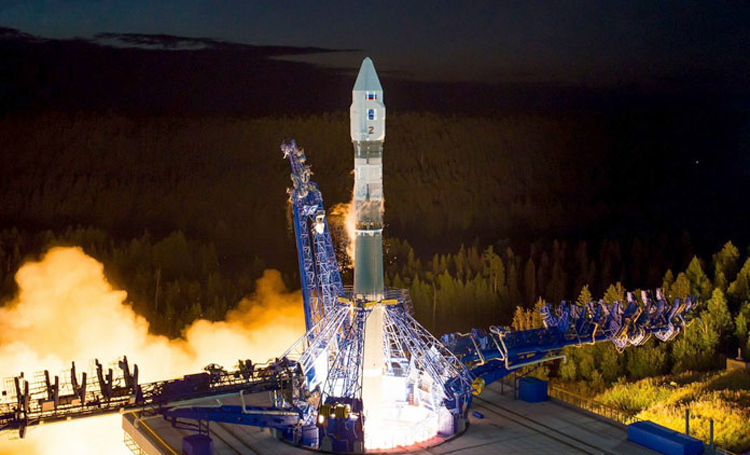
In the past, the US intelligence has warned that Russia is actively attempting to develop a space-based nuclear anti-satellite weapon designed to take out massive satellite constellations via an electromagnetic pulse (EMP). But if this is true, the US and Russia would be doing the same.
In 2019, India demonstrated kinetic anti-satellite capability under Mission Shakti, destroying a satellite in low Earth orbit. Since then, India has expanded its military space infrastructure. The Defence Research and Development Organisation (DRDO) is working on directed-energy weapons, electronic warfare systems, and space situational awareness programmes. ISRO has strengthened its NETRA surveillance network in Bengaluru, designed to track orbital debris and hostile manoeuvres. India also practised satellite dogfighting in 2025, showcasing manoeuvring skills at orbital speeds of 28,800 km/h.
India's Space-Based Surveillance-III (SBS-III) programme is a national security initiative. It will deploy a constellation of 52 advanced military surveillance satellites in low Earth orbit to provide round-the-clock, all-weather intelligence over land borders and maritime zones.
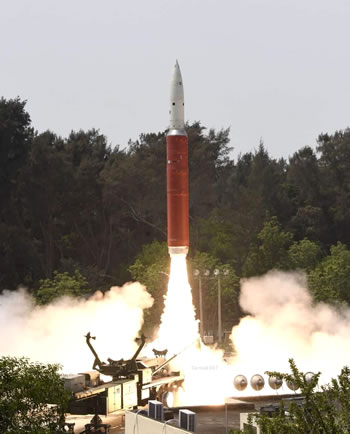
India's Space-Based Surveillance-III (SBS-III) programme is a ₹26,968 crore national security initiative approved by the Cabinet Committee on Security. It will deploy a constellation of 52 advanced military surveillance satellites in low Earth orbit to provide round-the-clock, all-weather intelligence over land borders and maritime zones. ISRO will manufacture 21 satellites, while private Indian companies will build 31. These satellites will carry synthetic-aperture radar, infrared sensors for night-time imaging, and electro-optical cameras for real-time tracking. The constellation will be operated under the Defence Space Agency and Mission Sudarshan Chakra, directly linking with air defence assets to strengthen operational capabilities. While early project timelines anticipated the first batch of satellites to launch as early as April 2026, the deployment timeline has shifted. Recent updates from the September 2026 International Space Summit in Paris indicate that the physical rollout and deployment of the 52-satellite constellation is now officially scheduled to take place between 2027 and 2030.
Finally, India's challenge is balancing deterrence with restraint. While it has proven ASAT capability, its focus remains on defensive preparedness and situational awareness. Partnerships with the US, including data-sharing agreements, enhance India's monitoring capacity. However, India must accelerate indigenous programmes to ensure its growing constellation of satellites remains secure in an increasingly hostile domain and unreliable foreign partners.