

The insightful articles, inspiring narrations and analytical perspectives presented by the Editorial Team, establish an alluring connect with the reader. My compliments and best wishes to SP Guide Publications.
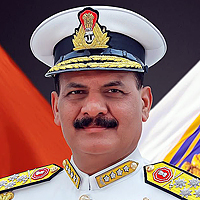
"Over the past 60 years, the growth of SP Guide Publications has mirrored the rising stature of Indian Navy. Its well-researched and informative magazines on Defence and Aerospace sector have served to shape an educated opinion of our military personnel, policy makers and the public alike. I wish SP's Publication team continued success, fair winds and following seas in all future endeavour!"

Since, its inception in 1964, SP Guide Publications has consistently demonstrated commitment to high-quality journalism in the aerospace and defence sectors, earning a well-deserved reputation as Asia's largest media house in this domain. I wish SP Guide Publications continued success in its pursuit of excellence.
Su-30 MKI Overhaul, Indigenous Radios and Naval Power on the agenda

Defence Minister Rajnath Singh is set to chair a meeting of the Defence Acquisition Council (DAC) today, on Monday September 7, 2026, with a wide-ranging agenda covering the Indian Air Force's fighter fleet, battlefield communications and the Indian Navy's surveillance and propulsion requirements.
At the centre of the Indian Air Force proposals is a plan to overhaul 40 Sukhoi Su-30 MKI fighter aircraft, underscoring the continuing importance of the Russian-origin fighter in India's combat fleet. The plan is to extend the operational life of the Su-30 MKI by another 15–20 years.
At the centre of the Indian Air Force proposals is a plan to overhaul 40 Sukhoi Su-30 MKI fighter aircraft, underscoring the continuing importance of the Russian-origin fighter in India's combat fleet
The proposal is significant because the Su-30 MKI is not merely another fighter in the IAF inventory. With more than 260 aircraft, it forms the backbone of India's air-combat capability. Until additional indigenous fighters and new-generation aircraft enter service in sufficient numbers, keeping the existing Su-30 fleet operationally relevant will remain essential.
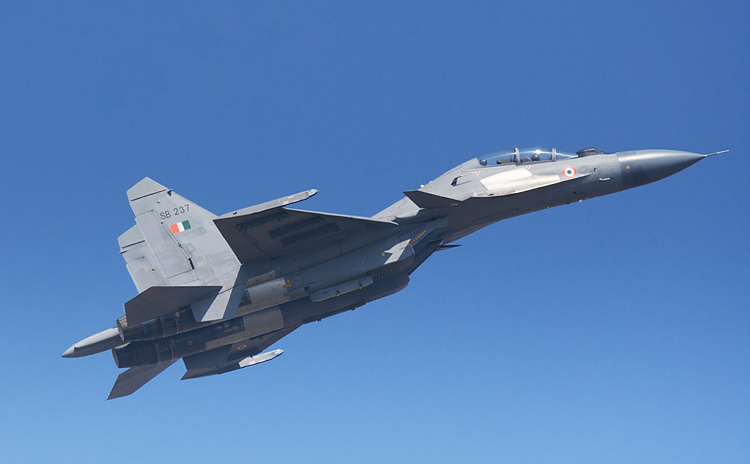
Additionally, the proposed overhaul would also allow the IAF to incorporate newer avionics, sensors, electronic warfare capabilities and weapons integration into the aircraft, depending on the final scope of the programme.
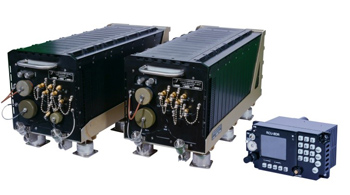
One of the most strategically important proposals before the DAC is the acquisition of around 2,500 indigenously developed Software Defined Radios (SDRs), estimated at approximately ₹5,000 crore.
An SDR is fundamentally different from a conventional radio because much of its communication functionality is controlled by software rather than fixed hardware.
In simple terms, a traditional radio is built around dedicated hardware for particular frequencies, waveforms and communication functions. An SDR can use software to change or upgrade these functions. This gives the armed forces considerably greater flexibility.
That makes the indigenous SDR programme particularly important for India's broader push towards network-centric operations and defence indigenisation
An SDR can provide secure voice and data communication and High-speed exchange of battlefield information.
India has already developed indigenous SDR technology. In 2019, the Defence Ministry said the SDR Tactical system had been developed by DRDO, Bharat Electronics Limited and WESEE, and was designed to provide secure voice communication, high-speed data exchange, information sharing and anti-jamming capability.
For the Talwar-class ships, radar modernisation would help keep these frigates operationally relevant despite their Russian-origin design.
That makes the indigenous SDR programme particularly important for India's broader push towards network-centric operations and defence indigenisation. The government's draft DAP 2026 also places greater emphasis on indigenous design, manufacturing and reducing dependence on imports.
The DAC agenda also reflects the Navy's growing focus on surveillance and combat-system modernisation.
The Navy is also looking towards the future with proposals linked to four next-generation destroyers
The council is expected to consider new radars for the Russian-built Talwar-class frigates, along with Air Route Surveillance Radars (ARSR) for naval stations. These systems would strengthen the Navy's ability to monitor aircraft and large unmanned aerial systems operating around its areas of responsibility.
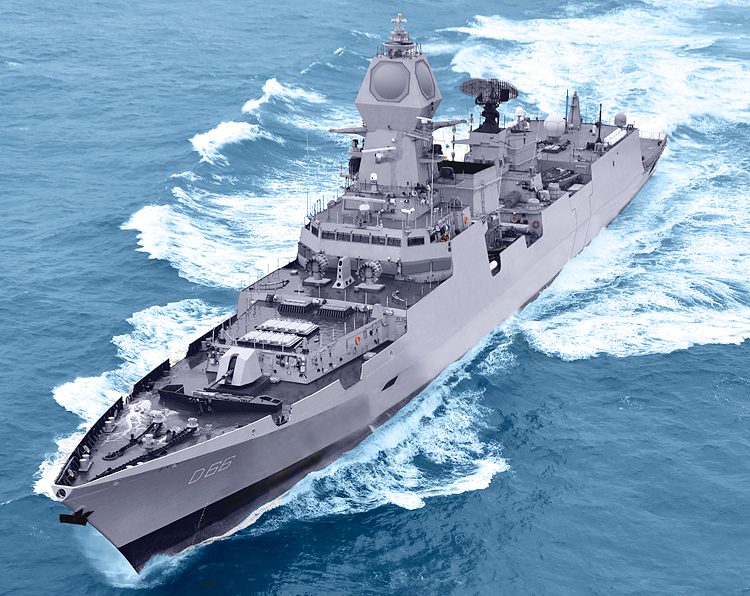
For the Talwar-class ships, radar modernisation would help keep these frigates operationally relevant despite their Russian-origin design. Rather than allowing older sensors to become the limiting factor, upgrading them can significantly improve the ships' ability to detect and track modern threats.
Another important item on the agenda is the proposed procurement of 24–28 MW marine gas turbines for future naval platforms
The Navy is also looking towards the future with proposals linked to four next-generation destroyers.
These ships will require considerably more sophisticated combat systems, sensors, communications and propulsion than earlier generations. The emphasis is increasingly on integrating multiple systems into a common combat architecture rather than developing each capability in isolation.
Another important item on the agenda is the proposed procurement of 24–28 MW marine gas turbines for future naval platforms.
The Navy's radar, destroyer and marine-turbine proposals represent the third — preparing for a more technologically demanding maritime environment.
However, as with every DAC proposal, it is important to distinguish Acceptance of Necessity (AoN) from an actual procurement contract. An AoN is an initial administrative approval that allows the acquisition process to move forward; it does not itself constitute a final contract or guarantee immediate delivery. Previous DAC meetings have followed the same process.
Manish Kumar Jha is a Consulting & Contributing Editor for SP's Aviation, SP's Land Forces and SP's Naval Forces and a security expert. He writes on national security, military technology, strategic affairs & policies.