
The insightful articles, inspiring narrations and analytical perspectives presented by the Editorial Team, establish an alluring connect with the reader. My compliments and best wishes to SP Guide Publications.
"Over the past 60 years, the growth of SP Guide Publications has mirrored the rising stature of Indian Navy. Its well-researched and informative magazines on Defence and Aerospace sector have served to shape an educated opinion of our military personnel, policy makers and the public alike. I wish SP's Publication team continued success, fair winds and following seas in all future endeavour!"

Since, its inception in 1964, SP Guide Publications has consistently demonstrated commitment to high-quality journalism in the aerospace and defence sectors, earning a well-deserved reputation as Asia's largest media house in this domain. I wish SP Guide Publications continued success in its pursuit of excellence.
India's plan to release a ₹30,000 crore RFP for MALE drones aims to pull together multiple objectives: modernising defence capabilities (particularly in UAV & drone warfare), building a large, resilient industrial base, invigorating private sector participation, advancing missile and payload technologies, and strengthening India's strategic autonomy.
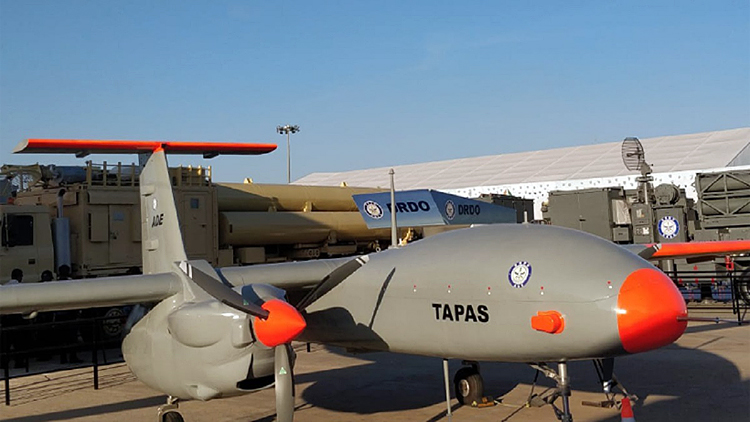
Recently, in September 2025, Defence Secretary Rajesh Kumar Singh announced a big move - the Indian government is preparing to issue a Request for Proposal (RFP) worth ₹30,000 crore for the procurement of Medium Altitude Long Endurance (MALE) drones. MALE drone can operate for long durations (often 24+ hours) at medium altitudes (often around 20 - 30,000 ft), suitable for surveillance, reconnaissance, electronic warfare, and strike roles.
The RFP is for MALE category drones to be made in India. Whether entirely indigenous in design or involving foreign technology transfer, manufacturing has to happen within the country.
He announced the procurement (RFP) for MALE drones, outlining India's upcoming defence priorities. Below are the key facets of this development, what it means for India's defence industrial base, how it ties into evolving drone warfare, missile technology, and the rising role of the private sector.
The RFP is for MALE category drones to be made in India. Whether entirely indigenous in design or involving foreign technology transfer, manufacturing has to happen within the country.
Singh has emphasised that this is part of a broader strategy where defence capital expenditure over the next decade will be $25 30 billion per year, with at least 75 per cent of that capex being spent in India.
With MALE drones, India will push up its capabilities in persistent surveillance (ISR), reconnaissance, electronic warfare, and precision strike—not just reactive but proactive missions.
There will be a strong focus on indigenisation – manufacturing not just of airframes but also engines, payloads (electro-optical, IR, SAR, etc.), satcom/navigation systems, etc. The aim is to reduce dependence on foreign suppliers and create a durable domestic supply chain.
Singh noted that in recent wars, the volume of missile/firepower used has been very high, and though India has tried to employ firepower in a calibrated way, wars may extend in duration and intensity. Thus, the ability to sustain operations with high tempo demands more robust industrial capacity.
For MALE drones, there is openness to foreign technology partnerships, but with an insistence that design/manufacturing happen in India. The RFP might allow either Indian design or a foreign partner, but regardless, it should be "Made in India."
With MALE drones, India will push up its capabilities in persistent surveillance (ISR), reconnaissance, electronic warfare, and precision strike–not just reactive but proactive missions. These platforms fill operational gaps between smaller UAVs and high altitude, high endurance systems.
There is recognition that state-run entities (Defence PSUs) are capacity-constrained. Till now, many missile systems have been produced by organisations like BDL, munitions by MIL, but these cannot, by themselves, meet future demand or rapidly scale up.
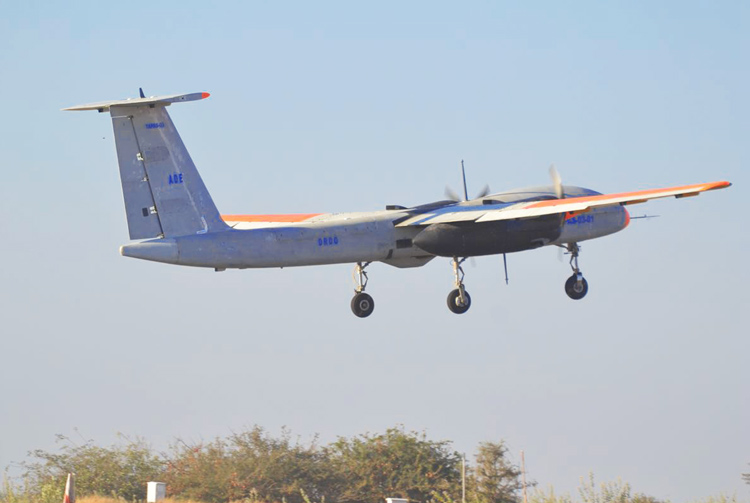
The government wants to attract private players by creating order visibility: large contracts under the "Buy Indian / IDDM (Indigenously Designed, Developed, and Manufactured)" category, removing or reducing nomination-based allocations and restrictions, so that private firms can invest with confidence.
For MALE drones, there is openness to foreign technology partnerships, but with an insistence that design/manufacturing happen in India. The RFP might allow either Indian design or a foreign partner, but regardless, it should be "Made in India."
Critical subsystems–engines, payloads, communications/navigation, sensor suites–are likely part of the scope for localisation. If successful, this pushes up India's technology readiness levels in drone, electronic, and avionics systems.
Private firms will be central in fulfilling these contracts—both in manufacturing capacity and in R&D. The RFP's structure and the policies around procurement reforms are clearly aimed at bringing them in.
Alongside drones, Singh flagged that in missile and munitions technologies, the private sector has been held back by reservation norms and limited orders. With this massive RFP and similar contracts, one can expect demand for precision munitions, missile integration, warhead payloads, communication and targeting systems, etc.
The emphasis on 60-75 per cent indigenous content in contracts (e.g. for the MALE drones) will push up local production of missile-grade materials, electronics, etc. Private firms will be central in fulfilling these contracts–both in manufacturing capacity and in R&D. The RFP's structure and the policies around procurement reforms are clearly aimed at bringing them in.
Manufacture of airframes, engines, payloads, sensors, etc., entails significant capital investment, skilled human resources, quality, and certifications. The RFP is expected to provide enough demand certainty to justify private investment.
By splitting contracts between two suppliers, creating separate production facilities, and emphasising local content, India aims not only to meet its own needs but also to become a player in the global UAV/MALE drone market.
Export potential is being factored in. By splitting contracts between two suppliers, creating separate production facilities, and emphasising local content, India aims not only to meet its own needs but also to become a player in the global UAV/MALE drone market.
A robust drone fleet with MALE-class capabilities (endurance, altitude, payload) changes the calculus in conventional conflicts and enhances India's ability for persistent monitoring and rapid response. Additionally, it boosts export potential – India could become a supplier of MALE drones (or their subsystems) to friendly countries.
While largely military in domain, it also spills over to civil sectors (e.g. satellite imaging, remote sensing, disaster monitoring) and dual-use technologies, which helpamortise R&D costs and scale.
India's plan to release a ₹30,000 crore RFP for MALE drones aims to pull together multiple objectives: modernising defence capabilities (particularly in UAV & drone warfare), building a large, resilient industrial base, invigorating private sector participation, advancing missile and payload technologies, and strengthening India's strategic autonomy.
If executed well, with careful management of technology, supply chains, and quality, this move could significantly shift India's defence and aerospace landscape over the next decade. But success will depend not just on funding, but on execution - design, testing, manufacturing, regulation, exports, and sustaining innovation.
Manish Kumar Jha is a Consulting & Contributing Editor for SP's Aviation, SP's Land Forces and SP's Naval Forces and a security expert. He writes on national security, military technology, strategic affairs & policies.