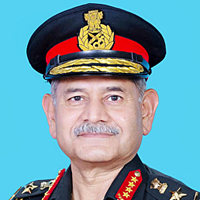
The insightful articles, inspiring narrations and analytical perspectives presented by the Editorial Team, establish an alluring connect with the reader. My compliments and best wishes to SP Guide Publications.
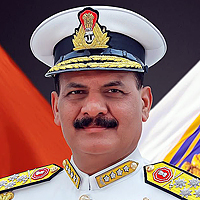
"Over the past 60 years, the growth of SP Guide Publications has mirrored the rising stature of Indian Navy. Its well-researched and informative magazines on Defence and Aerospace sector have served to shape an educated opinion of our military personnel, policy makers and the public alike. I wish SP's Publication team continued success, fair winds and following seas in all future endeavour!"

Since, its inception in 1964, SP Guide Publications has consistently demonstrated commitment to high-quality journalism in the aerospace and defence sectors, earning a well-deserved reputation as Asia's largest media house in this domain. I wish SP Guide Publications continued success in its pursuit of excellence.
For India it will not be just about the aircraft and the latest technologies but using the platform to boost the entire aerospace manufacturing ecosystem in the country
India is weighing its options for entering the highly demanding sixth-generation fighter aircraft race as it explores collaboration with two of the world's most ambitious next-generation combat-air programmes — the Global Combat Air Programme (GCAP) led by the United Kingdom, Italy and Japan, and Europe's Future Combat Air System (FCAS).
The move reflects a growing recognition within India's defence establishment that developing a sixth-generation fighter entirely on its own would require enormous financial resources, advanced technologies and decades of sustained industrial investment.
India's interest in the two programmes comes at a time when the global combat-air landscape is undergoing a major transformation
India's interest in the two programmes comes at a time when the global combat-air landscape is undergoing a major transformation. The United States and China are pursuing their own next-generation fighter programmes, while Europe and its partners are attempting to develop alternatives.
The Indian Air Force has already expressed interest in joining one of the European sixth-generation fighter initiatives. The Ministry of Defence (MoD) has been examining both GCAP and FCAS as possible avenues for international cooperation, technology, and industrial participation.
Recently, the Defence Secretary has also spoken on the issues and dialogue on such issues.
The Global Combat Air Programme, involving the UK, Italy and Japan, is currently one of the most advanced multinational sixth-generation fighter efforts. The three countries merged their respective next-generation fighter ambitions in 2022 and are targeting an aircraft entering service around 2035.

The programme is being developed around a highly connected combat-air architecture rather than simply a conventional fighter aircraft. The future platform is expected to combine stealth, advanced sensors, artificial intelligence, electronic warfare, and high-speed data links. But the most important aspect is the ability to operate alongside unmanned systems.
The Global Combat Air Programme, involving the UK, Italy and Japan, is currently one of the most advanced multinational sixth-generation fighter efforts
The programme received a major financial boost this year, with the UK, Italy and Japan awarding a £4.6 billion contract to Edgewing, the joint venture responsible for the fighter's development. The funding is intended to take the programme into its next major development phase.
For India, GCAP could offer access to technologies that would otherwise take years to develop independently. It could also provide an opportunity for Indian companies to participate in the global supply chain for advanced combat aircraft.
For India, GCAP could offer access to technologies that would otherwise take years to develop independently. It could also provide an opportunity for Indian companies to participate in the global supply chain for advanced combat aircraft.
India's reported emergence as a dialogue partner in the GCAP effort is therefore important. Rather than immediately committing to becoming a full programme partner, New Delhi can use such engagement to assess the technological, financial and industrial terms before taking a final decision.
The second option, FCAS, is already in the discussion. The original programme was conceived as a Franco-German-Spanish effort centred on a Next Generation Fighter (NGF) supported by unmanned combat aircraft, sensors and a wider combat cloud. However, deep disagreements between France's Dassault Aviation and Germany's Airbus over industrial responsibilities and workshare eventually brought the fighter partnership to an end.
FCAS differs from the original Franco-German-Spanish programme. France remains committed to developing a next-generation combat aircraft, and the programme's future structure and international participation are evolving
In June 2026, France and Germany abandoned their joint fighter project after failing to resolve the industrial dispute. Germany is now examining alternative routes for developing a sixth-generation combat aircraft, including possible cooperation with other European partners or potentially joining GCAP.
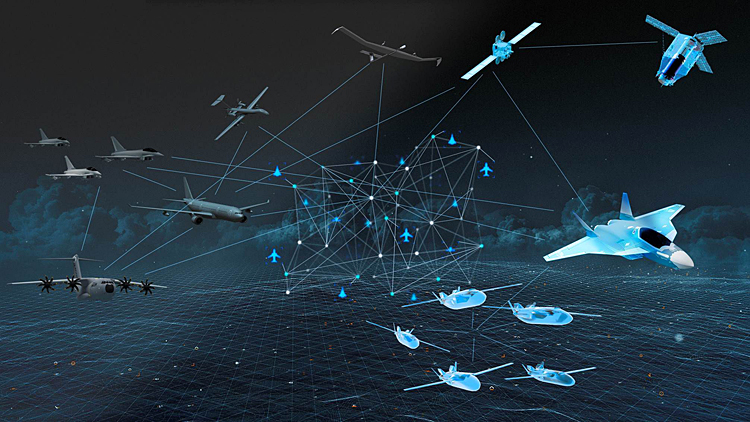
So the FCAS differs from the original Franco-German-Spanish programme. France remains committed to developing a next-generation combat aircraft, and the programme's future structure and international participation are evolving.
However, India's sixth-generation ambitions cannot be separated from its own Advanced Medium Combat Aircraft (AMCA) programme.
The AMCA is intended to give the Indian Air Force an indigenous fifth-generation fighter capability, while simultaneously building the industrial and technological foundation required for more advanced combat aircraft.
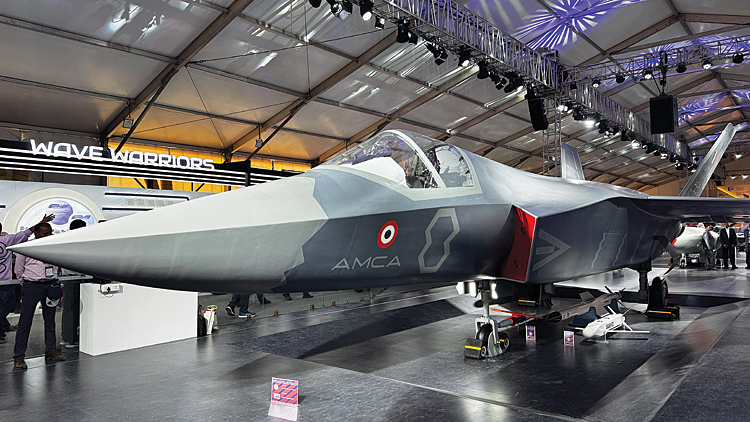
The timing is particularly important. India's AMCA programme and international sixth-generation initiatives are developing during roughly the same broad period. The experience gained through AMCA in stealth design, advanced avionics, sensors, electronic warfare, weapons integration and indigenous manufacturing could become a foundation for India's eventual participation in a sixth-generation programme.
AMCA is intended to give the Indian Air Force an indigenous fifth-generation fighter capability, while simultaneously building the industrial and technological foundation required
However, India should not see sixth-generation development simply as an extension of AMCA. The next generation of combat aircraft is expected to be as much about systems integration and information dominance as the aircraft itself.
A sixth-generation fighter is unlikely to be defined merely by a more advanced airframe or engine. Its defining advantage will come from the integration of multiple technologies.
These include low-observable design, advanced electronic warfare, AI-assisted decision-making, long-range sensing, secure communications, network-centric operations and manned-unmanned teaming.
India's consideration of GCAP and FCAS comes against the backdrop of continuing concerns over the depleting strength of the Indian Air Force
The fighter jet is increasingly being seen as the central node of a wider combat network involving loyal wingmen, drones, satellites, airborne sensors and other platforms.
That distinction will be critical. India is looking at participation in design, systems engineering, propulsion, sensors, electronic warfare, software and manufacturing.
India's consideration of GCAP and FCAS comes against the backdrop of continuing concerns over the depleting strength of the Indian Air Force. The government has already approved the acquisition of 114 Multi-Role Fighter Aircraft, with the majority expected to be manufactured in India.
The immediate requirement is therefore to strengthen the IAF's fighter fleet while simultaneously preparing for the future.
India's own aerospace industry would need a meaningful role from the beginning. Private companies, Hindustan Aeronautics Limited, DRDO laboratories, startups and academic institutions would have to be integrated into the development ecosystem.
New Delhi should therefore keep both channels open while negotiating hard for industrial participation, technology access, intellectual-property rights, manufacturing opportunities and a meaningful role in system development.
For India, the objective should not merely be to join the sixth-generation fighter race but own the technologies in the process.
Manish Kumar Jha is a Consulting & Contributing Editor for SP's Aviation, SP's Land Forces and SP's Naval Forces and a security expert. He writes on national security, military technology, strategic affairs & policies.