The insightful articles, inspiring narrations and analytical perspectives presented by the Editorial Team, establish an alluring connect with the reader. My compliments and best wishes to SP Guide Publications.
"Over the past 60 years, the growth of SP Guide Publications has mirrored the rising stature of Indian Navy. Its well-researched and informative magazines on Defence and Aerospace sector have served to shape an educated opinion of our military personnel, policy makers and the public alike. I wish SP's Publication team continued success, fair winds and following seas in all future endeavour!"

Since, its inception in 1964, SP Guide Publications has consistently demonstrated commitment to high-quality journalism in the aerospace and defence sectors, earning a well-deserved reputation as Asia's largest media house in this domain. I wish SP Guide Publications continued success in its pursuit of excellence.
Defence Secretary Rajesh Kumar Singh pushes for greater Indo-Japan defence cooperation with his meeting with Japan's Vice Minister of Defence for International Affairs, Kano Koji, in Tokyo. Opportunity with Japan opens immense potential for India in realising some of the most advanced military tech together.
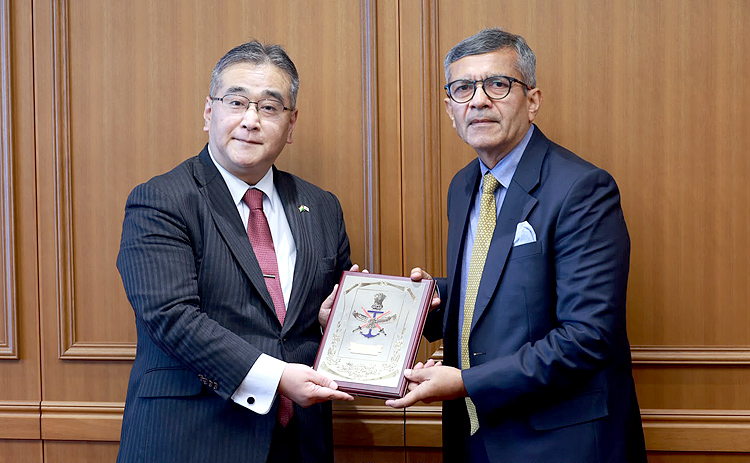
India and Japan have taken another significant step in strengthening their strategic defence partnership, with Defence Secretary Rajesh Kumar Singh and Japan's Vice Minister of Defence for International Affairs, Kano Koji, co-chairing the 8th India-Japan Defence Policy Dialogue in Tokyo on July 13.
While the high-level meeting reaffirmed the two nations' commitment to building a stronger defence relationship while promoting a free, open and rules-based Indo-Pacific, it opens more on the highly crucial defence industrial cooperation with India; an area just opened for India to seek some of the most advanced military systems and platforms with Japan, a long-time strategic and trusted partner.
The dialogue comes at a time of increasing geopolitical competition across the Indo-Pacific, growing military modernisation in the region, and shared concerns over maritime security, supply chain resilience, cyber threats, and emerging technologies
The dialogue comes at a time of increasing geopolitical competition across the Indo-Pacific, growing military modernisation in the region, and shared concerns over maritime security, supply chain resilience, cyber threats, and emerging technologies.
Defence Secretary Rajesh Kumar Singh led the Indian delegation while the Japanese side was headed by Vice Minister Kano Koji. The two sides reviewed the significant progress achieved since the previous Defence Policy Dialogue and reaffirmed their commitment to further advancing the India-Japan Special Strategic and Global Partnership, which has emerged as one of the pillars of stability in the Indo-Pacific.
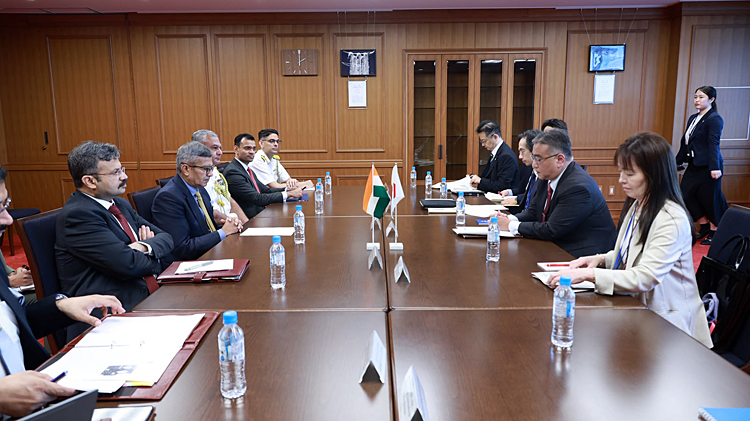
According to the Officials from MoD, both sides reviewed the full spectrum of bilateral defence engagement, including military-to-military exchanges, cooperation between the joint headquarters of both armed forces, maritime cooperation, bilateral and multilateral military exercises, capacity building, defence equipment and technology collaboration, and institutional mechanisms.
One of the most important outcomes of the meeting was the emphasis on expanding defence industrial collaboration and advanced technology partnerships
Particular emphasis was placed on expanding cooperation in maritime security, reflecting the strategic importance of the Indian Ocean and Western Pacific. Both countries agreed that regular high-level consultations and institutional dialogue remain essential for responding to evolving regional security challenges.
The dialogue also reviewed preparations for upcoming ministerial-level engagements, including the next India-Japan 2+2 Foreign and Defence Ministerial Dialogue, expected later this year.
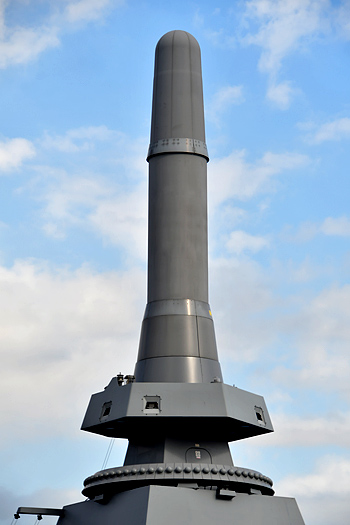
One of the most important outcomes of the meeting was the emphasis on expanding defence industrial collaboration and advanced technology partnerships.
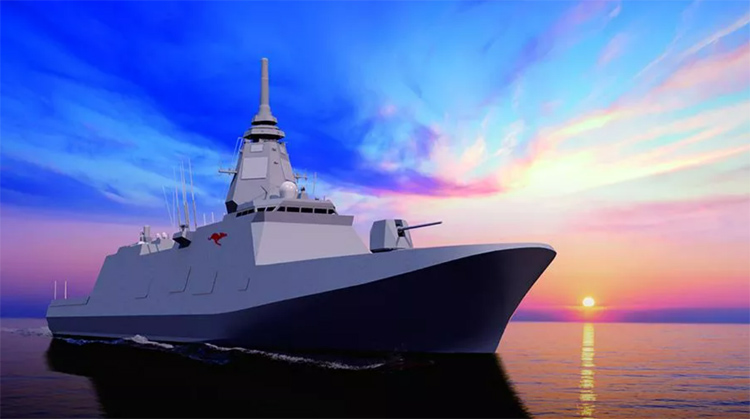
India and Japan discussed opportunities for cooperation in naval communication antenna systems in the advanced maritime surveillance radar technologies whisch is already in the pipeline. While further discussion on the maritime platforms, including potential collaboration involving Japan's Mogami-class frigates, is yet to be confirmed, both sides likely deliberated the idea.
The discussions reflect the Defence Secretary's focus on leveraging Japan's strengths in advanced defence manufacturing while supporting New Delhi's Atmanirbhar Bharat initiative
Japan possesses one of the world's most sophisticated defence technology bases. Operated by the Japan Self-Defense Forces (JSDF), its military technology focuses on precision engineering, naval superiority, anti-submarine warfare, integrated air and missile defence, advanced sensors and increasingly sophisticated unmanned systems.
Owing to Japan's post-war constitutional framework, its defence capabilities have traditionally been oriented towards deterrence, homeland defence and maritime security rather than expeditionary operations. But the core of such advancement does place Japan among the top tier in military tech.
That presents tremendous potential in areas like fighter aircraft technologies, Aero-engine cooperation, Space security, Artificial intelligence, and emerging defence technologies.
The discussions reflect the Defence Secretary's focus on leveraging Japan's strengths in advanced defence manufacturing while supporting New Delhi's Atmanirbhar Bharat initiative.
An area attracting considerable strategic interest is Japan's participation in the Global Combat Air Programme (GCAP) alongside the United Kingdom and Italy.
The trilateral programme recently moved into its next phase after awarding a contract valued at approximately £4.6 billion to the Edgewing joint venture, which is leading key design and engineering activities for the sixth-generation stealth combat aircraft.
For India, which is simultaneously advancing its own Advanced Medium Combat Aircraft (AMCA) programme while pursuing indigenous aero-engine development, Japanese expertise in propulsion, advanced materials, sensors and avionics could become an important area of future collaboration
The programme incorporates advanced artificial intelligence, network-centric warfare capabilities, optional unmanned teaming, long-range precision strike capability and one of the largest composite airframe structures ever developed for a British military aircraft.
Before joining GCAP, Japan had independently pursued the Mitsubishi F-X fighter programme—often informally referred to as the "Godzilla Fighter." The merger of the Japanese effort with British and Italian expertise has created one of the world's most ambitious next-generation combat aircraft programmes.

For India, which is simultaneously advancing its own Advanced Medium Combat Aircraft (AMCA) programme while pursuing indigenous aero-engine development, Japanese expertise in propulsion, advanced materials, sensors and avionics could become an important area of future collaboration if political and export frameworks evolve favourably.
Defence Secretary Rajesh Kumar Singh also emphasised the prevailing regional and global security environment and noted the growing convergence between New Delhi and Tokyo on strategic issues affecting the Indo-Pacific.
Both sides reiterated their commitment to promoting a free, open and rules-based Indo-Pacific based on respect for sovereignty, international law and freedom of navigation. The shared vision aligns closely with the strategic priorities of both countries under the Quad framework and their broader objective of maintaining peace, stability and secure maritime commons.
During his visit, Defence Secretary Rajesh Kumar Singh also called on Japanese Defence Minister Shinjiro Koizumi, conveying greetings from Defence Minister Rajnath Singh and extending an invitation for the Japanese Defence Minister to visit India at the earliest opportunity.
India and Japan have steadily transformed their relationship from one centred primarily on economic cooperation into a comprehensive strategic partnership encompassing defence, maritime security, advanced technology and resilient supply chains
The meeting reaffirmed the growing momentum behind the India-Japan Special Strategic and Global Partnership and highlighted the importance both governments attach to defence cooperation amid an increasingly uncertain regional security environment.
Earlier, Singh paid tribute at the Self-Defense Forces Memorial Stone in Tokyo, laying a wreath in honour of members of the Japan Self-Defense Forces who made the supreme sacrifice in service of their nation—a gesture symbolising the mutual respect that increasingly characterises bilateral military relations.
India and Japan have steadily transformed their relationship from one centred primarily on economic cooperation into a comprehensive strategic partnership encompassing defence, maritime security, advanced technology and resilient supply chains.
The latest Defence Policy Dialogue signals that both nations are prepared to deepen collaboration in next-generation defence technologies, defence manufacturing and operational cooperation. As strategic competition intensifies across the Indo-Pacific, New Delhi and Tokyo are increasingly positioning themselves as like-minded security partners committed to preserving regional stability through stronger military interoperability, industrial collaboration and adherence to international rules.
The Tokyo dialogue reinforces that India-Japan defence ties are no longer confined to exchanges and exercises but are gradually evolving into a technologically driven strategic partnership with long-term implications for Indo-Pacific security.
Manish Kumar Jha is a Consulting & Contributing Editor for SP's Aviation, SP's Land Forces and SP's Naval Forces and a security expert. He writes on national security, military technology, strategic affairs & policies.