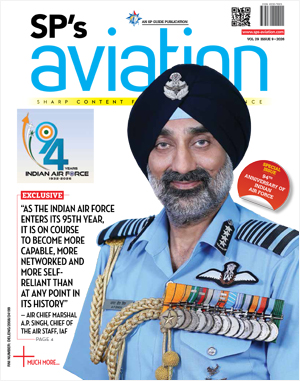
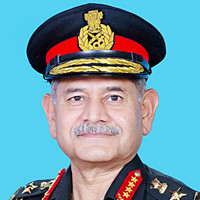
The insightful articles, inspiring narrations and analytical perspectives presented by the Editorial Team, establish an alluring connect with the reader. My compliments and best wishes to SP Guide Publications.
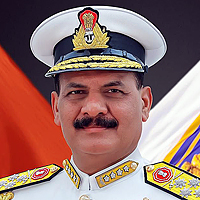
"Over the past 60 years, the growth of SP Guide Publications has mirrored the rising stature of Indian Navy. Its well-researched and informative magazines on Defence and Aerospace sector have served to shape an educated opinion of our military personnel, policy makers and the public alike. I wish SP's Publication team continued success, fair winds and following seas in all future endeavour!"

Since, its inception in 1964, SP Guide Publications has consistently demonstrated commitment to high-quality journalism in the aerospace and defence sectors, earning a well-deserved reputation as Asia's largest media house in this domain. I wish SP Guide Publications continued success in its pursuit of excellence.
For Tokyo and New Delhi, however, the larger significance lies beyond a single air exercise with the challenge to now translate the growing political trust and sophisticated military exercises into concrete industrial and technological outcomes
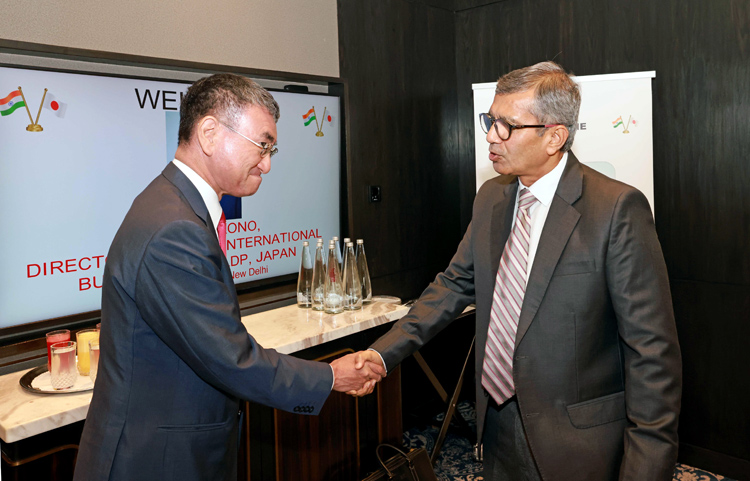
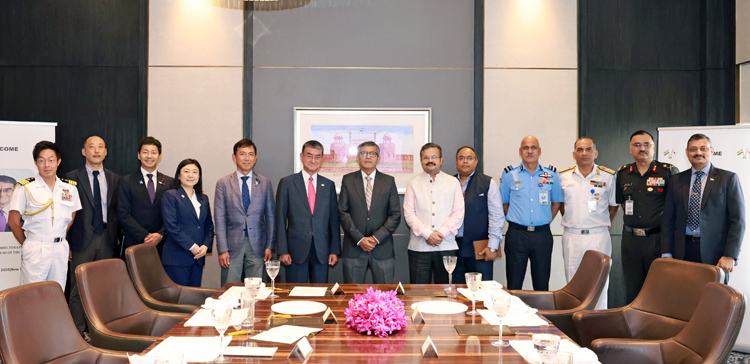
The India-Japan defence relationship is moving into a more operational and technology-driven phase, with the conclusion of the bilateral air exercise Veer Guardian 2026. It also coincides with fresh discussions in New Delhi on defence technology cooperation, joint military exercises and security in the Indo-Pacific.
The discussions focused on strengthening bilateral defence technology collaboration, expanding joint exercises and regional security cooperation in the Indo-Pacific
The latest momentum was visible on September 22 when Defence Secretary Rajesh Kumar Singh met a delegation of Japanese parliamentarians led by Liberal Democratic Party leader Taro Kono. The discussions focused on strengthening bilateral defence technology collaboration, expanding joint exercises and regional security cooperation in the Indo-Pacific.
The timing was significant. On the same day, the Indian Air Force (IAF) and Japan Air Self-Defense Force (JASDF) concluded their 14-day Veer Guardian 2026 exercise at Air Force Station Jodhpur. The exercise added a practical military dimension to the broader strategic engagement.
On the same day, the Indian Air Force (IAF) and Japan Air Self-Defense Force (JASDF) concluded their 14-day Veer Guardian 2026 exercise at Air Force Station Jodhpur
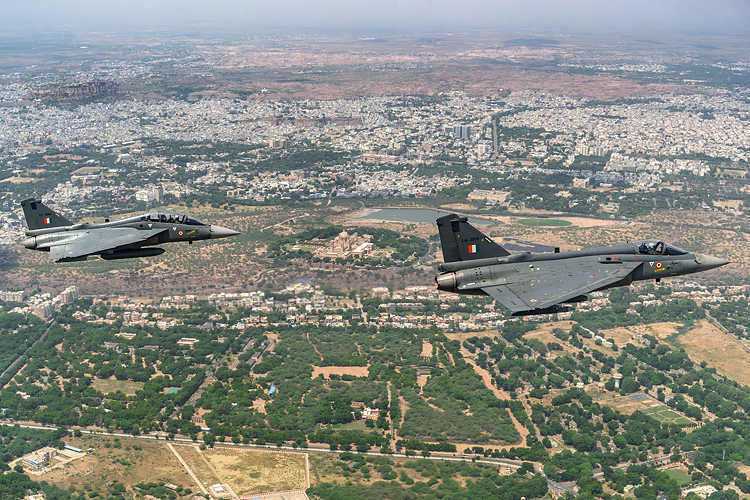
The exercise brought together Indian Su-30 MKI, Rafale and indigenous Light Combat Aircraft Tejas fighters with Japan's F-2A fighters. Both air forces conducted advanced flying missions, including within-visual-range combat and coordinated multi-aircraft operations.
More importantly, Veer Guardian was not limited to flying sorties. According to officials from the IAF, the exercise included mission-planning conferences, operational discussions, engineering interactions, maintenance practices and aerospace-safety briefings. These interactions allowed personnel from both air forces to exchange operational experience and understand each other's procedures and capabilities.
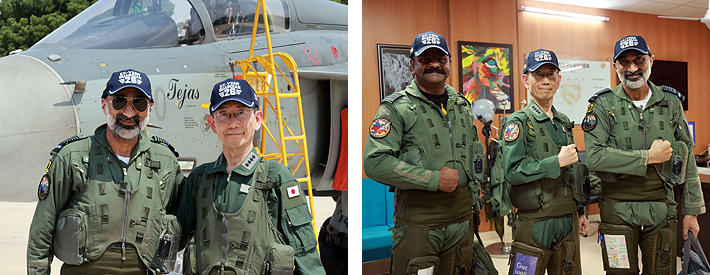
Notably, General Takehiro Morita, Chief of Staff of the JASDF, and Air Chief Marshal A.P. Singh, Chief of the Air Staff, flew the indigenous Tejas fighter at Jodhpur
Notably, General Takehiro Morita, Chief of Staff of the JASDF, and Air Chief Marshal A.P. Singh, Chief of the Air Staff, flew the indigenous Tejas fighter at Jodhpur.
The participation of Tejas alongside the Su-30 MKI and Rafale also demonstrated the expanding range of India's combat aviation inventory while providing an opportunity for Japanese air crews and officials to gain exposure to India's indigenous fighter programme.
For Tokyo and New Delhi, however, the larger significance lies beyond a single air exercise. Japan's 2026 Defence White Paper describes India as an important partner with shared interests in regional peace and stability, while also noting the expansion of cooperation in defence equipment and technology.
Japan's 2026 Defence White Paper describes India as an important partner with shared interests in regional peace and stability, while also noting the expansion of cooperation in defence equipment and technology
The two countries already have a framework for defence equipment and technology cooperation. Their agreement on the transfer of defence equipment and technology was signed in 2015 and entered into force in 2016. In 2024, India and Japan signed an implementation arrangement concerning the transfer of Japan's UNICORN integrated communication antenna system for naval vessels. Discussions on its transfer to India are now progressing after the visit of the Japanese Defence Minister Shinjiro Koizumi to India.
Further, India and Japan agreed to accelerate defence equipment and technology cooperation, deepen service-to-service engagement and explore cooperation in areas including naval shipbuilding and design.
The Japanese minister also proposed a broader industrial approach described as "Design with Japan, Make in India", signalling an ambition to move towards greater industrial collaboration rather than limiting cooperation to equipment transfers. The two countries also agreed to explore repair and maintenance arrangements at shipyards in Japan and India.
The Japanese minister also proposed a broader industrial approach described as "Design with Japan, Make in India", signalling an ambition to move towards greater industrial collaboration
This could open opportunities in areas such as unmanned systems, artificial intelligence, maritime surveillance, communications, electronic warfare, advanced materials, shipbuilding and other emerging defence technologies. For India, Japanese industrial capabilities could complement its growing domestic defence manufacturing base, while India offers Japan a large manufacturing ecosystem and an increasingly important strategic partner in the Indo-Pacific.
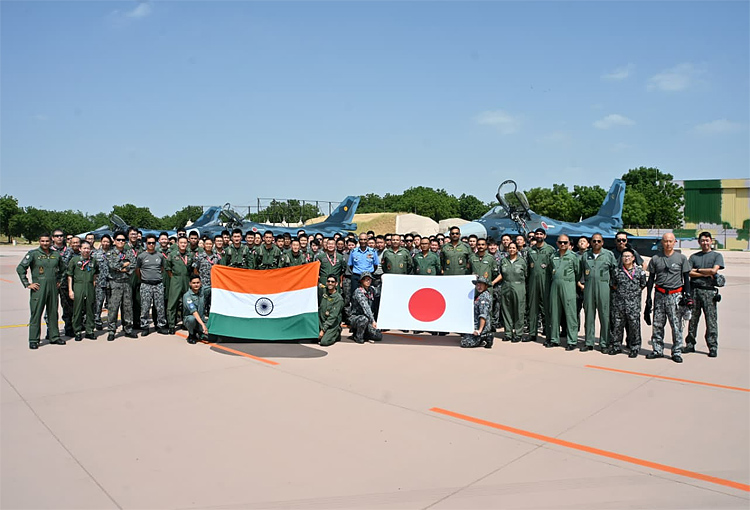
The two countries have conducted regular army, naval and air exercises, while Japan has also increased its engagement with India under its broader Indo-Pacific strategy. Japan's defence policy documents identify India as a key partner for strengthening security cooperation in the region.
For modern air warfare, interoperability depends on much more than flying alongside another country's fighters. It involves common operating procedures, mission planning, communications, maintenance, logistics, data exchange, electronic warfare awareness and the ability of personnel to understand each other's decision-making processes.
For India, Japanese industrial capabilities could complement its growing domestic defence manufacturing base, while India offers Japan a large manufacturing ecosystem and an increasingly important strategic partner in the Indo-Pacific
For India, deeper engagement with Japan also comes at a time when the Indian military is seeking technological autonomy and a stronger domestic defence-industrial base. Japan's advanced manufacturing capabilities, particularly in electronics, sensors, robotics, shipbuilding and high-end industrial systems, could offer areas for future collaboration.
The challenge now is to translate the growing political trust and sophisticated military exercises into concrete industrial and technological outcomes.
So, the next phase will be how quickly that expanding strategic convergence can be converted into concrete programmes and manufacturing partnerships in the key areas of defence and aerospace.
Manish Kumar Jha is a Consulting & Contributing Editor for SP's Aviation, SP's Land Forces and SP's Naval Forces and a security expert. He writes on national security, military technology, strategic affairs & policies.