
The insightful articles, inspiring narrations and analytical perspectives presented by the Editorial Team, establish an alluring connect with the reader. My compliments and best wishes to SP Guide Publications.

"Over the past 60 years, the growth of SP Guide Publications has mirrored the rising stature of Indian Navy. Its well-researched and informative magazines on Defence and Aerospace sector have served to shape an educated opinion of our military personnel, policy makers and the public alike. I wish SP's Publication team continued success, fair winds and following seas in all future endeavour!"

Since, its inception in 1964, SP Guide Publications has consistently demonstrated commitment to high-quality journalism in the aerospace and defence sectors, earning a well-deserved reputation as Asia's largest media house in this domain. I wish SP Guide Publications continued success in its pursuit of excellence.
India's drone strategy must be built around three principles: mass, autonomy and trust. The side that can combine all three—and continuously adapt its systems faster than the adversary—will have a major advantage on the future battlefield.
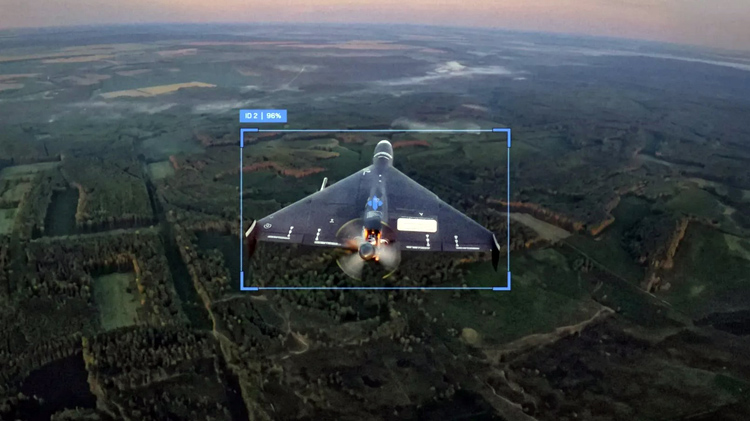
The rapid use of artificial intelligence and drones in the Russia-Ukraine war should be a wake-up call for India, with the Indian Army needing to move beyond individual drone purchases towards a comprehensive strategy for AI-enabled and autonomous warfare.
Speaking at the NDTV Defence Summit, Lt General Raj Shukla (Retd) said the scale of drone operations had changed dramatically in Ukraine as warfare moved from human-controlled systems towards "algorithmic warfare".
"Till last year, the focus of drone operations was with some very skilled remote operators," he said, adding that Ukraine could launch about 10,000 drone operations a day. With greater use of algorithms that figure has risen to around 20,000, demonstrating the scale of the transformation.
The lesson for India is clear: the drone is no longer just an aerial platform; it is becoming part of an AI-driven combat network
The lesson for India is clear: the drone is no longer just an aerial platform; it is becoming part of an AI-driven combat network.
For the Indian military, this means building a layered drone strategy covering surveillance, target acquisition, electronic warfare, logistics, precision strike, loitering munitions and drone swarms.
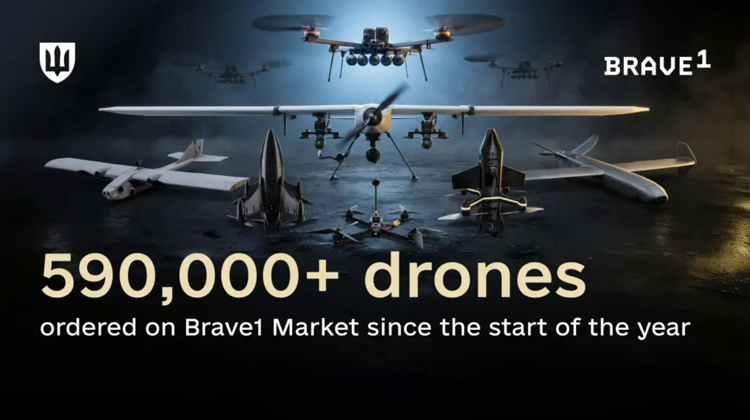
The Indian Armed Forces, especially the Indian Army, will also need large numbers of inexpensive systems that can be rapidly produced, modified and replaced alongside more sophisticated autonomous platforms. In a future conflict, mass could be as important as technological sophistication.
Ukraine has also demonstrated the importance of operating drones in a heavily contested electromagnetic environment. With communications being jammed and navigation systems disrupted, Indian drones will need greater autonomy, secure communications and anti-jamming capability. This means they must operate with limited human intervention. This raises the most difficult question: how much autonomy can be trusted in combat?
The Army should therefore build large-scale drone and AI test ranges and create common digital architectures linking DRDO, the armed forces, Indian industry, start-ups and academia
Shukla cited the Ukrainian approach that "the drone proposes and the human on the loop disposes". But he questioned who would make that decision when communications are disrupted in a dense electronic-warfare environment. For India, the answer should lie in rigorous testing rather than blind trust in AI.
A digital engineering and simulation chain can create a virtual battlefield where AI decision-making systems are repeatedly tested against jamming, spoofing, deception, and changing battlefield conditions before deployment on actual platforms.
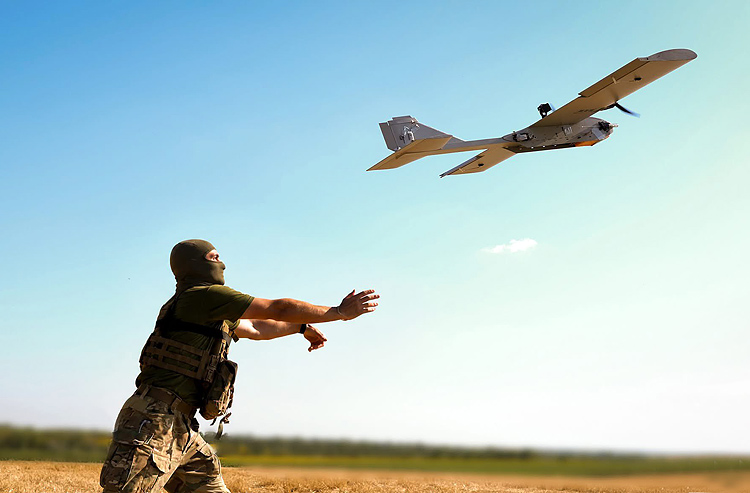
The Army should therefore build large-scale drone and AI test ranges and create common digital architectures linking DRDO, the armed forces, Indian industry, start-ups and academia.
The objective should be to develop a continuous cycle of design-test-learn-upgrade, rather than procure a drone and freeze its technology for years.
The Ukraine experience also shows that software is becoming as important as the airframe. India will need indigenous control algorithms, computer vision, battlefield AI, secure data links, navigation technologies and edge computing.
Autonomous drones are "here to stay". For the military, the challenge is no longer whether to adopt them, but how quickly to build the doctrine, technology and industrial capacity to use them effectively
Autonomous drones are "here to stay". For the military, the challenge is no longer whether to adopt them, but how quickly to build the doctrine, technology and industrial capacity to use them effectively.
India's drone strategy must be built around three principles: mass, autonomy and trust. The side that can combine all three—and continuously adapt its systems faster than the adversary—will have a major advantage on the future battlefield.
Manish Kumar Jha is a Consulting & Contributing Editor for SP's Aviation, SP's Land Forces and SP's Naval Forces and a security expert. He writes on national security, military technology, strategic affairs & policies.