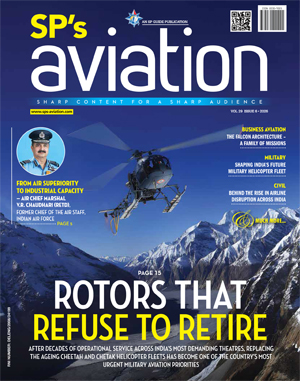
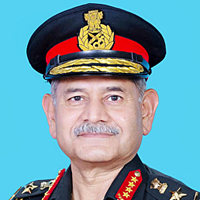
The insightful articles, inspiring narrations and analytical perspectives presented by the Editorial Team, establish an alluring connect with the reader. My compliments and best wishes to SP Guide Publications.
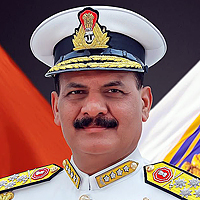
"Over the past 60 years, the growth of SP Guide Publications has mirrored the rising stature of Indian Navy. Its well-researched and informative magazines on Defence and Aerospace sector have served to shape an educated opinion of our military personnel, policy makers and the public alike. I wish SP's Publication team continued success, fair winds and following seas in all future endeavour!"

Since, its inception in 1964, SP Guide Publications has consistently demonstrated commitment to high-quality journalism in the aerospace and defence sectors, earning a well-deserved reputation as Asia's largest media house in this domain. I wish SP Guide Publications continued success in its pursuit of excellence.
Indian Air Force Chief Air Chief Marshal A.P. Singh has called for a sharper focus on fewer indigenous fighter aircraft programmes, warning that prolonged delays in delivering combat platforms are directly affecting the IAF's modernisation plans.
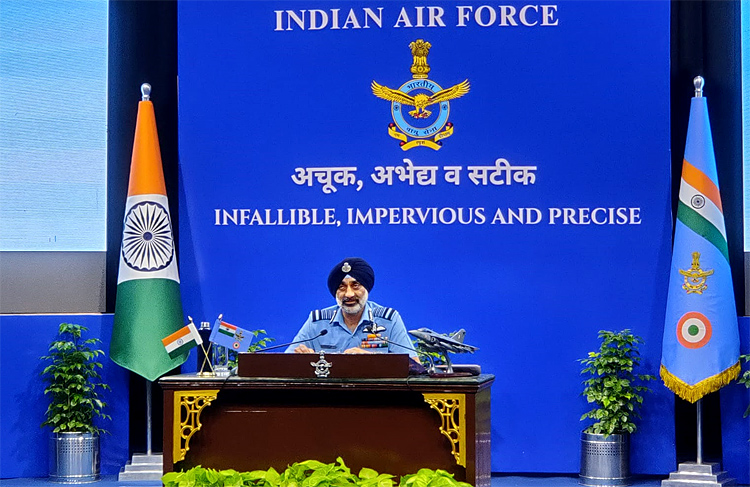
Indian Air Force Chief Air Chief Marshal A.P. Singh has called for a sharper focus on fewer indigenous fighter aircraft programmes, warning that prolonged delays in delivering combat platforms are directly affecting the IAF's modernisation plans.
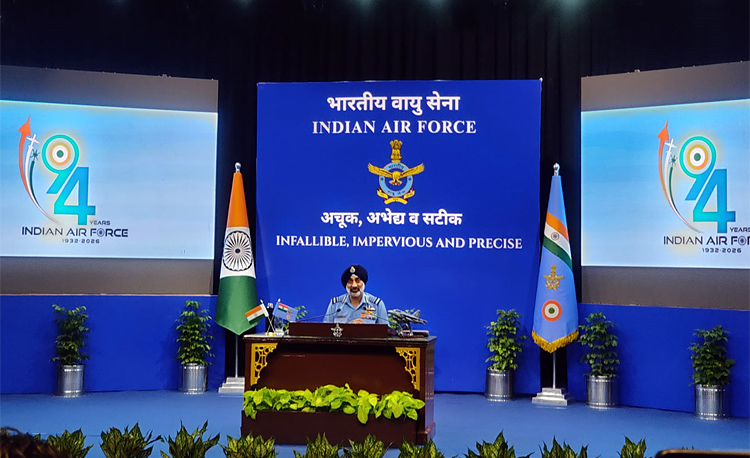
Responding to the question raised by the author, while addressing his annual press conference ahead of Air Force Day on October 8, Singh said India needs to prioritise defence aerospace projects instead of spreading its resources and technological capacity across too many programmes simultaneously.
"There is a requirement to reduce the number of programmes that are going on at any time, no doubt,"
"There is a requirement to reduce the number of programmes that are going on at any time, no doubt," Singh said, responding to a question on the efficacy of multiple fighter aircraft development programmes being pursued in India.
His remarks come as the Aeronautical Development Agency (ADA), the country's principal design agency for combat aircraft, is handling several major programmes, including the Tejas Mk1A, Tejas Mk2, Advanced Medium Combat Aircraft (AMCA) and potential Multi Role Fighter Programme (MRFA) for the co-design.
Singh agrees that India needs additional institutional capacity to manage the growing number of aerospace projects, pointing to the need for a more focused development structure and clearly defined priorities.
Singh agrees that India needs additional institutional capacity to manage the growing number of aerospace projects
The IAF Chief's central concern was not the number of projects alone, but the lack of tangible progress and predictable delivery timelines. For the IAF, delays in indigenous platforms create a difficult operational dilemma as the service faces the challenge of maintaining its combat strength while waiting for next-generation aircraft.
The AMCA programme is particularly critical. Singh said that if the indigenous fifth-generation fighter is delayed, the IAF would have to examine alternative platforms to bridge the capability gap.
"As far as other platforms are concerned, we have to look at some platform in case there are delays in the AMCA. If we have to fill in the gap... we need to look at something," he said.
If the indigenous fifth-generation fighter is delayed, the IAF would have to examine alternative platforms to bridge the capability gap
The warning underlines the difficult balance facing the IAF. While the service remains committed to indigenous aircraft development, it cannot allow operational requirements to be compromised by uncertain timelines.
Singh also flagged the growing security challenge posed by cooperation between Pakistan and China on a fifth-generation fighter aircraft.
He described Pakistan's reported plans to acquire Chinese J-35 stealth fighters—and reports that Pakistani pilots are already training in China—as a "cause for worry". However, he firmly asserted that it is not an insurmountable threat, stating that India possesses the necessary capabilities to respond effectively.
Singh also flagged the growing security challenge posed by cooperation between Pakistan and China on a fifth-generation fighter aircraft
"It is a cause for worry," he said, while stressing that the IAF has multiple capabilities and cannot afford to become overly dependent on any single weapons platform.
The message is significant for India's aerospace establishment. Indigenous development has become central to the country's defence strategy, but the IAF needs aircraft to enter service within operationally relevant timelines. A technologically ambitious programme that arrives years late can create a capability gap that becomes increasingly difficult and expensive to close.
At the same time, the IAF is looking at imported aircraft to supplement indigenous programmes. Singh said the government is working towards finalising the Multi-Role Fighter Aircraft (MRFA) deal by the end of the current financial year, subject to the process proceeding as planned.
Indigenous development has become central to the country's defence strategy, but the IAF needs aircraft to enter service within operationally relevant timelines
India had in February cleared the long-pending proposal to acquire 114 fighter aircraft under a government-to-government framework with France. The programme, centred on the Rafale, is intended to provide a major boost to the IAF's depleted fighter fleet and strengthen its combat capability while indigenous platforms mature.
The MRFA programme, however, is not a substitute for India's indigenous fighter ecosystem. The larger challenge is to ensure that the Tejas Mk1A, Tejas Mk2 and AMCA programmes move from development promises to predictable production and induction schedules.
Singh's remarks therefore point to a broader lesson for India's defence modernisation: fewer programmes, clearer priorities and firm delivery timelines may be more valuable than a long list of ambitious projects
Singh's remarks therefore point to a broader lesson for India's defence modernisation: fewer programmes, clearer priorities and firm delivery timelines may be more valuable than a long list of ambitious projects.
For the IAF, delays are not merely administrative setbacks. Every year lost in development and production affects squadron strength, operational planning and the ability to respond to a changing regional threat environment.
India's aerospace ambitions will ultimately be judged not by the number of programmes announced, but by how quickly capable aircraft reach the flight line.
Manish Kumar Jha is a Consulting & Contributing Editor for SP's Aviation, SP's Land Forces and SP's Naval Forces and a security expert. He writes on national security, military technology, strategic affairs & policies.