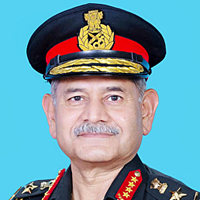
The insightful articles, inspiring narrations and analytical perspectives presented by the Editorial Team, establish an alluring connect with the reader. My compliments and best wishes to SP Guide Publications.
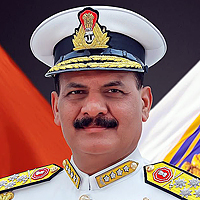
"Over the past 60 years, the growth of SP Guide Publications has mirrored the rising stature of Indian Navy. Its well-researched and informative magazines on Defence and Aerospace sector have served to shape an educated opinion of our military personnel, policy makers and the public alike. I wish SP's Publication team continued success, fair winds and following seas in all future endeavour!"

Since, its inception in 1964, SP Guide Publications has consistently demonstrated commitment to high-quality journalism in the aerospace and defence sectors, earning a well-deserved reputation as Asia's largest media house in this domain. I wish SP Guide Publications continued success in its pursuit of excellence.
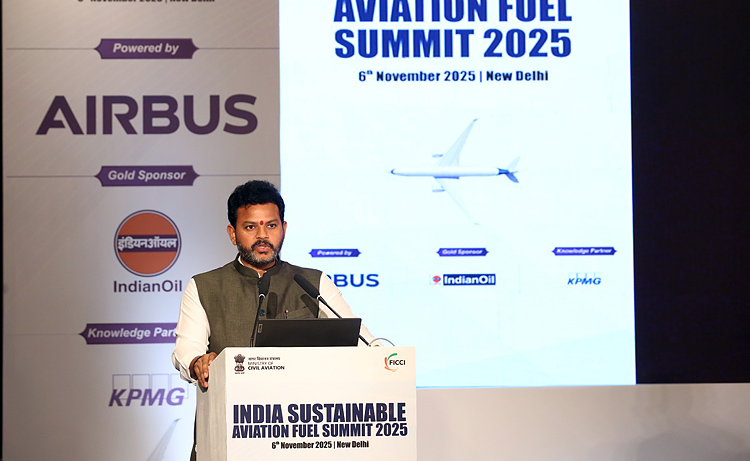
The next time you enjoy a crispy samosa, remember – it might just hold the secret to powering your next flight! At the Sustainable Aviation Fuel (SAF) Summit in New Delhi, Civil Aviation Minister K. Rammohan Naidu used this delicious metaphor to highlight how India's waste-to-fuel innovation could turn kitchen by-products into jet fuel.
"From feedstock to fuel, from farmers to flyers, and from frying to flying – who would have imagined that even those frying samosas can be part of this global aviation movement," Naidu quipped, summing up India's inclusive vision for Sustainable Aviation Fuel.
The Minister confirmed that the government is finalising a Sustainable Aviation Fuel Policy, which will soon be announced. "We are committed to speeding up the SAF movement and will be releasing the policy very soon," he assured.
India's SAF policy will soon be unveiled to power greener skies.
The policy aims for one per cent blending of SAF in jet fuel by 2027, two per cent by 2028, and five per cent by 2030. But beyond climate goals, it's also an economic and social opportunity. SAF can potentially reduce India's crude oil import bill by $5-7 billion annually, create over one million green jobs, and increase farmers' incomes by 10-15 per cent – a "farm-to-flight" revolution in the making.
The Minister observed that the global aviation industry stands at a crossroads – balancing rapid growth with mounting climate concerns.
With air traffic expanding faster than the overall economy and other transport sectors, India is projected to record 10 million passenger trips in 2025, growing at an annual rate of 6.7 per cent. "Aviation has truly become the growth engine for mobility and businesses worldwide," Naidu said, noting that Indian carriers have collectively placed orders for more than 1,700 aircraft – a clear indicator of the sector's rapid expansion and confidence in long-term growth.
SAF can create over 1 million green jobs and raise farmers' incomes by 15 per cent.
However, this growth comes with an urgent sustainability challenge. India's aviation turbine fuel (ATF) consumption is projected to reach 15-16 million tonnes by 2030, and nearly 31 million tonnes by 2040, potentially doubling the sector's carbon footprint. The solution, he emphasised, lies in Sustainable Aviation Fuel, which can reduce emissions by up to 80 per cent compared to conventional jet fuel.
If there was one theme that echoed through the Summit, it was collaboration. "The growing energy needs of the aviation sector demand greater clarity, commitment, and collaboration from all stakeholders. India's SAF drive is a multi-ministry mission, involving the Ministry of Civil Aviation, Petroleum & Natural Gas, Finance, Agriculture, and NITI Aayog – all working to accelerate the transition from laboratory research to commercial production." added Ekta Agrawal, Dy. Director, DGCA.
The strongest fuel is collaboration - government, industry, and academia unite for SAF.
Indian Oil Corporation's Panipat Refinery has already become the first facility certified to produce SAF, with Kotconq India Pvt Ltd serving as the country's first SAF certifying authority – a major step toward building domestic credibility and scaling up production.

With 750 million tonnes of biomass and 230 million tonnes of surplus agricultural residue, India has abundant feedstock potential. The policy will prioritise non-feedstock-based production – using waste oils, crop residue, and municipal waste – ensuring that SAF growth doesn't come at the cost of food security.
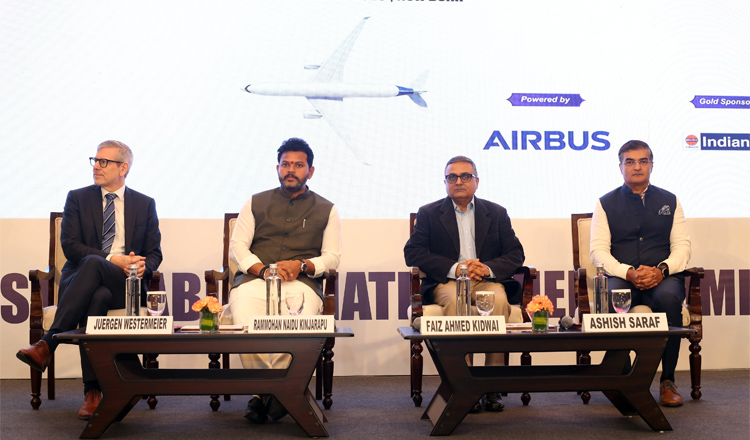
Faiz Ahmed Kidwai, Director General, DGCA, highlighted that aviation decarbonisation is a global endeavor requiring shared responsibility and solidarity. "India is committed to being a proactive and principal partner in this journey. Our ambition of achieving a five per cent SAF blending target by 2030 is a declaration of intent to lead by example," he said.
Jürgen Westermeier, Chairman, FICCI National Civil Aviation Committee and President & MD, Airbus India & South Asia, called SAF a transformative opportunity: "For India, the relevance of SAF extends far beyond environmental targets – it can be a powerful economic enabler. By developing a domestic SAF industry, India can enhance its energy security and sovereignty over its fuel supply chain."
Ashish Saraf, Co-Chairman, FICCI Civil Aviation Committee and Vice President & Country Head India, Pratt & Whitney, emphasised that SAF is the cornerstone of India's Net Zero aviation story. He noted that SAF alone could account for up to two-thirds of emission reductions, positioning India as a potential global export hub for sustainable fuels.
At the Summit, Airbus, Indian Oil, and Gati Shakti Vishwavidyalaya (GSV) announced a Joint Study Agreement to explore converting waste materials into SAF, symbolising the power of academia-industry synergy.
Adding to the knowledge momentum, FICCI and KPMG released a Thought Leadership Report on SAF – offering an actionable roadmap to scale production, address affordability challenges, and drive adoption among airlines.
The event captured the essence of India's SAF journey – inclusive, innovative, and collaborative. From laboratories to refineries, from kitchens to cockpits, India is stitching together a sustainability story that's uniquely its own.
"We must balance growth with responsibility, innovation with inclusion, and ambition with action," Naidu concluded.
The next time you fry a samosa, it might just be contributing – in spirit and science – to a cleaner sky!