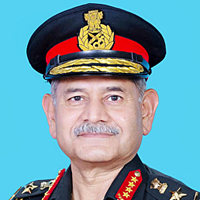
The insightful articles, inspiring narrations and analytical perspectives presented by the Editorial Team, establish an alluring connect with the reader. My compliments and best wishes to SP Guide Publications.
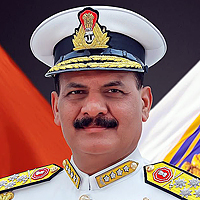
"Over the past 60 years, the growth of SP Guide Publications has mirrored the rising stature of Indian Navy. Its well-researched and informative magazines on Defence and Aerospace sector have served to shape an educated opinion of our military personnel, policy makers and the public alike. I wish SP's Publication team continued success, fair winds and following seas in all future endeavour!"

Since, its inception in 1964, SP Guide Publications has consistently demonstrated commitment to high-quality journalism in the aerospace and defence sectors, earning a well-deserved reputation as Asia's largest media house in this domain. I wish SP Guide Publications continued success in its pursuit of excellence.
Boeing's Values and Behaviors guide Ratan Khatwa and his team in their Human Factors mission.
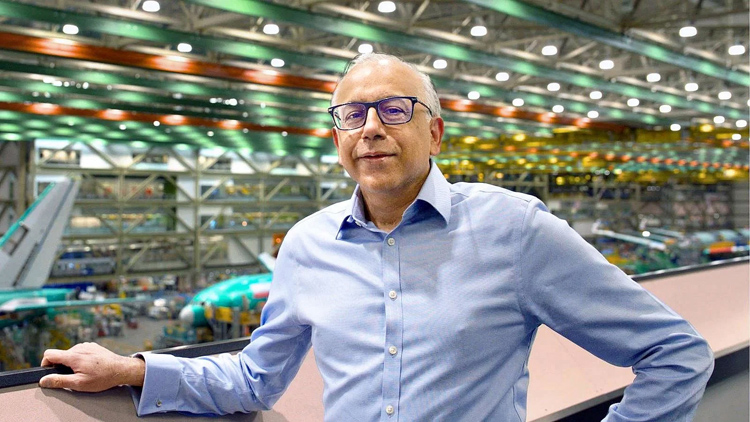
While on medical leave after undergoing life-changing surgery, Ratan Khatwa spent a lot of time thinking about his life and purpose. He wasn't looking to leave his role at a supplier, where he worked as a senior chief engineer in Human Factors. But following the 2018 and 2019 737 MAX accidents and during conversations with his family, he kept coming back to the idea of working for Boeing, where he felt he had an opportunity to make a difference.
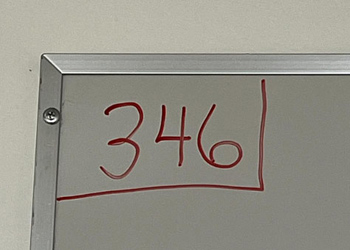
Now on a whiteboard in his office, he keeps a handwritten number in the corner: 346 — the number of lives lost in the 737 MAX accidents.
"It grounds me and reminds me why I'm here." —Ratan Khatwa, Boeing Senior Technical Fellow
Khatwa, a Senior Technical Fellow in Human Factors Engineering, has a history of developing innovative, safety-enhancing flight deck technologies. He previously led a team that redesigned weather radar with pilots' needs as the priority. The redesign was the first clean-slate weather radar approach in nearly 30 years and helps pilots spot hazards such as turbulence, hail and lightning sooner and with less workload.
At Boeing, Khatwa helped work on a human factors evaluation of the 777-9 flight deck with pilots from around the world.
"It's a great example of how we, as a team, can work together to put the needs of our customers first," he said. "It also has helped us build trust with our regulators and customers. They have come along with us on this journey."
Why it matters: Culture – not just tools – helps teams build trust; design safer systems; and work more effectively with pilots, airlines and regulators.
Khatwa prioritizes three truths: Engineers succeed when designs prioritize the needs of humans, when teams collaborate respectfully and when people act with integrity.
Engaging with customers, regulators and safety organizations early and often, as well as clearly conveying how ideas lead to improvements, helped earn trust with stakeholders.
Award winner: Khatwa recently received the Flight Safety Foundation's David Morrison Innovation Award for his work in advancing flight deck technologies and aviation safety. He believes human-centered design and early engagement with pilots, airlines and regulators shape better solutions.
"It's not just technology for the sake of technology but technology to serve the unmet needs of our customers," he said.