
The insightful articles, inspiring narrations and analytical perspectives presented by the Editorial Team, establish an alluring connect with the reader. My compliments and best wishes to SP Guide Publications.

"Over the past 60 years, the growth of SP Guide Publications has mirrored the rising stature of Indian Navy. Its well-researched and informative magazines on Defence and Aerospace sector have served to shape an educated opinion of our military personnel, policy makers and the public alike. I wish SP's Publication team continued success, fair winds and following seas in all future endeavour!"

Since, its inception in 1964, SP Guide Publications has consistently demonstrated commitment to high-quality journalism in the aerospace and defence sectors, earning a well-deserved reputation as Asia's largest media house in this domain. I wish SP Guide Publications continued success in its pursuit of excellence.
How the FIFA World Cup Is Reshaping Business Aviation Across North America

The FIFA World Cup has always been about movement. Teams travel between venues, supporters cross continents to follow their nations, and broadcasters move thousands of personnel and tonnes of equipment from one stadium to the next. Yet while commercial aviation carries the vast majority of those travelling to football's biggest tournament, another network has quietly become just as critical to keeping the event moving.
The World Cup has created a constantly shifting pattern of business aviation activity across three countries, 16 host cities and thousands of kilometres. Every match changes travel plans. Every knockout fixture reshapes aircraft positioning. For operators, flexibility has become just as important as fleet size
Away from the packed airline terminals and fan zones, North America's business aviation industry is experiencing one of its busiest and most operationally demanding periods in recent memory.
The increase in private aircraft movements during the 2026 FIFA World Cup was hardly unexpected. What has surprised many within the industry is where that demand has appeared, how operators have adapted, and what the tournament has revealed about the future of business aviation in North America.
Unlike the Super Bowl, where demand builds around a single city over a few days, the World Cup has created a constantly shifting pattern of business aviation activity across three countries, 16 host cities and thousands of kilometres. Every match changes travel plans. Every knockout fixture reshapes aircraft positioning. For operators, flexibility has become just as important as fleet size.

From an aviation perspective, the 2026 FIFA World Cup represents something the industry has never faced before.
The tournament spans the United States, Canada and Mexico, with matches taking place over more than five weeks. Operators have had to prepare for six consecutive weeks of elevated traffic while managing slot-controlled airports, parking restrictions, permit requirements, hotel shortages and cross-border regulatory complexities. The company has described the tournament as one of the most operationally demanding events business aviation has encountered in North America.
Rather than flying to one event and returning home, many travellers are following the tournament itself, creating longer, more complex itineraries that place greater emphasis on planning, scheduling and aircraft availability than a traditional business trip
That planning began months before the opening match. Unlike traditional business travel, where demand can often be predicted through corporate schedules, World Cup travel evolves almost daily. Sponsors alter hospitality programmes, broadcasters shift production teams, executives attend multiple fixtures, and charter requests change as national teams advance–or are eliminated–from the tournament.
Instead of reacting to bookings as they arrive, operators have increasingly found themselves positioning aircraft in anticipation of where demand is likely to emerge next. That subtle shift says a great deal about how business aviation has evolved.
The first signs of increased activity became visible almost immediately after the tournament began.
Analysis by WINGX, covering business aviation activity across the 16 host cities between 11 and 22 June, found that several markets experienced substantial increases compared with a typical operating day. Interestingly, the strongest percentage increases were not necessarily recorded at North America's largest business aviation hubs.
Seattle, for example, experienced roughly double its normal level of business aviation activity during the USA-Australia fixture, while Mexico City recorded around 1.7 times its typical business aviation traffic during the opening match. According to WINGX analyst Nick Koscinski, the biggest percentage increases have generally occurred in smaller markets, where additional aircraft movements stand out far more than they do in already busy metropolitan areas such as New York or Los Angeles. He also expects the knockout rounds and final to generate even larger spikes in activity.
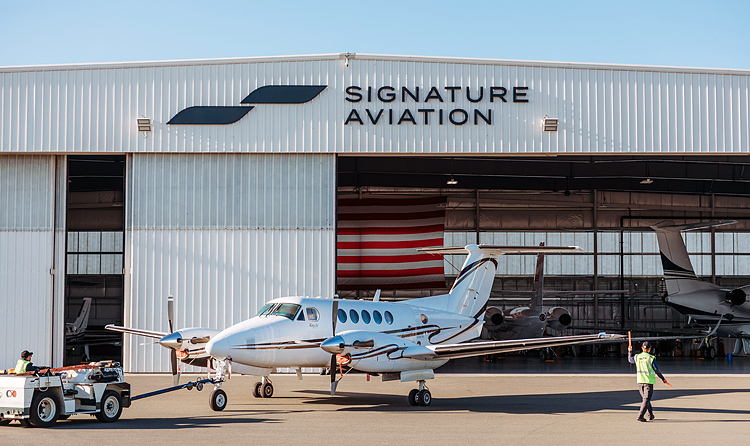
Those findings challenge a common assumption. It would be easy to assume that New York, Los Angeles or Miami would dominate the tournament's private aviation story simply because they already handle significant business aviation traffic. Instead, the World Cup has highlighted the growing strategic importance of secondary and regional airports, many of which have become critical overflow locations as operators search for available parking and operational flexibility. That may ultimately prove to be one of the tournament's most significant aviation lessons.
One of the defining characteristics of the World Cup is that demand never stays in one place. As the tournament progresses, aircraft are constantly repositioned to support new fixtures, accommodate changing itineraries and remain close to where demand is expected next. Unlike events that generate a single surge of arrivals and departures, the World Cup creates a moving wave of business aviation activity.
The World Cup has demonstrated that modern business aviation is no longer built around simply responding to customer requests. Increasingly, operators are predicting demand, positioning aircraft in advance and building flexibility into their schedules before bookings are even confirmed
For operators, this has changed the way aircraft are managed. Rather than concentrating fleets around one destination, companies have had to spread aircraft across multiple regions while maintaining the flexibility to redeploy them at short notice. Parking availability has become a strategic consideration rather than a logistical detail, with secondary airports playing an increasingly important role in supporting operations around major host cities.
Signature Aviation has similarly advised operators to prepare for sustained peak demand, constrained parking and increased operational complexity throughout the tournament, reflecting concerns shared across the wider business aviation industry.
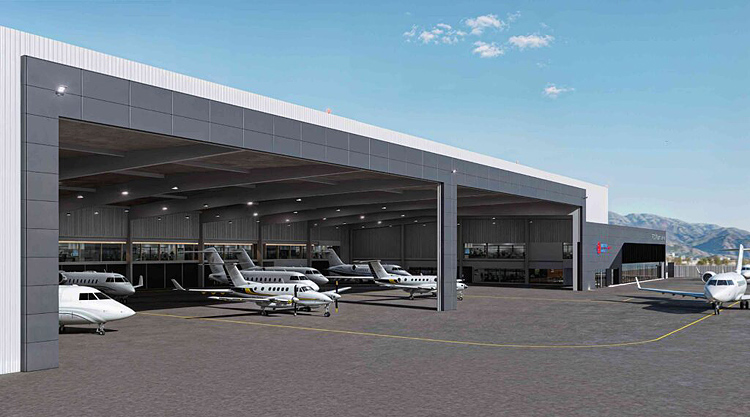
The emphasis has shifted from simply having aircraft available to ensuring they are available in the right place, at the right time.
The tournament has also highlighted another trend already taking shape across North American business aviation. Larger operators appear to be extending their advantage.
According to WINGX market data, overall North American business aviation activity is up 5.0 per cent year-to-date through 21 June, with the U.S. market growing by 5.2 per cent. Yet several of the industry's largest operators have grown considerably faster. NetJets departures have increased by 13.9 per cent, Flexjet by 11.2 per cent, Executive Jet Management by 9.0 per cent and flyExclusive by 6.0 per cent, suggesting that major fleet operators continue to capture an increasing share of the market.
Larger operators continue to outperform the wider market, reflecting the advantages of extensive fleets and sophisticated dispatch capabilities. During complex, multi-city events, operational flexibility often becomes the deciding factor
The World Cup has reinforced why. Large fleets provide options. When one airport reaches capacity or demand shifts unexpectedly to another host city, operators managing hundreds of aircraft have greater flexibility to reposition assets than companies working with much smaller fleets. That does not necessarily mean smaller charter providers have struggled–many have also benefited from increased demand–but it does underline the competitive value of operational scale during complex, multi-city events.
The same pattern has emerged among fractional ownership providers. Sentient Jet, for example, reported hundreds of World Cup-related flights already booked, many involving multi-leg itineraries, with expectations of even stronger demand as the tournament progresses into its knockout stages.

The significance of that statement extends beyond a single operator. It reflects a wider shift in customer behaviour. Rather than flying to one event and returning home, many travellers are following the tournament itself, creating longer, more complex itineraries that place greater emphasis on planning, scheduling and aircraft availability than a traditional business trip.
By the time the tournament reaches its latter stages, it will not simply be a question of how many aircraft are flying. It will be a question of how effectively an entire industry has adapted to keeping them moving.
The immediate beneficiaries of the World Cup have been easy to identify. Charter operators have reported stronger demand, fractional ownership providers have seen increased aircraft utilisation, and FBOs across host cities have been handling a noticeably busier mix of domestic and international arrivals.
The wider impact, however, extends well beyond those businesses. Ground handlers have had to coordinate tighter aircraft turnaround schedules. Fuel suppliers have experienced sustained demand over several weeks rather than the short spikes typically associated with major sporting events. Hotels near key business aviation airports have accommodated flight crews for longer periods, while trip support companies have spent months helping operators navigate permits, customs requirements and airport restrictions before the tournament even began.
The 2026 tournament has demonstrated that the sector is capable of supporting one of the most geographically complex sporting events ever staged, not through dramatic increases in fleet size, but through smarter planning, operational flexibility and closer coordination across the industry
Perhaps the biggest winner has been the industry's planning capability. The World Cup has demonstrated that modern business aviation is no longer built around simply responding to customer requests. Increasingly, operators are predicting demand, positioning aircraft in advance and building flexibility into their schedules before bookings are even confirmed. That approach has been essential during a tournament where travel demand changes almost every day.
Universal Weather & Aviation advised operators months in advance to expect prolonged parking shortages, tighter airport slot availability, increased permit processing requirements in Mexico and unusually high demand for crew accommodation throughout the competition. Rather than treating each match as an individual event, operators have approached the tournament as a six-week operational campaign requiring continuous planning rather than day-to-day scheduling.
For aircraft manufacturers, the World Cup has offered something that cannot easily be recreated through marketing campaigns. It has provided a live demonstration of business aviation at work.
Every day, business aircraft have connected executives with clients, sponsors with hospitality events and broadcasters with multiple venues across North America. While manufacturers are unlikely to attribute new aircraft orders directly to the tournament, events of this scale reinforce the practical value of business aviation to exactly the audience most likely to invest in it.

The World Cup has also highlighted the diversity of today's fleet. Long-range aircraft have supported transatlantic arrivals from Europe and the Middle East, while super-midsize and midsize aircraft have formed the backbone of domestic travel between host cities. Rather than any one aircraft type dominating operations, the tournament has demonstrated how different categories complement one another within a single, highly dynamic transport network.
Comparisons with the Super Bowl are inevitable, but operationally they are very different events.
The Super Bowl is characterised by an intense, short-lived surge in demand. Aircraft converge on one metropolitan area over a matter of days before dispersing almost immediately after the game. The World Cup has required something entirely different.
Demand has been spread across three countries, multiple international borders and sixteen host cities over several weeks. Aircraft have rarely remained in one location for long, and operators have had to manage changing itineraries as teams progressed through the tournament and corporate schedules evolved.
In many respects, the challenge has not been generating enough capacity but maintaining operational resilience over an extended period. That distinction may ultimately make the World Cup the more valuable case study for business aviation.
The tournament has reinforced several trends that were already beginning to emerge across the industry.
First, flexibility has become business aviation's greatest competitive advantage.
The ability to reposition aircraft quickly, adapt to changing customer requirements and operate outside fixed airline schedules has proved more valuable than ever during a tournament where demand is constantly moving.
Second, infrastructure matters just as much as fleet size. The World Cup has highlighted the importance of secondary airports, adequate apron space and efficient ground operations. In several markets, the industry's biggest operational constraint has not been aircraft availability but parking capacity and airport infrastructure.
Third, scale increasingly delivers resilience. Data from WINGX suggests larger operators continue to outperform the wider market, reflecting the advantages of extensive fleets and sophisticated dispatch capabilities. During complex, multi-city events, operational flexibility often becomes the deciding factor rather than simply the number of aircraft available.
Finally, the tournament has demonstrated that business aviation's role extends far beyond luxury travel. Much of the activity generated during the World Cup has been driven by corporate hospitality, media organisations, commercial partners, governing bodies and logistics providers rather than leisure travel alone. The industry has functioned as an extension of the tournament's commercial infrastructure, enabling people and organisations to move efficiently between venues while adapting to constantly changing schedules.
Long after the final trophy is lifted and aircraft return to their normal operating patterns, the aviation industry is likely to remember the 2026 FIFA World Cup for reasons that have little to do with football.
It has tested airport infrastructure, challenged dispatch teams, rewarded operators with the flexibility to adapt quickly and reinforced the growing importance of regional airport networks. Many of the operational lessons learned this summer are likely to influence planning for future global events, including the 2028 Los Angeles Olympic Games and other international sporting competitions.
Just as importantly, the tournament has shown that business aviation continues to evolve. It is becoming more data-driven, more predictive and more operationally sophisticated. The industry's success is no longer measured simply by how many aircraft it operates, but by how efficiently those aircraft can be deployed when circumstances change.
Every World Cup leaves a legacy. For football, that legacy is measured in unforgettable matches and new champions. For business aviation, it is measured differently.
The 2026 tournament has demonstrated that the sector is capable of supporting one of the most geographically complex sporting events ever staged, not through dramatic increases in fleet size, but through smarter planning, operational flexibility and closer coordination across the industry. The additional aircraft movements will eventually fade, and airport ramps will return to their normal rhythm. The lessons, however, are likely to remain.
If there is one conclusion to draw from the past several weeks, it is that the World Cup has not simply generated more business aviation traffic–it has accelerated the industry's evolution. Operators have adapted their planning, airports have tested the limits of their infrastructure and service providers have shown they can support sustained demand over a prolonged period. In doing so, the tournament has revealed something perhaps more significant than any traffic statistic. Business aviation's greatest strength is no longer the aircraft themselves. It is the industry's ability to adapt.