The insightful articles, inspiring narrations and analytical perspectives presented by the Editorial Team, establish an alluring connect with the reader. My compliments and best wishes to SP Guide Publications.
"Over the past 60 years, the growth of SP Guide Publications has mirrored the rising stature of Indian Navy. Its well-researched and informative magazines on Defence and Aerospace sector have served to shape an educated opinion of our military personnel, policy makers and the public alike. I wish SP's Publication team continued success, fair winds and following seas in all future endeavour!"
Since, its inception in 1964, SP Guide Publications has consistently demonstrated commitment to high-quality journalism in the aerospace and defence sectors, earning a well-deserved reputation as Asia's largest media house in this domain. I wish SP Guide Publications continued success in its pursuit of excellence.
Wings India 2026 marks India's rise as an Aviation Hub
Wings India 2026 marked a defining moment for Indian civil aviation, underscoring a shift from market-driven growth to capability-led development. Held in Hyderabad at Begumpet Airport from January 28-31, 2026, the four-day event brought together policymakers, state governments, global OEMs, airlines and industry stakeholders for displays and discussions on manufacturing, services, regional connectivity and emerging technologies. Organised by the Ministry of Civil Aviation along with AAI and FICCI, the show featured conferences, exhibitions, aircraft displays and business meetings. A spate of partnerships and announcements reinforced India's ambition to become a global aviation hub. The event concluded on January 31 after drawing strong industry engagement and significant public interest.
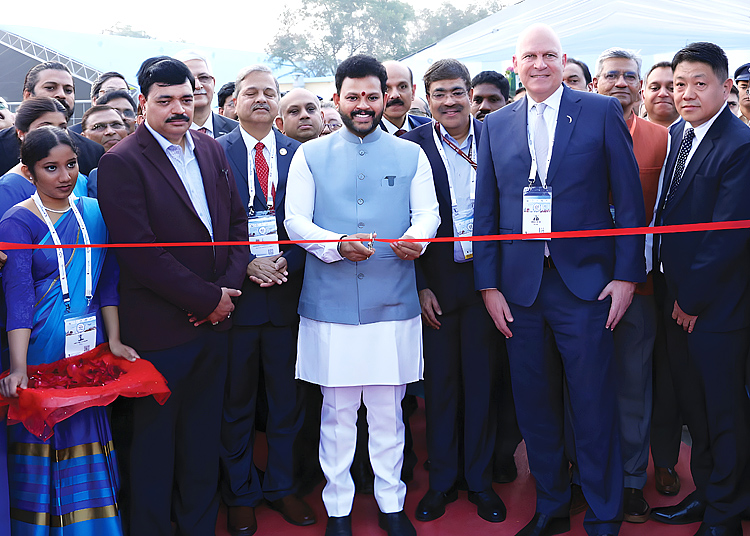
Minister of Civil Aviation, Rammohan Naidu Kinjarapu, formally inaugurated Wings India 2026 at the Static Display Area at Begumpet Airport, Hyderabad, marking the launch of Asia's largest civil aviation platform. Emphasising the event's national significance, the Minister underscored how Wings India 2026 places the "Aam Aadmi" at the centre of India's aviation growth, while accelerating business partnerships and enabling progressive policy reforms. He highlighted that the four-day event reflects India's rising stature in the global aviation ecosystem, bringing together government leadership, international industry players, innovators and policymakers under one platform. The inauguration set the strategic tone for the show, positioning Hyderabad as a focal point of global aviation dialogue and collaboration, and reinforcing India's ambition to build a more accessible, efficient, and globally competitive aviation sector.
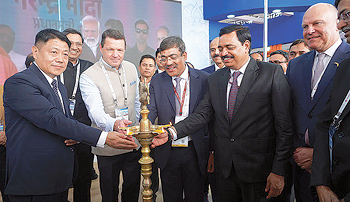
Secretary, Ministry of Civil Aviation, Samir Kumar Sinha, inaugurated the Exhibition Area at Wings India 2026 and undertook a comprehensive walk-through, engaging with exhibitors, industry leaders and global stakeholders across the aviation value chain. The exhibition showcased both ongoing initiatives and emerging opportunities across civil aviation, underlining India's accelerating sectoral transformation. The exhibition underscored India's ambition to position itself as a globally competitive aviation hub, while reinforcing the government's commitment to enabling industry growth through collaboration, reform and long-term capacity building.
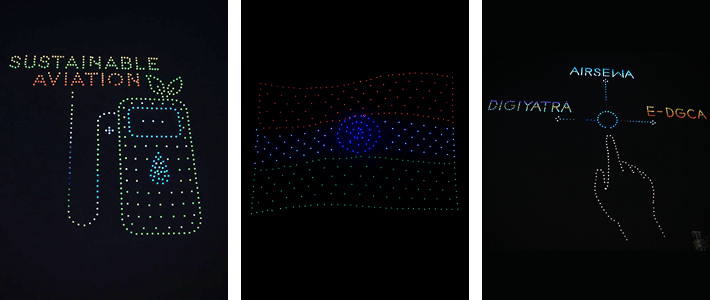
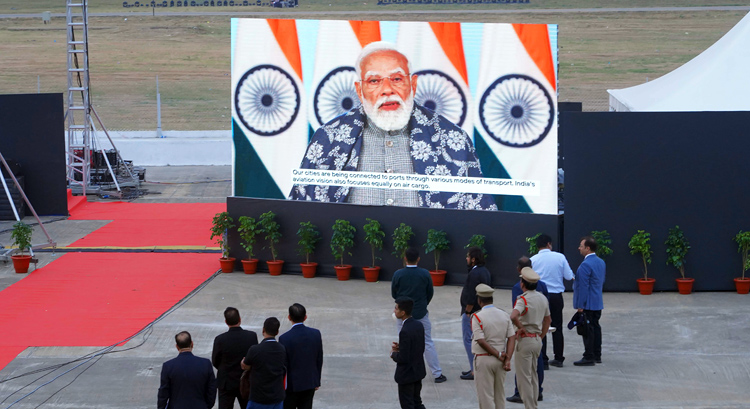
Prime Minister Narendra Modi, addressing Wings India 2026 virtually, underscored the historic transformation of India's aviation sector over the past decade, from an elite mode of travel to the world's third-largest domestic aviation market. He highlighted the next phase of the UDAN scheme to further strengthen regional connectivity, including seaplane operations, and reaffirmed India's progress in indigenous aircraft manufacturing. The Prime Minister positioned aviation as a strategic enabler of economic development, regional integration and global engagement. Secretary, Ministry of Civil Aviation, Samir Kumar Sinha, echoed this vision, stressing the importance of innovation and long-term capacity building. The programme concluded with a drone show symbolising India's innovation-led and future-ready aviation journey.
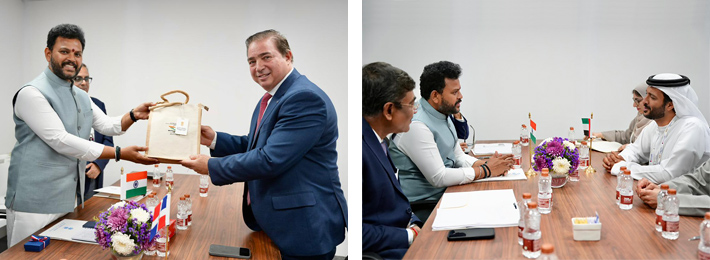
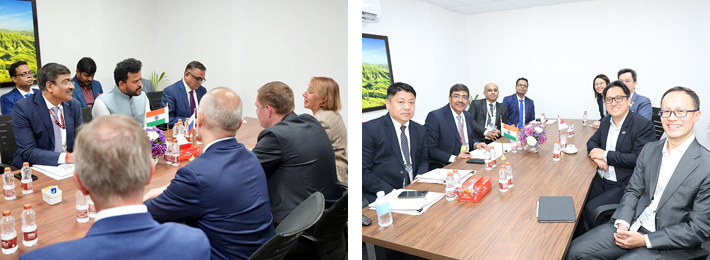
On the sidelines of Wings India 2026, Minister for Civil Aviation, Rammohan Naidu, held bilateral meetings with ministerial delegations from the UAE, Saudi Arabia, Russia, and the Dominican Republic, strengthening India's international aviation engagement. Also, during the show, Secretary, Ministry of Civil Aviation, Samir Kumar Sinha, held a courtesy meeting with a delegation from Airports Council International (ACI), reinforcing India's engagement in global sustainability initiatives. During the interaction, ACI invited the Ministry to join the Airport Carbon Accreditation (ACA) Advisory Board, a globally recognised carbon management certification programme for airports. This invitation reflects India's growing role in shaping global climate action frameworks within the aviation sector.
Boeing projected a dramatic expansion of aviation across India and South Asia, with passenger traffic expected to grow at an average of seven per cent annually over the next two decades. According to its Commercial Market Outlook, airlines in the region will require nearly 3,300 new aircraft by 2044, with single-aisle aircraft accounting for nearly 90 per cent of deliveries. The commercial fleet is projected to grow from 795 aircraft today to approximately 2,925 by 2044, driven primarily by India's booming domestic market and a continued shift from rail to air travel. Wide-body fleets are expected to more than triple, strengthening long-haul connectivity, while freighter fleets are projected to grow fivefold, driven by e-commerce and high-tech manufacturing. Boeing estimates the region will require over $195 billion in aviation services and approximately 1,41,000 new aviation professionals. The outlook reinforces India's emergence as a central pillar of global aviation growth.

Airbus projected that India's commercial aircraft fleet will triple to 2,250 aircraft by 2035, driven by strong domestic demand and expanding international ambitions of Indian airlines. Passenger traffic is forecast to grow at 8.9 per cent annually, the fastest among major economies, supported by rising incomes, infrastructure investment and changing travel behaviour. Airbus expects to deliver over 1,250 aircraft to Indian carriers, with annual inductions potentially peaking at 150 aircraft. Workforce demand will surge in parallel, with pilot numbers projected to rise to 35,000 and technical staff to 34,000 by 2035. Airbus also highlighted India's growing role in its global engineering and supply chain ecosystem, with procurement expected to rise to $2 billion annually. The company announced a new 5,000-seater campus in Bengaluru and confirmed assembly programmes for the C-295 and H125 helicopters, reinforcing India's strategic position in global aerospace manufacturing.

Despite India becoming the world's third-largest aviation market, GE Aerospace noted at Wings India 2026 that the country is still short of the critical engine volume needed to justify a dedicated global MRO facility. Vikram Rai, CEO, GE Aerospace (South Asia), during the MRO Roundtable explained that a viable business case typically requires 2,000-2,500 aircraft engines to ensure rolling capacity. While Indian airlines have ordered around 1,300 engines over the past five to six years, 1,196 powered by GE or CFM only about 550 GE and CFM engines are currently in operation domestically. Narrow-body engines, primarily CFM, typically require major performance restoration every four years. Rai emphasised that timing is crucial, as global MRO providers need assurance of sustained engine inflows before committing capital, highlighting the importance of fleet maturity and utilisation growth.
ATR's latest white paper, Exploring India's Connectivity Landscape, released at Wings India 2026, confirms that India's regional aviation market is fundamentally suited to turboprops. Using its MobilityMonitor platform, the study found that over 90 per cent of India's 4.6 billion annual inter-city journeys are under 400 nautical miles, the range where turboprops offer superior economics and lower emissions compared to regional jets. Only three per cent of inter-city travel is currently by air, indicating significant untapped demand. The report identifies up to 900 new domestic routes, with 420 ideally suited for turboprop operations, potentially serving an additional 35 million passengers. ATR estimates that many of the 90 million new passengers expected through UDAN-backed airport expansion can only be served efficiently by turboprops, reinforcing their central role in India's regional connectivity strategy.
One of the most prominent aircraft at Wings India 2026 was Hunnu Air's Embraer E195-E2, branded the "Profit Hunter." Delivered in December 2025, the aircraft drew strong attention as part of Embraer's product showcase, competing with the Airbus A220 and Sukhoi Superjet SJ100 in the small jet segment. The aircraft arrived in Hyderabad on a nine-hour flight from Ulaanbaatar with a refuelling stop in Almaty, demonstrating its extended regional reach. Powered by Pratt & Whitney PW1900 engines, the E195-E2 offers reduced fuel burn and lower noise, cruising at Mach 0.82 with a regional range of nearly 5,556 km. Configured with 16 premium economy and 120 economy seats, the aircraft supports Hunnu Air's network across Central and East Asia, with charter links to India for religious tourism.

Thales reaffirmed its long-term commitment to India's aviation ecosystem at Wings India 2026, where it served as the Official Avionics Partner. The company highlighted its expanding role as a technology partner to Indian airlines, airports, and regulators, supporting major carriers such as Air India and IndiGo. Thales showcased its end-to-end focus on the passenger journey, from DigiYatra-enabled biometric airport solutions and Airport Operations Control Centres to advanced avionics and inflight entertainment systems. The company also outlined its growing capabilities in drones, counter-drone systems, Unmanned Traffic Management (UTM), and Air Traffic Management (ATM), aligned with India's future airspace needs. Localisation remains central to Thales' strategy, with ongoing investments in engineering centres in Bengaluru and Noida, expansion of its Gurugram MRO facility, and deeper supply chain partnerships. These initiatives align with Atmanirbhar Bharat and position Thales as a key enabler of India's aviation transformation.

TimeTooth Technologies made history at Wings India 2026 by becoming the first Indian company to receive DGCA Indian Technical Standard Order (ITSO) certification for aircraft seating systems. This landmark approval positions TimeTooth as a certified domestic manufacturer and represents a major step forward for India's aircraft interiors and manufacturing ecosystem under Atmanirbhar Bharat. The company also signed a strategic MoU with Hindustan Aeronautics Limited (HAL) for the development and supply of pilot and co-pilot seating for indigenous aircraft and defence platforms. A separate MoU with regional airline Fly91 will support seating solutions for its expanding fleet under the UDAN scheme. These partnerships reflect growing airline and OEM confidence in Indian-certified products and reduce dependence on imports. The ITSO approval unlocks both domestic and global market opportunities, marking a defining moment for India's aircraft interiors sector.

Air India announced a major expansion of its Boeing order book, placing an additional order for 30 Boeing 737 aircraft, taking its total Boeing commitment to 250 aircraft. The airline also entered into a multi-year agreement with Boeing Global Services for the 787 Component Services Program, covering its entire Dreamliner fleet, both existing aircraft and those on order. Together, these moves reinforce Air India's long-term fleet modernisation strategy, enhance operational reliability, and support the scale-up of its long-haul international network. Boeing India noted that the lifecycle support programme will enable faster turnarounds, expert repairs and seamless fleet performance. The announcements underscore Air India's transformation into a world-class global carrier, with fleet expansion and aftermarket support forming the twin pillars of its operational and service excellence strategy.

Air India announced the conversion of 15 of its Airbus A321neo orders to the Airbus A321XLR, with deliveries expected between 2029 and 2030. The A321XLR will enable the airline to operate new non-stop international routes and optimise medium-haul operations with enhanced range and fuel efficiency. The move reflects Air India's strategic focus on expanding its international footprint, improving network flexibility and deploying next-generation aircraft to serve long-thin routes economically. The conversion strengthens the airline's long-term fleet planning and reinforces its ambition to build a globally competitive narrowbody and medium-haul network.

At Wings India 2026, India and Russia signed agreements aimed at strengthening aviation cooperation. Key highlights included an agreement on the production of sanctions-proof SJ-100 aircraft, the export of six Il-114-300 aircraft to India, the showcase of Russia's luxury Aurus business jet, and the Il-114-300's maiden overseas demonstration flight. These developments reflect a renewed strategic partnership in aerospace manufacturing, regional aircraft deployment and business aviation. The agreements also highlight diversification of India's aviation partnerships amid shifting global supply chains and geopolitical dynamics.

Sakthi Aviation and Defence Systems Pvt Ltd (SADSPL) and OMNIPOL Group signed an MoU at Wings India 2026 to bring the Czech L 410 NG 19-seater aircraft to India. The collaboration includes assessment of modalities to set up a final assembly line in India, enabling Transfer of Technology and strengthening the local aviation manufacturing ecosystem. The initiative aligns with India's Atmanirbhar Bharat vision, supporting regional connectivity, industrial capability development and integration into global aerospace supply chains. The L 410 NG is well-suited for regional operations, particularly in short-runway and remote-area environments, reinforcing India's regional aviation ambitions.

ATR's eight-year Global Maintenance Agreement (GMA) with Fly91 marks a significant milestone for India's regional aviation sector. Announced at Wings India 2026, the agreement supports Fly91's expanding ATR 72-600 fleet and aligns with the airline's disciplined growth strategy focused on cost efficiency, reliability, and operational stability. The long-term, manufacturer-led maintenance partnership provides predictable maintenance costs, high fleet availability, and enhanced technical support, critical enablers for sustainable regional network expansion. Building on their relationship established at Fly91's launch in 2024, the extended GMA underscores the growing role of OEM-backed maintenance models in strengthening India's regional connectivity under the UDAN framework. The agreement also highlights how structured, long-term MRO partnerships can de-risk airline growth, improve asset utilisation, and support the broader development of India's tier-2 and tier-3 aviation markets.

PHL signed a purchase contract with Hindustan Aeronautics Limited (HAL) for the supply of 10 Dhruv NG helicopters during Wings India 2026. The helicopters will support offshore operations and enhance last-mile connectivity, particularly in hilly regions, northeastern states, and remote island territories such as Lakshadweep and the Andaman & Nicobar Islands. The contract exchange, witnessed by the Minister of Civil Aviation, marks a significant step in strengthening aviation services in challenging terrains. The initiative reflects India's commitment to improving regional air connectivity while promoting Atmanirbharta in aerospace manufacturing. By deploying indigenous rotary-wing platforms across utility, offshore and connectivity missions, the agreement reinforces the strategic role of helicopters in bridging infrastructure gaps and expanding access across India's diverse and difficult geographies.

At Wings India 2026, the Government of Odisha signed two landmark MoUs in civil aviation, positioning the state as an emerging hub for aviation and drone technology. A Flying Training Organisation will be established at Dandbose Airport in Mayurbhanj to train 50 commercial pilots annually, while Odisha's first UAV (Drone) Training and Testing Centre will be set up at Rangeilunda Airstrip in Ganjam to train over 100 UAV pilots each year. These initiatives will support critical applications across agriculture, infrastructure, logistics and disaster management, while generating employment and building future-ready skills among youth. The agreements reflect Odisha's commitment to strengthening its aviation ecosystem and contributing to India's broader technology-driven growth agenda.

Global aircraft hangar door specialist Jewers Doors has announced the establishment of a wholly owned subsidiary in India, reinforcing its long-term commitment to the country's rapidly expanding aviation and MRO ecosystem. The move aligns with the Government of India's Make in India and Atmanirbhar Bharat initiatives and positions India as a regional centre of excellence for South Asia and beyond. The British engineering firm, known for delivering complex, mission-critical hangar door systems worldwide, cited India as one of the most important global aviation growth markets. The decision builds on its successful execution of high-security infrastructure projects in India, including the country's largest aircraft hangar door for the VVIP fleet. The new subsidiary will support localisation, skills development, and sustained engagement across both civil and defence aviation sectors.
Heritage Aviation Pvt Ltd signed a contract with Airbus for one H130 helicopter to expand heli-pilgrimage and regional connectivity operations under the UDAN scheme, with delivery scheduled for September 2026. The aircraft will support passenger transportation, heli-pilgrimage and regional connectivity missions, complementing Heritage's existing H125 and H130 fleet. Founder and CEO Rohit Mathur highlighted strong tailwinds driven by favourable government policies and rising demand, particularly in under-served regions such as North East India. Airbus Helicopters' Sunny Guglani emphasised the helicopter's role in bridging last-mile connectivity gaps across India's remote and hard-to-access terrains. Known for performance, efficiency and comfort, the H130 is well-suited for environmentally sensitive and mountainous regions, reinforcing helicopters as critical enablers of regional mobility.

At Wings India 2026, IndiaOne Air and Sarla Aviation signed a partnership aimed at advancing air taxis and short takeoff and landing (STOL) aircraft in India. The collaboration brings together airline operational experience and cutting-edge aviation technology to develop mobility solutions tailored for Indian conditions, regulations and passenger needs. With the presence of the Secretary, Ministry of Civil Aviation, at the signing ceremony, the partnership signalled strong institutional support for next-generation regional mobility. The agreement underscores India's readiness to lead the regional mobility revolution, moving air taxis and STOL operations from concept to operational reality. The focus now shifts from whether these platforms will fly in India to when and at what scale.

The Ministerial Plenary at Wings India 2026 spotlighted the accelerating momentum around global collaboration in aviation. Ministers from multiple countries emphasised the importance of cross-border partnerships focused on fleet expansion, aircraft assembly lines and supply chain resilience. Discussions reflected a shared intent to unlock growth while addressing common challenges related to security, geopolitical uncertainty and industrial sustainability. Saudi Arabia extended an invitation to participating nations to attend the Future Aviation Forum in April 2026, reinforcing international cooperation. Panelists outlined a tripartite growth agenda linking aviation, tourism and economic development, positioning India as a central partner in global aviation expansion. Ministers from Indian states showcased readiness to expand aero services regionally, while international representatives from countries including the UAE, Saudi Arabia, Singapore, Mongolia, Oman, Qatar, Dominican Republic and others expressed strong interest in deepening engagement with India. The session underscored that India's aviation future will be shaped as much by global partnerships as by domestic reforms.

The Ministry of Civil Aviation and Invest India released the report "Cleared for Takeoff: Unleashing India's MRO Potential" at Wings India 2026. The report was launched by Secretary Samir Kumar Sinha and Senior Economic Advisor Piyush Srivastava, outlining strategic pathways to accelerate India's MRO growth. The roadmap focuses on regulatory reforms, tax clarity, infrastructure development, skill creation and ecosystem collaboration to position India as a globally competitive MRO hub. The report reinforces the government's intent to retain greater maintenance value within the country, reduce foreign exchange outflows and strengthen aviation self-reliance.

India's helicopter sector holds vast untapped potential, yet remains severely underutilised relative to global benchmarks. With only around 250-280 civil and para-public helicopters in operation, less than one per cent of the global fleet, India lags far behind even smaller developed markets. Sunny Guglani, Head of Airbus Helicopters India and South Asia, highlighted the disparity, noting that "Pune alone has more helicopters than the entire North East region combined." Industry leaders identified the absence of a helicopter mindset as a core challenge, with helicopters still viewed primarily as VVIP or niche assets rather than essential mobility, emergency response and logistics platforms. Regulatory and infrastructure gaps, including heliport development, airspace access and rotary-fixed wing deconfliction, continue to constrain growth. Safety perceptions, limited accident data analysis, and a weak financing ecosystem further dampen expansion. Experts stressed that unlocking India's helicopter market will require coordinated policy reform, infrastructure development and a broader shift in perception, recognising helicopters as critical connectors across India's diverse geography.
India's business and general aviation sector is poised for rapid expansion, driven by rising demand and a growing role in regional connectivity, though experts warn that infrastructure and skill gaps could constrain long-term growth. Speaking at a panel, Asangba Chuba Ao, Joint Secretary at the Ministry of Civil Aviation, said India's aviation ecosystem has undergone a structural shift, with helicopters, fixed-wing aircraft, regional transport aircraft and business aviation now clearly distinguished and recognised separately by the DGCA. He described the sector's growth as "highly exponential," noting visible expansion at both ends of the market—from UDAN-enabled regional flying to increased induction of business jets for corporate and private use. Panelists flagged pilot availability, maintenance readiness and aircraft-specific training as key challenges and agreed that targeted policy, training and infrastructure investments will determine the sector's sustainable growth.

At Wings India 2026 in Hyderabad, the roundtable on "Airports, Collaborative Transformation: Developing and Operating Airports of the Future" underscored how partnership-driven models are redefining airport development and operations. Industry leaders emphasised that India's next phase of aviation growth will depend not merely on infrastructure expansion, but on integrated planning across airports, airlines, regulators, technology providers and urban authorities. Discussions focused on building future-ready airports that are efficient, resilient, digitally enabled and environmentally sustainable, while remaining financially viable. With passenger demand surging and regional connectivity expanding rapidly, speakers highlighted the need for collaborative frameworks to accelerate project delivery, optimise asset utilisation and enhance passenger experience. The session reflected a shared vision that India's airports must evolve into multimodal, smart infrastructure hubs, not just gateways, but economic engines aligned with long-term national development goals.

India's aircraft leasing market is at an inflection point, with nearly 85 per cent of the country's commercial fleet leased, far above the global average of around 50 per cent. Yet, despite being one of the world's fastest-growing aviation markets, India captures only a small share of the economic value generated by leasing. Speaking at Wings India 2026, Piyush Srivastava, Senior Economic Advisor at the Ministry of Civil Aviation, called for stronger domestic leasing capability to match India's aviation scale. Structural barriers such as rolling taxation on non-residents, higher corporate tax rates, regulatory uncertainty, and investor trust deficits continue to constrain growth. However, progress is evident. IFSCA's Dipesh Shah noted that GIFT City has laid the foundation of a leasing ecosystem, with around 370 assets leased between 2023 and 2026 and nearly 75 per cent of aircraft owned and leased from the IFSC. Industry leaders stressed that smooth aircraft induction, deregistration, repossession and effective Cape Town Convention implementation are essential to building investor confidence. Airbus projected India will require close to $100 billion in aircraft financing over the next decade, reinforcing the urgency of anchoring leasing capabilities domestically.
Roundtable 3 at Wings India 2026 focused on India's immense potential for expanding air connectivity, with international airlines highlighting the importance of partnerships to meet surging passenger demand. Discussions underscored India's ambition to manufacture aircraft domestically under 'Make in India', alongside the need for more accessible and flexible aircraft financing mechanisms. Panelists emphasised automation in freight management as a key enabler of operational efficiency and improved passenger experience. However, they also highlighted that significant fleet expansion will require large-scale investment in training and skill development, particularly for pilots, technicians and cabin crew. The session reinforced India's readiness to scale as a global aviation powerhouse, provided financing, manufacturing and workforce development ecosystems evolve in parallel with traffic growth.

The Roundtable on Women in Aviation at Wings India 2026 brought together voices from across the aviation ecosystem to advance a more inclusive and future-ready industry. Participants highlighted the importance of supportive policies, mentorship networks, leadership pathways, targeted skilling initiatives, STEM outreach and flexible work environments to accelerate women's participation across aviation roles. Discussions emphasised that diversity is no longer a social imperative alone, but a strategic workforce necessity as India scales its aviation sector rapidly. Industry leaders called for coordinated action across airlines, airports, MROs, regulators and training institutions to ensure women are represented across technical, operational, leadership and decision-making roles. The session reinforced that building a resilient aviation workforce will require not just infrastructure and capital, but also inclusive human capital strategies.

At Roundtable 5 on Maintenance, Repair and Overhaul (MRO), leaders from government, airlines, OEMs and service providers deliberated on strengthening fleet reliability, reducing turnaround times and positioning India as a globally competitive aviation maintenance hub. The discussion highlighted that India's MRO ambitions are no longer aspirational, but structural, with increasing policy alignment, demand scale and industry readiness. Panelists underscored the need to deepen domestic maintenance capability, improve infrastructure density, accelerate technology transfer and ensure regulatory clarity, especially around taxation and certification. The session reinforced that India's rapid fleet expansion must be matched by parallel growth in maintenance, component support, engineering services and workforce readiness. The consensus was clear: India's aviation growth story will only be fully realised if MRO becomes a strategic pillar of the ecosystem, anchoring value creation, cost efficiency and operational resilience within the country.

Roundtable 6 on Air Cargo Transportation brought together industry and government leaders to deliberate on building a seamless and resilient air cargo ecosystem. Discussions focused on cross-border e-commerce, multimodal connectivity, capacity optimisation and digital transformation. Panelists highlighted air cargo's growing role in enabling global trade, agri-produce exports and strengthening India's position in international logistics. The session underscored the need for integrated policy frameworks, infrastructure investment, customs reform and digital systems to support faster, more efficient cargo flows. As India's manufacturing and export ambitions expand, air cargo is emerging as a strategic enabler of economic competitiveness.

Roundtable 7 on Aircraft Component Manufacturing brought together OEMs, MSMEs, policymakers and certification experts to explore strategies for augmenting India's aerospace manufacturing capabilities. Discussions focused on capital investment requirements, certification readiness, adoption of advanced manufacturing technologies, skill enhancement, localisation of raw materials and policy support to facilitate seamless integration into global supply chains. Panelists stressed that manufacturing scale must be matched by certification maturity and quality assurance to meet international benchmarks. The session reinforced the importance of aligning industrial policy, investment, skilling and certification frameworks to enable India to move up the aerospace value chain from build-to-print to design-led manufacturing.
At Wings India 2026, roundtable discussions on Sustainable Aviation Fuel (SAF) underscored the central role of collaboration, certification frameworks and blending strategies in accelerating India's transition toward cleaner, more responsible aviation. Industry leaders emphasised that SAF adoption is not solely a technological challenge, but a systems challenge, requiring coordinated action across regulators, refiners, airlines, airports and OEMs. Discussions focused on scaling domestic production, ensuring feedstock availability, aligning regulatory pathways and building economic viability through blending mandates and policy incentives. The session reinforced that SAF is emerging as a cornerstone of India's decarbonisation strategy, and that timely policy clarity and ecosystem coordination will be essential to move from pilot projects to commercial-scale adoption.

Round Table 9 on Flying Training & Skilling in Aviation focused on expanding world-class training capacity and strengthening inclusive, diverse entry pathways into aviation careers. Panelists highlighted the urgent need to scale flying training organisations, simulators and technical institutes, while aligning curricula and certification frameworks with global standards. Discussions emphasised the role of technology-enabled training including AI, VR, digital platforms and advanced simulators in improving training quality, accessibility and cost efficiency. The session also stressed improving access for women, youth and under-represented groups to ensure a resilient and diverse workforce. The consensus was clear: infrastructure and fleets alone cannot sustain aviation growth human capital development must scale in parallel.

Round Table 10 on "India's Skyward Arc - Accelerating Advanced Air Mobility (AAM) from Vision 2047 to Reality" brought industry experts together to chart India's roadmap for next-generation air mobility. The discussion reinforced that AAM is not merely an aircraft programme, but a complete ecosystem encompassing policy, certification, infrastructure, airspace integration, vertiport planning, and community acceptance. Panelists emphasised a phased, safe and systematic introduction of AAM to build public confidence and regulatory certainty. Key priorities included predictable certification timelines, early market signals for OEM investments, robust satellite and data connectivity, and strong ecosystem collaboration. The session underscored that India's AAM future will depend on structured ecosystem building, policy consistency and industry-led task forces.

The Round Table on Drones at Wings India 2026 brought together stakeholders to deliberate on building a secure, self-reliant and future-ready drone ecosystem. Discussions focused on identification, cybersecurity, indigenisation, certification, safety, resilient supply chains and national security. Panelists stressed that drones are no longer niche tools but strategic assets across defence, agriculture, logistics, infrastructure inspection and disaster response. The session reinforced India's vision for responsible, scalable drone adoption, anchored in strong regulatory frameworks, indigenous manufacturing and robust cyber and physical security safeguards. As drone operations scale rapidly, the emphasis remains on ensuring safety, trust, and long-term sustainability of the ecosystem.
Etihad Airways maintained a strong and highly visible presence at Wings India 2026, using the platform to reinforce its premium positioning and India-focused strategy. The airline showcased its Business and First Class products, highlighting cabin experiences available on select aircraft operating between India and Abu Dhabi, including the Airbus A321LR. A key emphasis was placed on Etihad's US pre-clearance facility at Abu Dhabi International Airport, under which passengers travelling to the United States complete immigration and customs formalities before departure, allowing them to arrive directly at domestic terminals in the US.
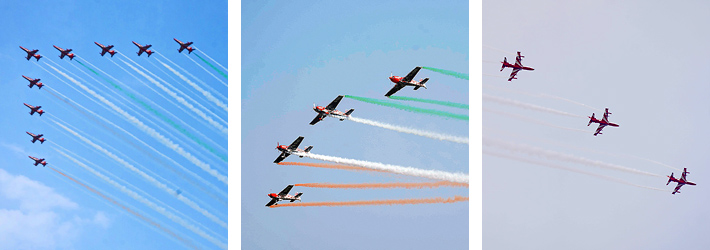
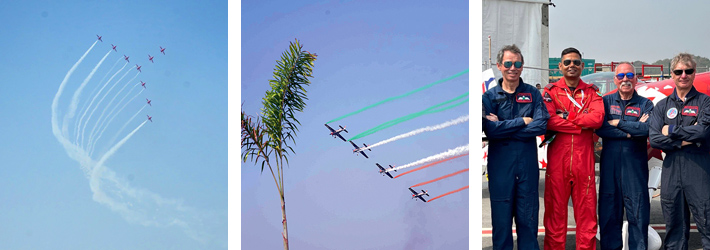
Day 2 of Wings India 2026 captured public imagination with thrilling aerial manoeuvres and stunning drone displays, igniting aspirations among the youth. The highlight was the breathtaking performance by the Indian Air Force's Surya Kiran Aerobatic Team, showcasing precision, discipline and operational excellence, complemented by the engaging display of aerobatic pilot Mark Jeffrey. The evening concluded with a mesmerising drone show that lit up the skies over Begumpet Airport, symbolising innovation, technological progress and India's bold aviation vision. Beyond entertainment, the air displays served a strategic purpose — inspiring the next generation of aviators, engineers and aviation professionals, while reinforcing India's journey toward an Atmanirbhar and future-ready aerospace ecosystem.