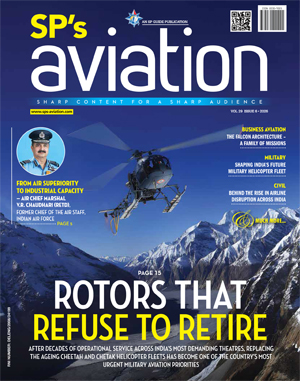
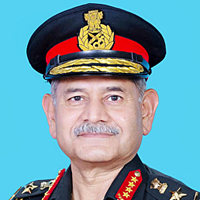
The insightful articles, inspiring narrations and analytical perspectives presented by the Editorial Team, establish an alluring connect with the reader. My compliments and best wishes to SP Guide Publications.
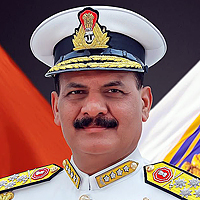
"Over the past 60 years, the growth of SP Guide Publications has mirrored the rising stature of Indian Navy. Its well-researched and informative magazines on Defence and Aerospace sector have served to shape an educated opinion of our military personnel, policy makers and the public alike. I wish SP's Publication team continued success, fair winds and following seas in all future endeavour!"

Since, its inception in 1964, SP Guide Publications has consistently demonstrated commitment to high-quality journalism in the aerospace and defence sectors, earning a well-deserved reputation as Asia's largest media house in this domain. I wish SP Guide Publications continued success in its pursuit of excellence.
Policy, partnerships and platforms converge to shape a future-ready, self-reliant Indian aviation ecosystem
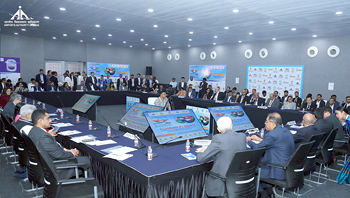
At Wings India 2026 in Hyderabad, the roundtable on "Airports, Collaborative Transformation: Developing and Operating Airports of the Future" underscored how partnership-driven models are redefining airport development and operations. Industry leaders emphasised that India's next phase of aviation growth will depend not merely on infrastructure expansion, but on integrated planning across airports, airlines, regulators, technology providers and urban authorities. Discussions focused on building future-ready airports that are efficient, resilient, digitally enabled and environmentally sustainable, while remaining financially viable. With passenger demand surging and regional connectivity expanding rapidly, speakers highlighted the need for collaborative frameworks to accelerate project delivery, optimise asset utilisation and enhance passenger experience. The session reflected a shared vision that India's airports must evolve into multimodal, smart infrastructure hubs, not just gateways, but economic engines aligned with long-term national development goals.
India's aircraft leasing market is at an inflection point, with nearly 85 per cent of the country's commercial fleet leased, far above the global average of around 50 per cent. Yet, despite being one of the world's fastest-growing aviation markets, India captures only a small share of the economic value generated by leasing. Speaking at Wings India 2026, Piyush Srivastava, Senior Economic Advisor at the Ministry of Civil Aviation, called for stronger domestic leasing capability to match India's aviation scale. Structural barriers such as rolling taxation on non-residents, higher corporate tax rates, regulatory uncertainty, and investor trust deficits continue to constrain growth. However, progress is evident. IFSCA's Dipesh Shah noted that GIFT City has laid the foundation of a leasing ecosystem, with around 370 assets leased between 2023 and 2026 and nearly 75 per cent of aircraft owned and leased from the IFSC. Industry leaders stressed that smooth aircraft induction, deregistration, repossession and effective Cape Town Convention implementation are essential to building investor confidence. Airbus projected India will require close to $100 billion in aircraft financing over the next decade, reinforcing the urgency of anchoring leasing capabilities domestically.
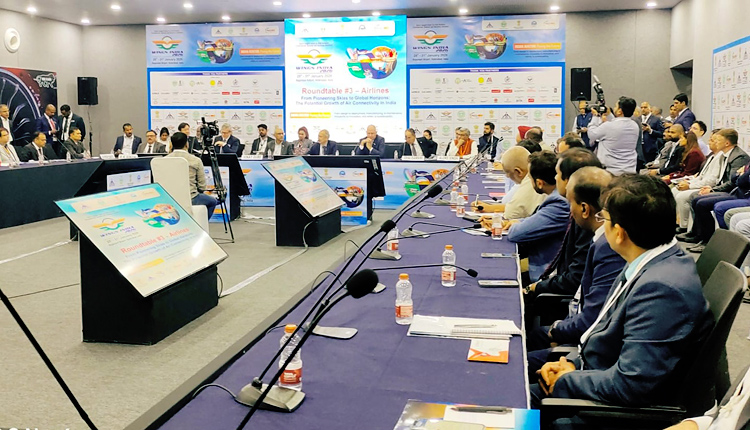
Roundtable 3 at Wings India 2026 focused on India's immense potential for expanding air connectivity, with international airlines highlighting the importance of partnerships to meet surging passenger demand. Discussions underscored India's ambition to manufacture aircraft domestically under 'Make in India', alongside the need for more accessible and flexible aircraft financing mechanisms. Panelists emphasised automation in freight management as a key enabler of operational efficiency and improved passenger experience. However, they also highlighted that significant fleet expansion will require large-scale investment in training and skill development, particularly for pilots, technicians and cabin crew. The session reinforced India's readiness to scale as a global aviation powerhouse, provided financing, manufacturing and workforce development ecosystems evolve in parallel with traffic growth.
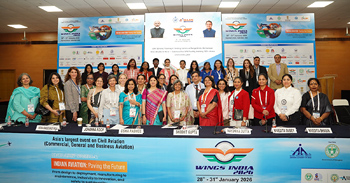
The Roundtable on Women in Aviation at Wings India 2026 brought together voices from across the aviation ecosystem to advance a more inclusive and future-ready industry. Participants highlighted the importance of supportive policies, mentorship networks, leadership pathways, targeted skilling initiatives, STEM outreach and flexible work environments to accelerate women's participation across aviation roles. Discussions emphasised that diversity is no longer a social imperative alone, but a strategic workforce necessity as India scales its aviation sector rapidly. Industry leaders called for coordinated action across airlines, airports, MROs, regulators and training institutions to ensure women are represented across technical, operational, leadership and decision-making roles. The session reinforced that building a resilient aviation workforce will require not just infrastructure and capital, but also inclusive human capital strategies.
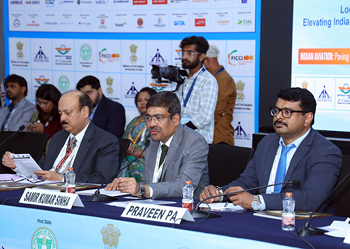
At Roundtable 5 on Maintenance, Repair and Overhaul (MRO), leaders from government, airlines, OEMs and service providers deliberated on strengthening fleet reliability, reducing turnaround times and positioning India as a globally competitive aviation maintenance hub. The discussion highlighted that India's MRO ambitions are no longer aspirational, but structural, with increasing policy alignment, demand scale and industry readiness. Panelists underscored the need to deepen domestic maintenance capability, improve infrastructure density, accelerate technology transfer and ensure regulatory clarity, especially around taxation and certification. The session reinforced that India's rapid fleet expansion must be matched by parallel growth in maintenance, component support, engineering services and workforce readiness. The consensus was clear: India's aviation growth story will only be fully realised if MRO becomes a strategic pillar of the ecosystem, anchoring value creation, cost efficiency and operational resilience within the country.
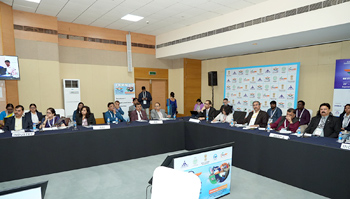
Roundtable 6 on Air Cargo Transportation brought together industry and government leaders to deliberate on building a seamless and resilient air cargo ecosystem. Discussions focused on cross-border e-commerce, multimodal connectivity, capacity optimisation and digital transformation. Panelists highlighted air cargo's growing role in enabling global trade, agri-produce exports and strengthening India's position in international logistics. The session underscored the need for integrated policy frameworks, infrastructure investment, customs reform and digital systems to support faster, more efficient cargo flows. As India's manufacturing and export ambitions expand, air cargo is emerging as a strategic enabler of economic competitiveness.
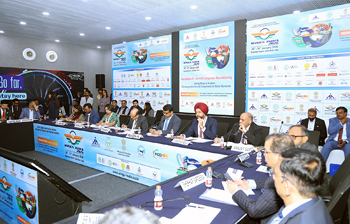
Roundtable 7 on Aircraft Component Manufacturing brought together OEMs, MSMEs, policymakers and certification experts to explore strategies for augmenting India's aerospace manufacturing capabilities. Discussions focused on capital investment requirements, certification readiness, adoption of advanced manufacturing technologies, skill enhancement, localisation of raw materials and policy support to facilitate seamless integration into global supply chains. Panelists stressed that manufacturing scale must be matched by certification maturity and quality assurance to meet international benchmarks. The session reinforced the importance of aligning industrial policy, investment, skilling and certification frameworks to enable India to move up the aerospace value chain from build-to-print to design-led manufacturing.
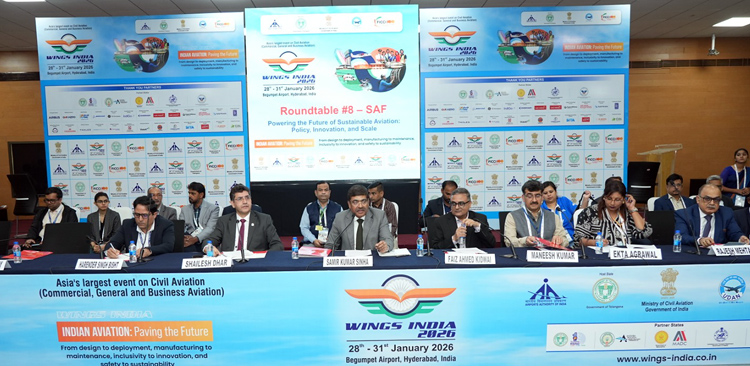
At Wings India 2026, roundtable discussions on Sustainable Aviation Fuel (SAF) underscored the central role of collaboration, certification frameworks and blending strategies in accelerating India's transition toward cleaner, more responsible aviation. Industry leaders emphasised that SAF adoption is not solely a technological challenge, but a systems challenge, requiring coordinated action across regulators, refiners, airlines, airports and OEMs. Discussions focused on scaling domestic production, ensuring feedstock availability, aligning regulatory pathways and building economic viability through blending mandates and policy incentives. The session reinforced that SAF is emerging as a cornerstone of India's decarbonisation strategy, and that timely policy clarity and ecosystem coordination will be essential to move from pilot projects to commercial-scale adoption.
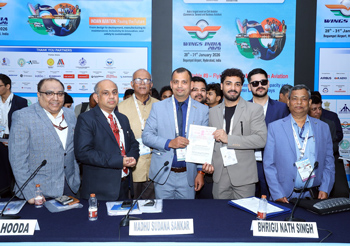
Round Table 9 on Flying Training & Skilling in Aviation focused on expanding world-class training capacity and strengthening inclusive, diverse entry pathways into aviation careers. Panelists highlighted the urgent need to scale flying training organisations, simulators and technical institutes, while aligning curricula and certification frameworks with global standards. Discussions emphasised the role of technology-enabled training including AI, VR, digital platforms and advanced simulators in improving training quality, accessibility and cost efficiency. The session also stressed improving access for women, youth and under-represented groups to ensure a resilient and diverse workforce. The consensus was clear: infrastructure and fleets alone cannot sustain aviation growth human capital development must scale in parallel.
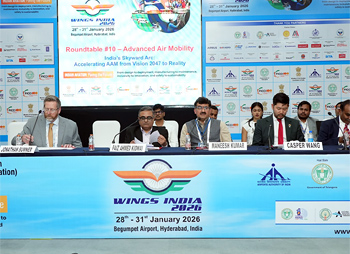
Round Table 10 on "India's Skyward Arc - Accelerating Advanced Air Mobility (AAM) from Vision 2047 to Reality" brought industry experts together to chart India's roadmap for next-generation air mobility. The discussion reinforced that AAM is not merely an aircraft programme, but a complete ecosystem encompassing policy, certification, infrastructure, airspace integration, vertiport planning, and community acceptance. Panelists emphasised a phased, safe and systematic introduction of AAM to build public confidence and regulatory certainty. Key priorities included predictable certification timelines, early market signals for OEM investments, robust satellite and data connectivity, and strong ecosystem collaboration. The session underscored that India's AAM future will depend on structured ecosystem building, policy consistency and industry-led task forces.
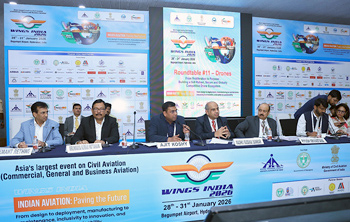
The Round Table on Drones at Wings India 2026 brought together stakeholders to deliberate on building a secure, self-reliant and future-ready drone ecosystem. Discussions focused on identification, cybersecurity, indigenisation, certification, safety, resilient supply chains and national security. Panelists stressed that drones are no longer niche tools but strategic assets across defence, agriculture, logistics, infrastructure inspection and disaster response. The session reinforced India's vision for responsible, scalable drone adoption, anchored in strong regulatory frameworks, indigenous manufacturing and robust cyber and physical security safeguards. As drone operations scale rapidly, the emphasis remains on ensuring safety, trust, and long-term sustainability of the ecosystem.