
The insightful articles, inspiring narrations and analytical perspectives presented by the Editorial Team, establish an alluring connect with the reader. My compliments and best wishes to SP Guide Publications.

"Over the past 60 years, the growth of SP Guide Publications has mirrored the rising stature of Indian Navy. Its well-researched and informative magazines on Defence and Aerospace sector have served to shape an educated opinion of our military personnel, policy makers and the public alike. I wish SP's Publication team continued success, fair winds and following seas in all future endeavour!"

Since, its inception in 1964, SP Guide Publications has consistently demonstrated commitment to high-quality journalism in the aerospace and defence sectors, earning a well-deserved reputation as Asia's largest media house in this domain. I wish SP Guide Publications continued success in its pursuit of excellence.
As Artemis II, NASA's crewed lunar mission, surpasses the farthest distance ever travelled by humans, the milestone marks a defining moment in the new age of deep-space exploration
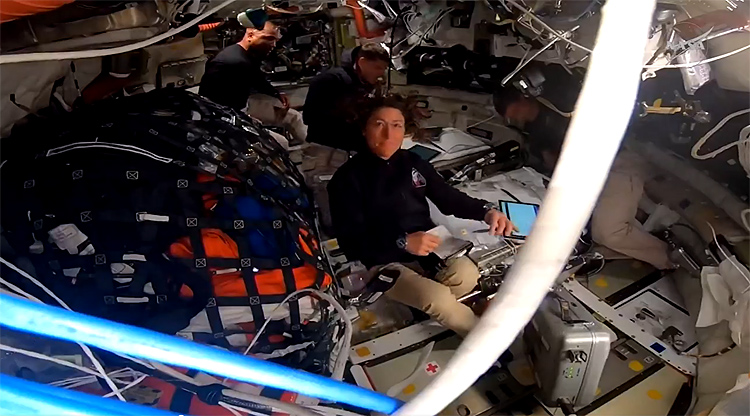
"To boldly go where no man has gone before." Few phrases in popular culture have captured the human instinct for exploration as powerfully as the iconic line from Star Trek. For generations, it has served as shorthand for mankind's urge to push beyond known frontiers and venture into the unknown. Earlier this week, that sentiment has taken on an extraordinary, real-world significance, as Artemis II, NASA's first crewed mission beyond low Earth orbit since Apollo, has travelled farther from Earth than any human beings in history.
Artemis II, NASA's first crewed mission beyond low Earth orbit since Apollo, has travelled farther from Earth than any human beings in history
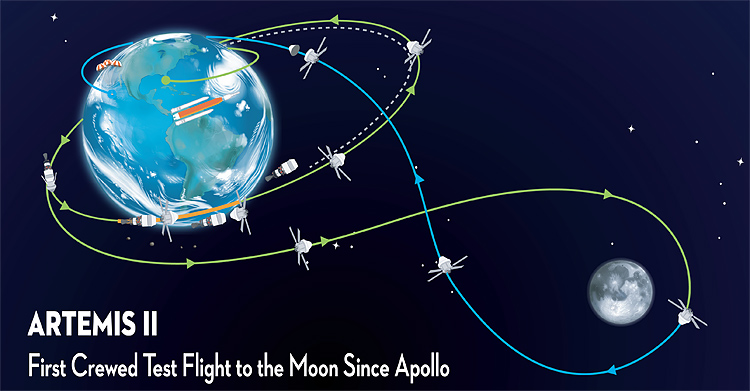
The Orion spacecraft and its four-member crew have now crossed a distance of 2,52,756 miles from Earth, moving beyond the record long held by Apollo 13, whose crew reached approximately 2,48,655 miles during its emergency return trajectory around the Moon in 1970. The milestone transforms Artemis II from an already historic mission into a defining landmark of modern human spaceflight. More importantly, it signals that humanity is no longer merely revisiting the Moon as a memory of the past, but actively building the operational confidence needed for the next era of deep-space exploration.
For more than five decades, the Apollo 13 record stood as one of the most enduring markers of human exploration. Ironically, that benchmark was born not from deliberate mission design but from crisis, when an onboard explosion forced the spacecraft onto a free-return path around the Moon. Since then, while spaceflight has advanced dramatically through the Space Shuttle era and the International Space Station, human missions have remained largely confined to Earth's orbital neighbourhood. The Moon existed as history rather than as an active frontier.
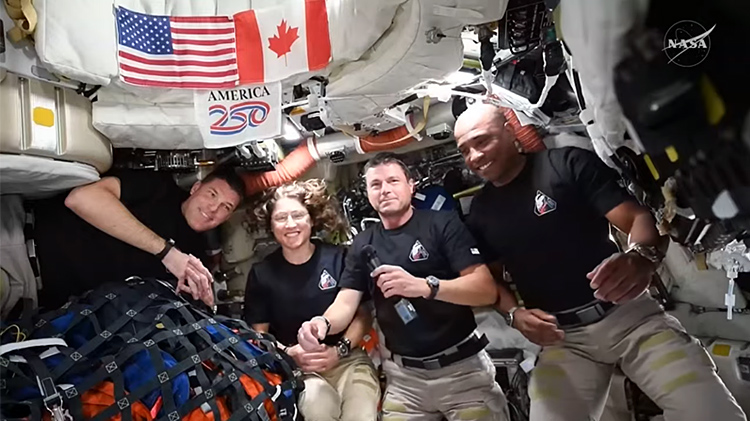
Artemis II changes that narrative. Unlike Apollo 13, this record has been achieved as part of a carefully planned mission profile, designed specifically to validate NASA's next-generation deep-space capabilities. The Orion spacecraft crossed the historic threshold as it moved around the far side of the Moon, officially becoming the farthest human voyage ever undertaken. For the crew onboard, this moment represented the greatest physical separation from Earth ever experienced by human beings. For NASA and its mission teams, it was a decisive validation of spacecraft autonomy, navigation systems, communication's architecture and life-support resilience at unprecedented range.
The milestone transforms Artemis II from an already historic mission into a defining landmark of modern human spaceflight
Distance in spaceflight is never merely a numerical achievement. Every additional mile from Earth introduces greater operational complexity, from communications delays and deep-space radiation exposure to crew endurance and autonomous mission decision-making. The farther a spacecraft travels, the less immediate support it can receive from Earth, making onboard systems reliability and crew preparedness critical. This is why the Artemis II milestone carries importance far beyond the headline figure. It demonstrates that humans can operate safely and effectively at distances that will define future lunar and planetary missions.
For the aerospace industry, the significance of this moment lies fundamentally in engineering validation. Artemis II is proving the Orion spacecraft and the broader Artemis architecture under real operational conditions that no simulation can fully replicate. Deep-space navigation, thermal performance, trajectory management and life-support systems are now being tested in precisely the kind of environment that future missions to the lunar surface and beyond will require. Every hour spent at record distance generates data that will directly shape Artemis III, the planned return of astronauts to the Moon's surface, as well as the development of Gateway, NASA's proposed lunar orbital outpost.
The Orion spacecraft crossed the historic threshold as it moved around the far side of the Moon, officially becoming the farthest human voyage ever undertaken
The milestone also arrives at a time when the Moon is once again becoming a strategic frontier. With China accelerating its own lunar ambitions, including plans for crewed missions and long-term surface infrastructure, Artemis II reinforces the United States' intent to lead the next phase of human deep-space exploration. The focus is no longer on singular symbolic achievements alone, but on sustained presence — communications networks, scientific infrastructure, logistics corridors and eventual surface habitats that can support long-duration missions.
That is why the current milestone should be viewed not as a culmination, but as a threshold. The Moon itself is increasingly becoming a proving ground rather than the final destination. Every lesson from Artemis II feeds directly into the broader Moon-to-Mars roadmap, informing the systems, procedures and human factors that will one day support missions far beyond lunar orbit.
Artemis II milestone carries importance far beyond the headline figure. It demonstrates that humans can operate safely and effectively at distances that will define future lunar and planetary missions
The famous Star Trek line has long been associated with imagination and aspiration. Today, it feels less like fiction and more like an apt summary of where human space exploration stands. By travelling farther than any humans before, Artemis II has not simply broken a long-standing record, it has reopened the pathway to deep space and reaffirmed that humanity's next great frontier is no longer theoretical. It is already underway.