
The insightful articles, inspiring narrations and analytical perspectives presented by the Editorial Team, establish an alluring connect with the reader. My compliments and best wishes to SP Guide Publications.

"Over the past 60 years, the growth of SP Guide Publications has mirrored the rising stature of Indian Navy. Its well-researched and informative magazines on Defence and Aerospace sector have served to shape an educated opinion of our military personnel, policy makers and the public alike. I wish SP's Publication team continued success, fair winds and following seas in all future endeavour!"

Since, its inception in 1964, SP Guide Publications has consistently demonstrated commitment to high-quality journalism in the aerospace and defence sectors, earning a well-deserved reputation as Asia's largest media house in this domain. I wish SP Guide Publications continued success in its pursuit of excellence.
The proven, advanced collaborative combat aircraft adds enhanced survivability to robust capabilities
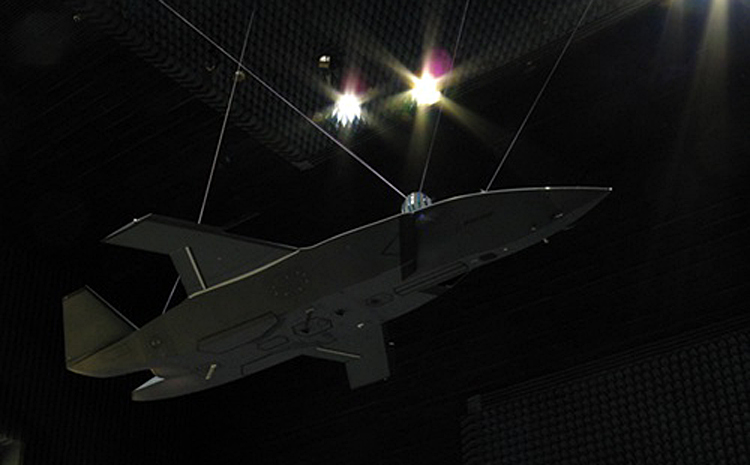
Boeing has validated another advanced capability for the MQ-28 collaborative combat aircraft, which gives customers a decisive edge in combat: stealth performance.
The MQ-28 Ghost Bat is designed to complement existing crewed aircraft by performing a variety of roles, including surveillance, electronic warfare, and force multiplication, all while maintaining a low radar profile. This milestone further demonstrates the platform's maturity, survivability, and ability to deliver cost-effective advanced capability for modern air combat operations.
"The combination of a highly capable platform, stealth features, advanced autonomy and artificial intelligence provides unprecedented ability for air forces to extend their mission effectiveness and operational flexibility," said Brad Thompson, Director for Phantom Works Australia.
One way to measure the stealth of an aircraft is Radar Cross Section (RCS) testing. RCS testing was conducted on an MQ-28 to provide customers with objective, repeatable data about survivability and detection risks. This information validates designs and models, supports procurement and certification, and guides tactics and countermeasure choices.
The MQ-28's RCS reduces the range that enemy radars can detect and engage an MQ-28, enhancing the platform's survivability in contested environments. The success of the RCS testing confirms the effectiveness of the MQ-28's design, production and material choices in minimising radar detection.
MQ-28 began development in 2017, took its first flight in 2021, and has completed more than 150 flights and several flight demonstrations including: