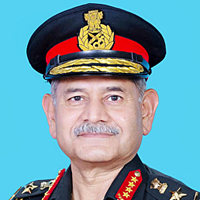
The insightful articles, inspiring narrations and analytical perspectives presented by the Editorial Team, establish an alluring connect with the reader. My compliments and best wishes to SP Guide Publications.

"Over the past 60 years, the growth of SP Guide Publications has mirrored the rising stature of Indian Navy. Its well-researched and informative magazines on Defence and Aerospace sector have served to shape an educated opinion of our military personnel, policy makers and the public alike. I wish SP's Publication team continued success, fair winds and following seas in all future endeavour!"

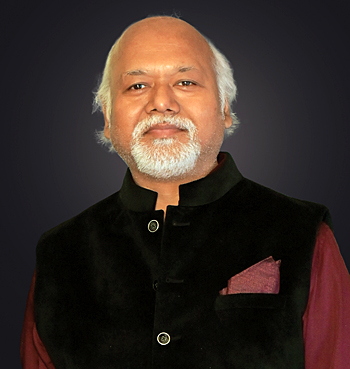
Since, its inception in 1964, SP Guide Publications has consistently demonstrated commitment to high-quality journalism in the aerospace and defence sectors, earning a well-deserved reputation as Asia's largest media house in this domain. I wish SP Guide Publications continued success in its pursuit of excellence.
The Artemis II mission marks a decisive shift in human space exploration, demonstrating the capability to send astronauts farther than ever before and safely return them to Earth. By validating deep-space systems, mission architecture and crew operations, it lays the groundwork for sustained lunar missions and eventual journeys to Mars, redefining the scope and ambition of future space exploration.
In the lead feature story, Rohit Goel examines how the Artemis II mission marked humanity’s return to deep space after more than five decades, validating NASA’s Orion spacecraft and broader Moon-to-Mars architecture through a 10-day crewed mission beyond lunar orbit. It set a new record for the farthest human travel from Earth while rigorously testing lifesupport, navigation, communications and re-entry systems. The mission demonstrated full operational capability and provided critical data for future lunar landings and eventual Mars missions, signaling a strategic shift toward sustained human presence in cislunar space.
Air Marshal R.G.K. Kapoor (Retd) analyses the ongoing USA–Israel–Iran conflict, highlighting the enduring centrality of air power amid evolving realities shaped by drones, missiles and geography. Despite air superiority, dispersed and deeply buried assets limited decisive outcomes. The conflict underscored the need for scalable air defence, greater magazine depth and manned-unmanned integration, reinforcing that air power must adapt to asymmetric, high-intensity warfare increasingly defined by cost-effective threats.
Manish Kumar Jha outlines India’s modernisation effort to rebuild the Indian Air Force’s combat strength through planned acquisitions, including 114 Rafale fighters, Medium Transport Aircraft and AEW&C systems. The scale signals a shift toward highintensity, technology-driven warfare, aiming to restore squadron strength, enhance readiness and improve deterrence, potentially transforming the IAF into a more capable, future-ready force.
Dassault Aviation has unveiled the Falcon 10X, a clean-sheet ultra-long-range business jet with the largest cabin in its class. Designed for enhanced comfort through flexible configurations and advanced systems, it offers a 7,500 nautical mile range, targeting global connectivity needs. Rohit Goel highlights how the aircraft combines performance, efficiency and innovation, positioning it as a flagship in a competitive segment.
Sanjay Julka discusses the evolving structure of business aviation, where separating aircraft ownership from operational management is gaining relevance. Traditional models face pressure for efficiency, transparency and specialised services. Decoupling ownership enables better cost control and flexibility, particularly in emerging markets, and is expected to improve utilisation, service standards and participation from global operators and financiers.
In his opinion piece, Alasdair Whyte highlights India’s business aviation sector as it begins to unlock long-standing potential. Growing interest from OEMs and operators reflects increasing confidence, with projections pointing to significant fleet expansion by 2030 as the market transitions from latent promise to tangible growth.
Neetu Dhulia explains the growing divide in aviation fuel economics, shaped by taxation, pricing disparities and sustainability pressures. In India, high ATF taxes continue to impact costs, while the shift toward sustainable fuels adds complexity. Balancing environmental goals with economic viability remains a key challenge, highlighting the need for policy alignment and coordinated industry efforts.
SP’s Special Correspondent captures strong momentum at AERO Friedrichshafen 2026, marked by record participation and growing confidence in business and general aviation. The event showcased advancements in aircraft, avionics and sustainable technologies, reflecting an industry adapting to evolving demands. Rising international participation also reinforced its global relevance.
All this and more in this issue of SP’s Aviation. Welcome aboard and we wish you safe landings!