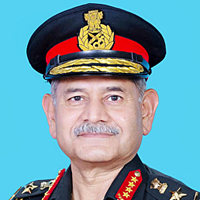
The insightful articles, inspiring narrations and analytical perspectives presented by the Editorial Team, establish an alluring connect with the reader. My compliments and best wishes to SP Guide Publications.
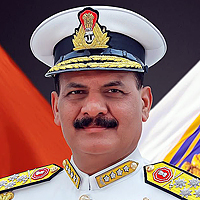
"Over the past 60 years, the growth of SP Guide Publications has mirrored the rising stature of Indian Navy. Its well-researched and informative magazines on Defence and Aerospace sector have served to shape an educated opinion of our military personnel, policy makers and the public alike. I wish SP's Publication team continued success, fair winds and following seas in all future endeavour!"

Since, its inception in 1964, SP Guide Publications has consistently demonstrated commitment to high-quality journalism in the aerospace and defence sectors, earning a well-deserved reputation as Asia's largest media house in this domain. I wish SP Guide Publications continued success in its pursuit of excellence.
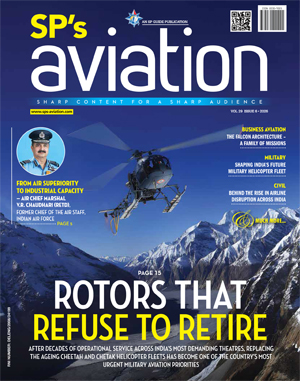
The widening gap between the capabilities of the ageing Cheetah and Chetak Helicopter fleets in the Indian Armed Forces and the operational demands placed upon them is no longer a matter of debate. What remains unresolved is the disconnect between strategic necessity and acquisition timelines. The question is not whether these helicopters should be replaced, but whether India’s defence procurement system can move with the urgency that operational realities demand.
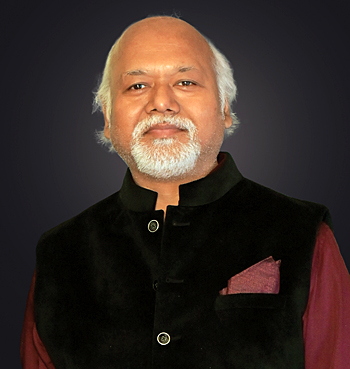
In a recent major announcement, Defence Secretary Rajesh Kumar Singh has assumed additional charge as Chairman of DRDO, placing India’s premier defence research organisation under the leadership of the government’s top defence bureaucrat. Manish Kumar Jha reports on the sector’s expectations surrounding his tenure, including advancing self-reliance through indigenous design, strengthening collaboration with private industry, faster decision-making and defence modernisation.
We are pleased to have former CAS Air Chief Marshal V.R. Chaudhari (Retd) give us his analyses of the air campaigns during the recent US-Iran conflict. He argues that Iran’s resilience reflected deliberate strategy rather than military collapse, employing measured escalation, inventory management, and mass-produced drones and missiles to sustain pressure on key US assets. ACM Chaudhari highlights the growing importance of industrial capacity, war economies, and the ability to replenish losses in modern warfare. Also, for India, the conflict offers important lessons on airbase hardening, force resilience, munitions stockpiling, drone warfare, and strengthening the defence industrial base to sustain prolonged high-intensity operations.
On business aviation, firstly we have Rohit Goel examine how Dassault Aviation has developed the Falcon family around a philosophy of mission effectiveness and operational utility rather than simply greater range or larger cabins. Drawing on technologies derived from the company’s long aviation heritage, the Falcon portfolio spans a wide range of mission profiles while emphasising airport accessibility, operational flexibility, passenger comfort, and sustainability.
Then, Julian Dsouza, Adani Group Head-Aviation writes that business aviation enables Corporates to operate across India’s geographically dispersed industrial hinterland. Using the Adani Group as a case study, he demonstrates how aviation-first deployment across ports, power plants and mining clusters drives economic activation, attracts FDI and builds high-value jobs.
Helicopter modernisation remains a critical issue for the Indian Armed Forces. Rohit Goel examines the long-delayed replacement of the ageing Cheetah and Chetak fleets, which have served for more than six decades in demanding operational environments. Rising maintenance burdens, declining serviceability, and safety concerns have made replacement increasingly urgent. In another related feature, Rohit Goel explores India’s broader rotary-wing transformation. Key programmes include the induction of 156 indigenous Prachand Light Combat Helicopters, MH-60R Seahawk maritime helicopters, the forthcoming Naval Utility Helicopter programme, upgrades to the Mi-17V5 fleet, and the long-term Indian Multi-Role Helicopter programme. Together, these initiatives reflect India’s drive towards self-reliance, operational resilience, and enhanced combat capability across diverse operational environments.
The recent instability in West Asia, coupled with the continued closure of Pakistani airspace, has disrupted airline operations across India. Charishma Chowdary analyses how rerouting has increased flight times, fuel consumption, and operating costs, placing pressure on carriers such as Air India and IndiGo. The resulting capacity constraints have affected schedules and route networks. While government intervention has provided temporary relief, the article highlights how geopolitical developments are increasingly shaping airline economics, network planning, and passenger experiences in India’s rapidly growing aviation market.
All this and more in this issue of SP’s Aviation. Welcome aboard and we wish you safe landings!