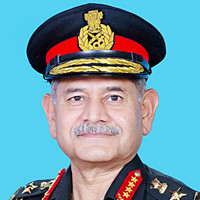
The insightful articles, inspiring narrations and analytical perspectives presented by the Editorial Team, establish an alluring connect with the reader. My compliments and best wishes to SP Guide Publications.
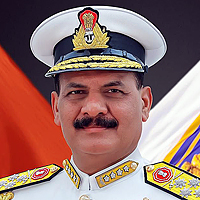
"Over the past 60 years, the growth of SP Guide Publications has mirrored the rising stature of Indian Navy. Its well-researched and informative magazines on Defence and Aerospace sector have served to shape an educated opinion of our military personnel, policy makers and the public alike. I wish SP's Publication team continued success, fair winds and following seas in all future endeavour!"

Since, its inception in 1964, SP Guide Publications has consistently demonstrated commitment to high-quality journalism in the aerospace and defence sectors, earning a well-deserved reputation as Asia's largest media house in this domain. I wish SP Guide Publications continued success in its pursuit of excellence.
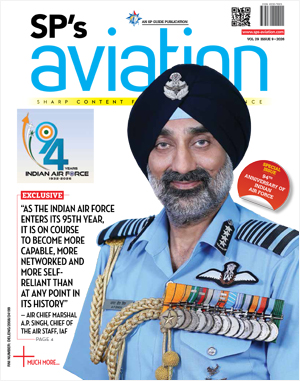
Air Chief Marshal A.P. Singh completes his tenure and hands over the baton on October 31, 2026. Among the most affable and charming Chiefs the Force has known, he leaves behind the legacy of a true ‘leader’, a consummate professional and a complete gentleman. We wish him the very best in all his future endeavours!
The lead story is an exclusive interview with outgoing Chief of the Air Staff, Air Chief Marshal A.P. Singh, reflecting on his tenure and outlining the Indian Air Force’s long-term readiness priorities. Citing Operation Sindoor as a defining milestone, he details a modernisation strategy centred on technological sovereignty, operational superiority and accelerated capability enhancement through indigenous aircraft, weapons, radars and air defence systems. He discusses the roles of drones, manned–unmanned teaming and Artificial Intelligence in warfare, alongside technological and cyber vulnerabilities. Addressing China’s advanced fighter programmes, he emphasises integrated combat capabilities over platform generations, reaffirming that human judgement, leadership and skilled personnel will remain central to the IAF.
Reporting on the IAF Day press conference, Manish Jha highlights CAS’s call to prioritise indigenous fighter programmes amid modernisation challenges. With 29 squadrons against the sanctioned strength of 42, the IAF faces serious operational pressures. The Chief stressed the need to streamline the Tejas Mk1A, Tejas Mk2 and Advanced Medium Combat Aircraft (AMCA) programmes, while advancing the Multi-Role Fighter Aircraft (MRFA) acquisition to bridge capability gaps. Focused priorities and predictable delivery timelines, he argues, are essential to meeting evolving regional national security challenges.
Former Chief of the Air Staff, Air Chief Marshal V.R. Chaudhari (Retd), traces the evolution of the IAF’s international engagements through bilateral and multilateral exercises. From early initiatives such as Garuda and Cope India to drills including Pitch Black and Red Flag, he charts the expansion of India’s air power diplomacy. The account culminates with Exercise Tarang Shakti 2024, India’s first multinational air combat exercise, hosted in two phases to accommodate partner air forces and strengthen defence cooperation.
Amid the ongoing global debate on manned versus unmanned systems, we have included two expert analyses on this subject. Air Marshal A.K. Bharti (Retd), the face of Operation Sindoor, advocates integrating manned platforms and unmanned systems rather than treating them as alternatives. Although drones and unmanned aerial systems (UAS) have demonstrated operational value in conflicts, they cannot independently secure strategic victory or replace human judgement, ethics and improvisation. As counter-UAS technologies, electronic jamming and advanced radars threaten to erode drones’ cost and stealth advantages, he identifies Manned-Unmanned Teaming (MUM-T) as essential to combining human judgement with unmanned efficiency.
Group Captain Akash Godbole similarly views unmanned aircraft as force multipliers, not replacements for manned platforms. Drawing lessons from modern conflicts, he argues that low-cost drones widen operational options, but strategic outcomes still depend on manned capabilities and command structures. For India, effective MUM-T requires addressing fighter squadron shortages, developing resilient data-linked kill webs, establishing clear operational doctrines and training commanders to coordinate integrated combat systems.
In remembrance, Air Vice Marshal Prashant Mohan (Retd) pays tribute to the iconic MiG-21, which officially retired from IAF service in September 2025 after more than six decades. Drawing on personal experience as a trainee, instructor and squadron commander, he recalls the aircraft’s robustness, its role in conflicts and its contribution to training generations of fighter pilots.
All this and more in this issue of SP’s Aviation. Welcome aboard and we wish you safe landings!