
The insightful articles, inspiring narrations and analytical perspectives presented by the Editorial Team, establish an alluring connect with the reader. My compliments and best wishes to SP Guide Publications.

"Over the past 60 years, the growth of SP Guide Publications has mirrored the rising stature of Indian Navy. Its well-researched and informative magazines on Defence and Aerospace sector have served to shape an educated opinion of our military personnel, policy makers and the public alike. I wish SP's Publication team continued success, fair winds and following seas in all future endeavour!"

Since, its inception in 1964, SP Guide Publications has consistently demonstrated commitment to high-quality journalism in the aerospace and defence sectors, earning a well-deserved reputation as Asia's largest media house in this domain. I wish SP Guide Publications continued success in its pursuit of excellence.
The Airbus A300 was a technological marvel, employing some of the advanced features of Concorde. The aim was to increase safety, operational capability, and profitability, and establish the airliner in a position of advantage vis-â-vis its prospective competitors.
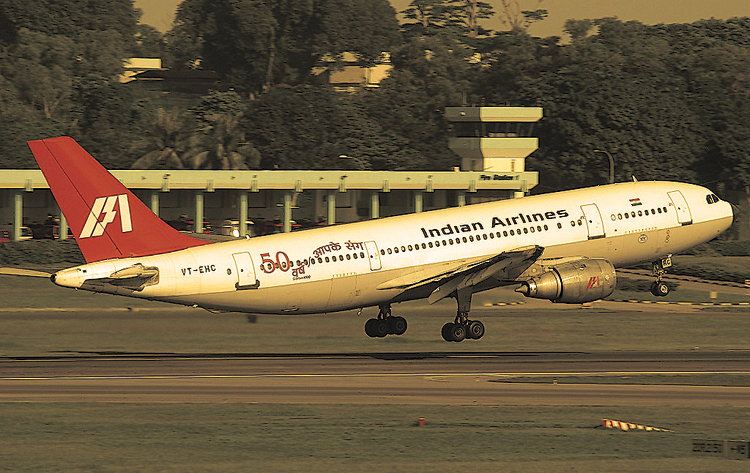
The post-World War II commercial aviation scene was overwhelmingly dominated by giant US aerospace firms like Boeing, Lockheed Martin, and McDonnell Douglas. European companies lagged far behind, mainly because they were in competition with one another. Realising this, in September 1967, aircraft manufacturers from France, West Germany and the United Kingdom signed an initial memorandum of understanding to jointly develop a new large airliner. However, the project was politically fraught from the start, and the British withdrew in early 1969. Thereafter, despite their differences, the French and West Germans reached a firm agreement and a new aerospace company, Airbus Industrie GIE, was formally created in December 1970 to develop and produce passenger aircraft. In time, it attracted significant participation from Spain, the UK, Italy, and other nations, becoming a truly integrated European aerospace enterprise. The word ‘airbus’ was used as a generic term for a large commercial aircraft, as it was considered recognisable in multiple European languages.
Airbus Industrie was initially headquartered in Paris but was relocated to Toulouse in January 1974. The company’s first product was the Airbus A300. The A300 prototype first flew on October 28, 1972, becoming the world’s first twin-engine, widebody (double-aisle) airliner. It was one of the most technologically advanced aircraft of the time. However, it also represented a huge gamble, since the fledgling Airbus consortium was directly challenging the might of the US aeronautical industry. The company pragmatically opted for English as the working language for the developing aircraft, as well as against using Metric instrumentation and measurements, as most airlines already had US-built aircraft that favoured Imperial units. This consultative approach, backed by market research, was a crucial factor in the company’s long-term success.
The Airbus A300 was a technological marvel, employing some of the advanced features of Concorde. The aim was to increase safety, operational capability, and profitability, and establish the airliner in a position of advantage vis-â-vis its prospective competitors. A world first was the employment of composite materials on a commercial aircraft. These were used for both secondary and later primary airframe structures, decreasing overall weight and improving cost effectiveness. For instance, the composite fin was built at significantly lower weight and cost because it had less than 100 components against 2,000 for a metal fin.
The A300 normally seated 247 passengers in two classes. It had a range of 2,900 to 4,050 nm. The airliner’s chief innovation was the twin-engine, wide-body concept, abandoning the existing triplet or quad-jet convention for large aircraft. In addition, the inclusion of underwing pods permitted the use of any suitable turbofan engine. Initial variants were powered by General Electric CF6-50 or Pratt & Whitney JT9D turbofans and had a three-crew flight deck. However, the improved A300-600 had updated General Electric CF6-80C2 or Pratt & Whitney PW4000 engines and a two-crew cockpit. The A300 was among the first airliners to have a glass cockpit, replacing traditional mechanical dials with electronic flight instrument displays.
Air France was the A300’s launch customer and introduced the type on May 23, 1974. The airliner soon proved itself, offering impressive operational efficiency and setting new standards for medium-haul routes. Initial demand for the A300 was muted. But sales took off once the plane was proven in service. Indian Airlines was the world’s first domestic airline to purchase the A300, ordering three aircraft with three options. What really boosted sales, was the introduction of ETOPS (Extended-range Twin-engine Operational Performance Standards) – safety rules that allow twin-engine jets to fly long routes, far from diversion airports, especially over the ocean, while ensuring that they can reach an alternative airport despite having one engine out. In 1977, the A300B4 became the first ETOPS compliant aircraft, due to its high performance and safety standards. The final version, the A300-600R, was rated for 180-minute ETOPS.
In the 1990s, the A300 gained popularity as a cargo aircraft. In fact, Airbus claims that it is the bestselling freight aircraft ever. Production ceased in July 2007 after 561 deliveries. As of early 2026, there are over a hundred A300 family aircraft still in commercial service. Of these, around seven are in passenger service in Iran, while the rest are pure freighters, forming the backbone of some global cargo networks.
The A300 radically altered the competitive landscape of commercial aviation. And it established a firm foundation for Airbus’s later success as a global aerospace giant. So much so that in October 2025 a later Airbus product – the Airbus A320 family – overtook the Boeing 737 family as the most-delivered jetliner with 12,260 deliveries till then. This monumental achievement of Airbus Industrie came just 51 years after the A300 entered commercial service.