
The insightful articles, inspiring narrations and analytical perspectives presented by the Editorial Team, establish an alluring connect with the reader. My compliments and best wishes to SP Guide Publications.

"Over the past 60 years, the growth of SP Guide Publications has mirrored the rising stature of Indian Navy. Its well-researched and informative magazines on Defence and Aerospace sector have served to shape an educated opinion of our military personnel, policy makers and the public alike. I wish SP's Publication team continued success, fair winds and following seas in all future endeavour!"

Since, its inception in 1964, SP Guide Publications has consistently demonstrated commitment to high-quality journalism in the aerospace and defence sectors, earning a well-deserved reputation as Asia's largest media house in this domain. I wish SP Guide Publications continued success in its pursuit of excellence.
With Record participation, AERO Friedrichshafen 2026, Europe’s Leading General Aviation Show, Delivers a Landmark Edition
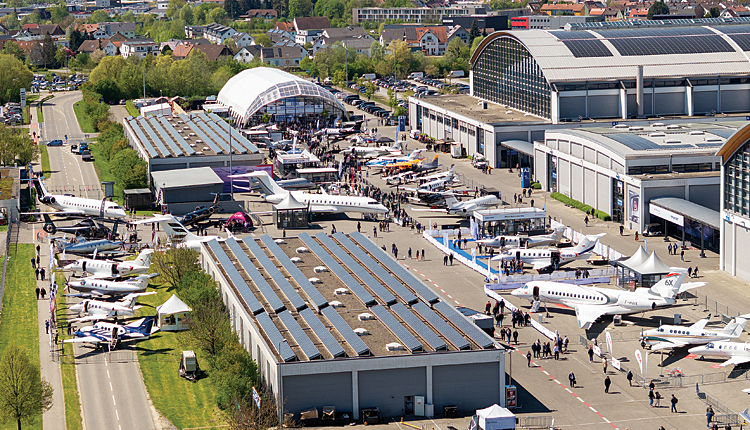
The 2026 edition of AERO Friedrichshafen concluded as one of the most successful and consequential in the show’s history, reflecting a global general aviation industry that has moved decisively into a phase of expansion. Held from April 22 to 25 in Friedrichshafen, Germany, the event delivered record participation, the largest aircraft display to date and a clear affirmation of business aviation and sustainability as the sector’s primary growth drivers.
Organised by Fairnamic GmbH, the 32nd edition of the show brought together 860 exhibitors from 50 countries, marking the highest level of participation ever recorded. Visitor turnout also reached new highs, with approximately 37,000 attendees from 88 countries, underscoring the event’s growing global relevance and its position as Europe’s premier platform for general and business aviation.
BUSINESS AVIATION EMERGES AS THE DEFINING THEME
AERO Friedrichshafen 2026 opened with a heightened focus on business aviation, following the surprise cancellation of the European Business Aviation Conference and Exhibition (EBACE), which had been scheduled for early June in Geneva. With EBACE gone, Fairnamic GmbH — the show’s organiser — now position AERO Friedrichshafen as Europe’s leading showcase for business aviation, a claim that, on the evidence of this edition, is difficult to dispute. AERO 2026 clearly demonstrated the growing centrality of business aviation within the broader aviation ecosystem. The segment recorded the highest growth rate at the show, both in terms of exhibitor presence and aircraft on display.
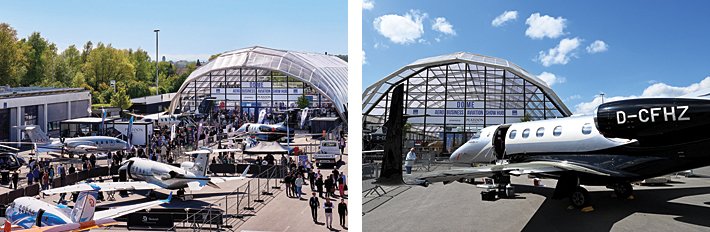
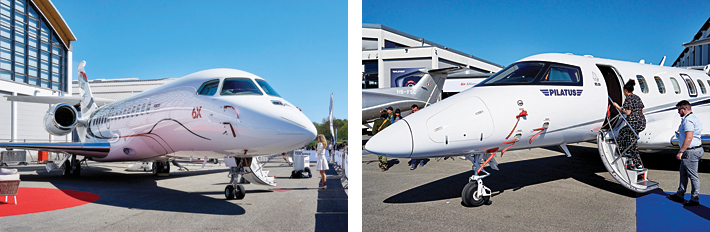
More than 50 business aircraft were showcased across the static display and exhibition halls, a significant increase compared to previous editions. This expansion was visibly reflected in the enlarged Business Aviation Dome and the increased allocation of exhibition space across multiple halls.
The shift was further reinforced by broader industry dynamics, including the absence of competing European business aviation events, which positioned AERO as the primary gathering point for OEMs, operators and service providers in the region.
MAJOR EXHIBITORS ANCHOR THE SHOW
The 2026 edition saw strong participation from leading global OEMs, with companies such as Dassault Aviation, Embraer, Pilatus Aircraft, Textron and Piaggio Aerospace playing a prominent role in shaping the show’s narrative.
Dassault Aviation drew significant attention with the presence of its Falcon 6X, reinforcing its positioning in the large-cabin, ultra-long-range segment. The aircraft served as a key attraction within the business aviation display, highlighting the continued demand for high-comfort, long-range platforms.
Embraer, meanwhile, showcased its popular Phenom series, including the Phenom 300E, one of the best-selling light jets globally. The company’s presence underlined the strength of the light and mid-size jet market, particularly for regional and corporate travel.
AERO 2026 clearly demonstrated the growing centrality of business aviation within the broader aviation ecosystem
Pilatus Aircraft maintained a strong footprint with both the PC-24 jet and the PC-12 PRO turboprop on display. The PC-24, often positioned as a “super versatile jet,” attracted considerable interest for its ability to operate from short and unpaved runways, while the PC-12 PRO continued to demonstrate the enduring appeal of high-performance turboprops.
A notable highlight came from Piaggio Aerospace, which marked a significant return to the show with the P.180 Avanti EVO. The aircraft’s presence was complemented by a major development during the event, as the company secured a launch order for its upgraded Avanti NX variant, signalling renewed momentum for the manufacturer and its distinctive high-speed turboprop platform.
AIRCRAFT DISPLAY: BREADTH AND DEPTH ACROSS SEGMENTS
The static aircraft display at AERO 2026 was the largest in the show’s history, offering a comprehensive overview of the aviation ecosystem.
In the business jet category, key aircraft included the Falcon 6X, Bombardier Global 6500, Cessna Citation Longitude and the new Citation Ascend, which made a notable appearance as part of its European demonstration tour.
The light and mid-size segment featured aircraft such as the Embraer Phenom 300E and HondaJet Elite II, both of which continue to dominate their respective categories.
Turboprop aircraft formed another major highlight, with the Daher TBM 980, Kodiak 900 and Pilatus PC-12 PRO drawing strong attention for their operational flexibility and cost efficiency. The return of the Piaggio P.180 Avanti EVO added further diversity to this segment, reinforcing its relevance in both executive and special mission roles.
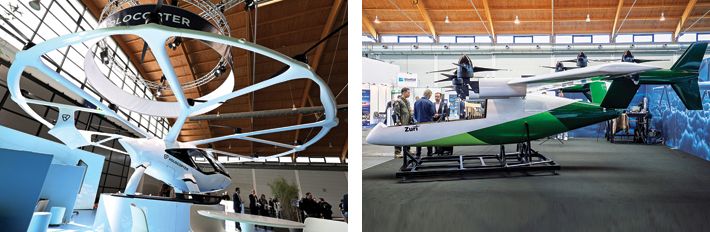
The exhibition also featured a wide range of general aviation aircraft, including piston trainers, gliders, ultralights and helicopters, alongside emerging electric and hybrid platforms.
INNOVATION AND SUSTAINABLE AVIATION TAKE CENTRE STAGE
Sustainability and technological innovation were central themes throughout AERO 2026, with exhibitors presenting a wide range of solutions aimed at reducing aviation’s environmental footprint.
The e-flight Expo and dedicated innovation zones showcased advancements in electric propulsion, hybrid systems and hydrogen-based technologies. Companies such as Pipistrel and emerging European startups demonstrated tangible progress in electric aviation, moving closer to commercial viability.
The Hydrogen & Battery Summit, held alongside the show, brought together experts from industry, academia and regulatory bodies to discuss infrastructure, energy storage and the future of zero-emission flight.
These developments reflected a broader industry transition, with sustainability increasingly moving from conceptual discussions to practical implementation.
CONFERENCES AND INDUSTRY ENGAGEMENT
AERO Friedrichshafen 2026 also delivered an extensive conference programme, reinforcing its role as a platform for industry dialogue and knowledge exchange.
The Air Charter Association brought its European Regional Forum to AERO for the first time, with three panel sessions covering the scope and scale of the charter industry, the risks of illegal charter operations, and the role of the air charter broker. Corporate Jet Investor contributed two panels examining the practicalities of buying pre-owned aircraft and the broader economics of aircraft ownership, drawing executives from across the transactional spectrum of the industry. The Women in Aviation International Connect Brunch brought a welcome dimension of inclusion to the programme, while the newly formed TAB (Technology Aviation Business) took to the Dome stage to announce new directions in aviation technology development.
The European Union Aviation Safety Agency (EASA) held a General Aviation Conference focused on simplifying rules for safer GA — covering regulatory initiatives aimed at reducing administrative burdens for small and medium-sized enterprises and improving the broader competitiveness of the GA industry.
Career Days and training initiatives once again attracted strong participation, reflecting the industry’s ongoing need to address workforce shortages and build the next generation of aviation professionals.
The expanded airshow programme on the final day provided a fitting conclusion to the event, featuring aerobatic displays, formation flying and helicopter demonstrations and reinforcing the event’s role not only as a trade platform but also as a showcase for aviation to a broader audience.
CONCLUSION
AERO Friedrichshafen 2026 ultimately stood out not just for its scale, but for what it revealed about the direction of the aviation industry. Three key trends were evident throughout the show. First, business aviation is no longer a niche segment but a central pillar of the global aviation ecosystem, driven by demand for flexibility, privacy and efficiency. Second, sustainability is moving from aspiration to implementation, with tangible technologies now entering the market. Third, innovation across propulsion, avionics and digitalisation is reshaping how aircraft are designed, operated and maintained.
More importantly, it highlighted a clear shift in industry dynamics. Business aviation has emerged as a primary growth engine, sustainability has moved closer to operational reality and innovation continues to reshape the competitive landscape.
As the industry looks ahead, AERO Friedrichshafen has firmly established itself as a critical platform where these trends converge—reflecting not just the current state of aviation, but its future trajectory.