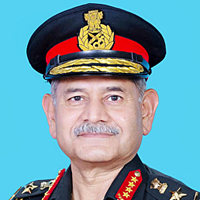
The insightful articles, inspiring narrations and analytical perspectives presented by the Editorial Team, establish an alluring connect with the reader. My compliments and best wishes to SP Guide Publications.
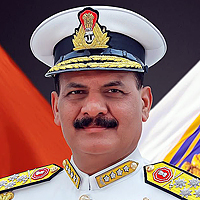
"Over the past 60 years, the growth of SP Guide Publications has mirrored the rising stature of Indian Navy. Its well-researched and informative magazines on Defence and Aerospace sector have served to shape an educated opinion of our military personnel, policy makers and the public alike. I wish SP's Publication team continued success, fair winds and following seas in all future endeavour!"

Since, its inception in 1964, SP Guide Publications has consistently demonstrated commitment to high-quality journalism in the aerospace and defence sectors, earning a well-deserved reputation as Asia's largest media house in this domain. I wish SP Guide Publications continued success in its pursuit of excellence.
Why India Needs Specialised Aircraft Management Companies for its Business Aviation Sector
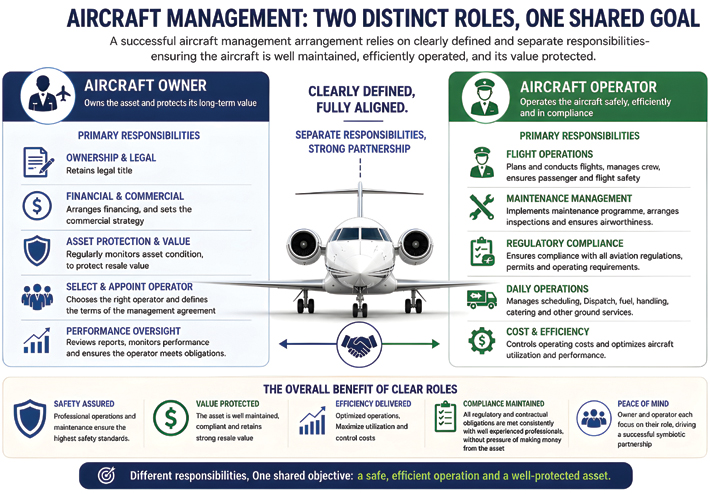
The Indian aviation sector is on a meteoric trajectory, with record-breaking aircraft orders and a burgeoning demand for private and business travel. However, a systemic bottleneck persists on the ground: the regulatory hesitation to fully embrace the Aircraft Management Company (AMC) model. While global aviation hubs thrive by separating aircraft ownership from operation, Indian practice often insists on a “Unified Entity” approach. To achieve the government’s vision of “Safer Skies,” it is time to shift this paradigm.
THE SAFETY ARGUMENT: INTEGRITY OVER PROFIT
The most compelling reason to separate the owner from the operator is flight safety. When the same entity owns the asset and manages the operation, a dangerous conflict of interest arises. The owner- operator bears the full weight of the Profit and Loss (P&L) statement. In times of financial pressure, the temptation to cut corners—deferring “non-essential” maintenance or pushing crew duty limits—becomes a systemic risk.

In an AMC model, the operator is a service provider, not the bill-payer. Their primary “product” is safety and regulatory compliance. Since the owner covers the operational costs, the operator has no incentive to take shortcuts. If a supervisor at an AMC decides an aircraft is not airworthy, they make that call without the personal financial sting of a lost charter fee. This creates a natural “check and balance” where the operator errs on the side of caution, prioritising the hull’s longevity and passenger safety over immediate margins.
STREAMLINING THE SKIES: EXPERIENCE AND OVERSIGHT
The current insistence—driven largely by historical interpretations of customs and import rules—that an aircraft importer must hold their own Non-Scheduled Operator’s Permit (NSOP) or Air Operator Certificate (AOC) leads to a fragmented market. We end up with dozens of small, inexperienced operators managing one or two aircraft each.
This fragmentation has two major downsides:
BEYOND SAFETY: THE ECONOMIC ADVANTAGES
Aircraft management companies offer benefits that go far beyond the cockpit:
THE PATH FORWARD: A MATTER OF INTERPRETATION
Interestingly, India does not necessarily need a radical overhaul of its financial or aviation laws. The barrier is primarily an interpretive one. Regulators often hesitate to allow “Owner A” to hand an aircraft to “Operator B” due to fears of violating customs notifications related to “Actual User” conditions.
However, if we read these laws through the lens of international best practices, also intended while making the Indian law, the “operator” is the professional user of the asset and as long as end use of the aircraft is for charter purposes, the import and custom laws don’t get violated. By recognising AMCs as legitimate entities, India can foster a mature ecosystem where specialised experts fly the planes, wealthy investors buy them, and the DGCA monitors a streamlined, professionalised industry. For India to truly lead in global aviation, we must stop fearing the separation of deed and deck; in that separation lies our safest path forward.