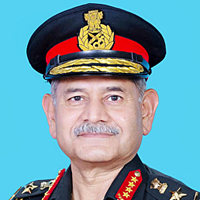
The insightful articles, inspiring narrations and analytical perspectives presented by the Editorial Team, establish an alluring connect with the reader. My compliments and best wishes to SP Guide Publications.
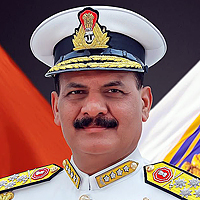
"Over the past 60 years, the growth of SP Guide Publications has mirrored the rising stature of Indian Navy. Its well-researched and informative magazines on Defence and Aerospace sector have served to shape an educated opinion of our military personnel, policy makers and the public alike. I wish SP's Publication team continued success, fair winds and following seas in all future endeavour!"

Since, its inception in 1964, SP Guide Publications has consistently demonstrated commitment to high-quality journalism in the aerospace and defence sectors, earning a well-deserved reputation as Asia's largest media house in this domain. I wish SP Guide Publications continued success in its pursuit of excellence.
Geopolitical tensions far beyond India’s borders are reshaping airline operations, forcing carriers to navigate longer routes, higher costs and growing uncertainty in an increasingly interconnected aviation landscape
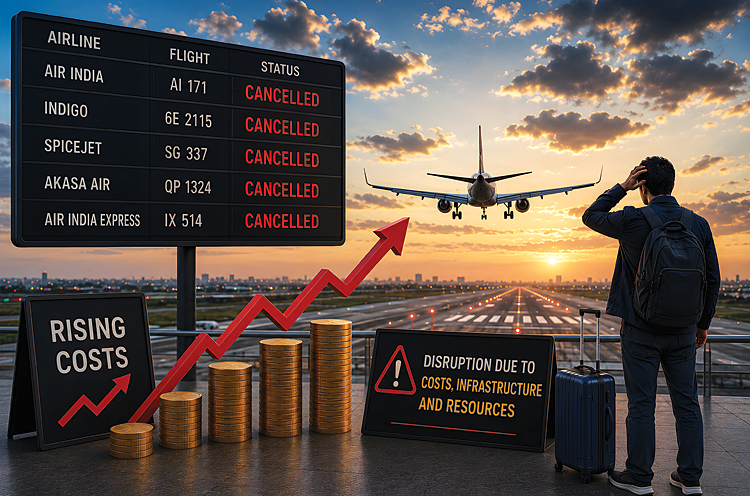
India’s aviation industry is experiencing unprecedented growth, with millions of passengers taking to the skies each year. Yet behind the sector’s rapid expansion lies a growing challenge: Flight Cancellations.
From aircraft shortages and maintenance issues to crew constraints and airport congestion, a range of operational pressures is disrupting schedules and affecting travellers across the country. As airlines race to meet rising demand, questions are emerging about whether the industry’s infrastructure and resources are keeping pace.
TURBULENCE OVER WEST ASIA: HOW GEOPOLITICAL REROUTING AND SOARING COSTS ARE RESHAPING INDIAN AVIATION
The global aviation industry has long been at the mercy of geopolitics, but the recent escalation of instability in West Asia is underscoring this point for Indian carriers. What began as localised tensions thousands of kilometres away has rapidly cascaded into severe operational hurdles for airlines operating out of India.
While passengers frequently attribute flight cancellations to weather or internal crew planning, the underlying culprit behind the recent wave of 2026 disruptions is an economic squeeze forced by airspace restrictions and skyrocketing operational costs.
THE GEOMETRY OF AVOIDANCE: ELONGATED FLIGHT ROUTES
When key air corridors over West Asia are restricted or closed entirely due to military risks, airlines cannot simply take the shortest geographical path (known as Great Circle Route). Instead, they must map complex, circuitous detours around conflict zones.
For Indian carriers flying to Europe, North America and parts of the Middle East, these forced diversions add hundreds of extra kilometres and hours to a single journey. When combined with the pre-existing closure of Pakistan airspace for certain routes, Indian long haul international flights are being pushed to their absolute operational limits. The primary layer of this routing gridlock stems from a bitter bilateral standoff. Following a major terror attack in Pahalgam, Kashmir, both New Delhi and Islamabad clamped down on each other’s commercial aviation, initiating a strict, reciprocal airspace closure. This ban is enforced strictly through rolling NOTAM (Notice to Air Mission previously known as Notice to Airmen).
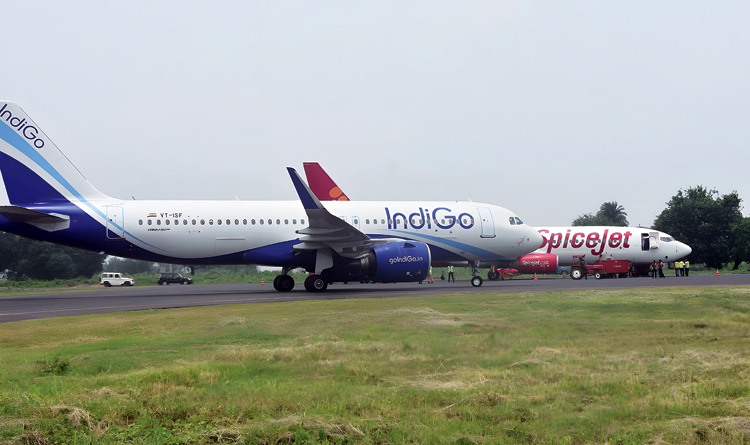
The closure has completely altered the layout of flights heading west out of India. For over a year, instead of crossing straight over Pakistan into Central Asia or the Middle East, Indian flights heading to Europe and North America have been forced to take sharp southern detours over the Arabian Sea. Air India alone has publicly acknowledged that this single detour cost the airline an estimated ₹4,000 crore in cumulative losses during the initial phases of the ban.
Historically, Indian flights could safely navigate the southern diversion by routing tightly through Iranian, Iraqi, or broader Gulf airspace. However, the escalating military conflict in West Asia, specifically surrounding Iran, and the vital maritime and aerial chokepoints near the Strait of Hormuz - has effectively shattered the safety of this alternative.
With the threat of stray ballistic missiles, drone traffic, and electronic GPS jamming, these vital air corridors have become high-risk zones. International aviation watchdogs and insurers have heavily restricted over-flights below specific altitudes.
CRUISING ON RECORD HIGH COSTS
To keep the record accurate, the core crisis is not a physical shortage of jet fuel, but rather a catastrophic surge in fuel consumption and cost. Taking longer routes means burning significantly more Aviation Turbine Fuel (ATF) per flight. This increased burn rate coincides with a volatile global energy market that has driven international fuel prices to record levels.
To truly understand why airlines are scaling back, you have to look at how violently the economics of a single flight have changed over the first half of 2026. The financial pressure on carriers is driven by a twin crisis: burning more fuel because of longer routes, and paying vastly higher prices for every litre of that fuel.
To cushion this blow, the Union Cabinet recently approved a massive ₹10,000 crore ATF Price Stabilisation Fund. This fund acts as a temporary buffer to advance interest-free loans to oil marketing companies, capping domestic fuel spikes and shielding passengers from immediate hyper-inflation in ticket pricing.
NETWORK RATIONALISATION: THE RIPPLE EFFECT OF CAPACITY CUTS
A prolonged flight time does not just cost more in fuel; it shrinks the availability of the aircraft itself. If a wide-body jet takes two extra hours to return from London to New York, it misses its next scheduled domestic or regional leg. This has reduced overall aircraft utilisation across the network.
Rather than allowing erratic delays to cascade across their entire schedules, India’s leading carriers have proactively chosen “network rationalisation” - slashing flights to preserve overall system stability.
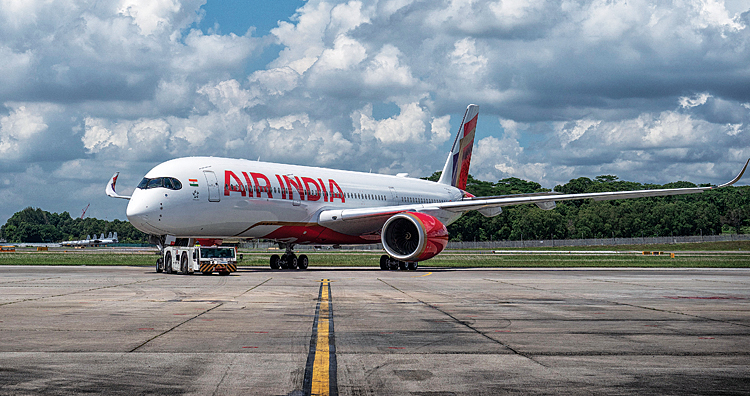
Air India recently announced an aggressive adjustment to its network, temporarily cutting or suspending frequencies on 29 international routes through August 2026. In an official statement, the airline noted these steps were “necessitated by continued airspace restrictions over certain regions and record high jet fuel prices for international operations”.
IndiGo, which has otherwise expanded its dominant domestic market share to 65 per cent has felt the geopolitical squeeze on its international long haul operations.
The low cost carrier announced the temporary discontinuation of its direct flights between India and Manchester. IndiGo has aggressively damp leased Boeing 787-9 Dreamliners to build a European foothold, but as Abhijit Dasgupta (IndiGo VP of Network Planning) notes, “longer flying times due to airspace constraints coupled with dramatically escalating costs” forced them to return aircraft and temporarily scale back.
THE PASSENGER PERSPECTIVE: CHAOS, COSTS, AND BROKEN CALENDARS
For Indian travellers, this geopolitical ripple effect translates to direct friction: reduced flight options, an increased likelihood of last-minute changes and undercurrents of fare volatility. While Directorate General of Civil Aviation (DGCA) mandates that affected flyers are entitled to full refunds or free re-bookings, navigating a shrinking summer flight schedule remains an uphill task for consumers.
Ultimately, the passenger is no longer just buying a ticket from point A to point B. They are unknowingly purchasing a high-stakes ticket to global geopolitics, navigating a landscape where a closed air corridor over the Middle East translates directly into a missed connection in Mumbai or a ruined vacation in Europe.
CONCLUSION: A NEW ERA OF DEFENSIVE AVIATION
The ongoing disruptions gripping Indian aviation serve as a stark reminder that in a globalised economy, geography is both an asset and a vulnerability. The current crisis has effectively dispelled the illusion that airline performance is solely dictated by passenger demand, fleet size, or local economic health. Instead, external geopolitical crosswinds can instantly redraw the financial and operational boundaries of the sky.
For Indian carriers like Air India and IndiGo, the current playbook is no longer about aggressive international expansion, but rather tactical survival and ‘defensive scheduling’. The massive multi-thousand-crore capacity cuts - spanning from domestic regional routes to critical longhaul destinations like Chicago and Manchester - mark a temporary retreat aimed at safeguarding network integrity and conserving cash.
While the Union Government’s unprecedented ₹10,000 crore ATF Price Stabilisation Fund provides an invaluable financial shock absorber, it functions as a temporary shield rather than a permanent cure. It offsets the catastrophic financial sting of importing fuel at inflated parity prices, but it cannot shrink the physical distance of a flight detour or manufacture extra aircraft availability.
Ultimately, the sky over India will remain turbulent until diplomatic breakthroughs or ceasefires reopen the vital aerial highways of Pakistan and West Asia. Until then, airlines must continue to balance the scales of profitability against the rigid realities of international conflict, and passengers must adjust to an era where the shortest distance between two points is no longer a straight line, but a complex, costly detour.