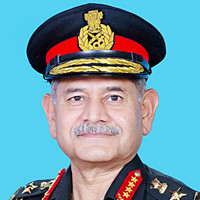
The insightful articles, inspiring narrations and analytical perspectives presented by the Editorial Team, establish an alluring connect with the reader. My compliments and best wishes to SP Guide Publications.
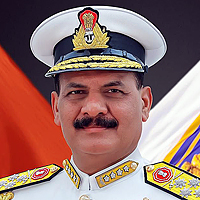
"Over the past 60 years, the growth of SP Guide Publications has mirrored the rising stature of Indian Navy. Its well-researched and informative magazines on Defence and Aerospace sector have served to shape an educated opinion of our military personnel, policy makers and the public alike. I wish SP's Publication team continued success, fair winds and following seas in all future endeavour!"

Since, its inception in 1964, SP Guide Publications has consistently demonstrated commitment to high-quality journalism in the aerospace and defence sectors, earning a well-deserved reputation as Asia's largest media house in this domain. I wish SP Guide Publications continued success in its pursuit of excellence.
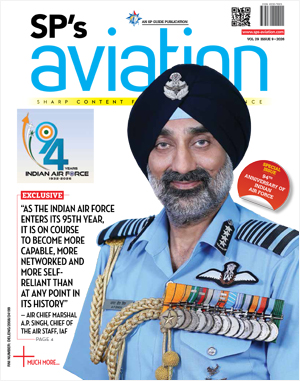
Speaking to Jayant Baranwal, Editor-in-Chief of SP’s Aviation, on the occasion of the 94th Indian Air Force Day, the outgoing Chief of the Air Staff, Air Chief Marshal A.P. Singh, reflects candidly on his tenure, outlines his vision for the IAF, and details the modernisation plans that will build a future-ready force
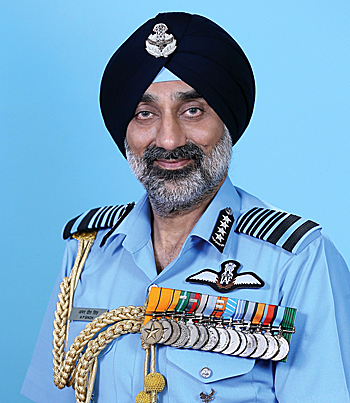
SP’s Aviation (SP’s): How would you define your tenure as the Chief of our air force?
– What stands out as the single highest peak, and
– The toughest challenge of your journey?
Chief of the Air Staff (CAS): I would define my tenure as a period in which the Indian Air Force proved itself in combat while transforming itself for the future, and did both at the same time. Our responsibility has been to remain operationally ready for today’s contingencies while preparing the Air Force for tomorrow’s wars.
The single highest peak, without doubt, was Operation Sindoor. Our responsibility was clear: to achieve the objectives assigned to us by the national leadership, while retaining the ability to respond to any escalation. The IAF delivered precise and calibrated effects at considerable ranges, struck with indigenous weapons deep into enemy territory, and protected our own airspace with a home-grown, networked air defence shield, all with a commitment to zero collateral damage that reflected the ethos of our Service. Perhaps most significantly, the operation restored to national consciousness the immense impact of offensive air power. Seeing every element of the Air Force, and our sister Services, work together as one was the proudest moment of my service.
“I had the privilege of commanding air warriors whose professionalism, dedication and spirit turned every challenge into an opportunity”
As for the toughest challenge, I would rather refer them to as demanding moments. Sustaining combat readiness while transforming the force at the pace modern warfare demands is never easy. But, I was blessed with an extraordinary team at Air Headquarters and across our Commands. Above all, I had the privilege of commanding air warriors whose professionalism, dedication and spirit turned every challenge into an opportunity. Whether it was in the skies during Operation Sindoor, on remote locations in harsh weather, or in a maintenance hangar late into the night, they rose to every occasion. When you command such men and women, challenges do not overwhelm you, they bring out the best in the entire Air Force.
SP’s: Would you like to comment on the progress of overall modernisation process of Air Force?
CAS: India’s quest for advanced and critical technologies is central to building a credible, future-ready aerospace power. The Indian Air Force is driving a comprehensive modernisation strategy built on three pillars: technological sovereignty, operational superiority and rapid capability enhancement. That strategy is now visibly turning plans into capability.
Our modernisation is anchored in a clear long-term vision. The IAF has formulated a Capability Perspective Plan-2047, which sets out long-term priorities based on emerging technologies. It feeds into our intervening long-term plans, which run on ten-year cycles and are updated periodically. Every acquisition we make today is therefore a deliberate step towards the Air Force the nation will need in the decades ahead.
The progress is already significant. We have made substantial gains in surveillance radars, surface-to-air guided weapons, utility and combat helicopters, light combat aircraft and unmanned platforms. Indigenous radars designed by DRDO, including the Ashwini, Rohini and Mountain Radars, are steadily entering service. The Defence Acquisition Council has cleared Astra Mk-II missiles for the IAF. It has also accorded Acceptance of Necessity for the Multi-Role Fighter Aircraft, for combat missiles with deep-strike capability, and for High Altitude Pseudo Satellites for persistent surveillance. Over the next few years, we expect further progress in medium helicopters, air-to-air and air-to-ground weapons, combat platforms, airborne radars, self-protection suites, secure communication systems and networked operations.
Our priorities are clearly defined. We are enhancing our combat potential through contemporary fighter platforms and long-range, high-precision aerial weapons with stand-off ranges. We are also strengthening self-protection systems and secure communication, networked operational capability, and combat enablers such as airborne early warning and control aircraft and in-flight refuellers. Unmanned systems capable of operating in a contested environment are another priority. One area has emerged as especially critical: multi-layered ground-based air defence, backed by gap-free surveillance and built to be mobile and easily deployable.
Increasingly, this modernisation is being delivered from within India. A majority of our projects are sourced indigenously. Where critical technologies are not yet available at home, or certain platforms are unlikely to be available in the foreseeable future, we explore appropriate global options. Even then, each acquisition carries commensurate plans to strengthen the domestic industrial ecosystem.
Modernisation is a continuous journey, not a destination. As the Indian Air Force enters its 95th year, it is on course to become more capable, more networked and more self-reliant than at any point in its history. It remains ready to meet whatever challenges the future may bring.
SP’s: Do you think drones are being overhyped, or are they now essential to the revolution in military affairs?
CAS: I would not describe drones as overhyped. Nor would I call them a magic wand that replaces traditional warfare or a complete substitute for crewed platforms. The truth lies in between, and it is more significant than either extremes. Drones are an essential component of modern warfare and a vital force multiplier. They are also the primary catalyst for a transition towards distributed lethality. Their importance comes not from being the only weapon that matters, but from forcing every other weapon system to evolve. In that sense, drones are the engine driving the current revolution in military affairs.
Recent conflicts around the world, and our own experience in Operation Sindoor, leave little doubt about this. As I have often said, drones have evolved from eyes in the sky to claws in the sky. Beyond persistent, low-cost ISR, they now strike, decoy and saturate. They are the physical manifestation of networkcentric warfare, shrinking the time between detecting a target and neutralising it from hours or minutes to seconds. Operation Sindoor demonstrated both sides of this reality. On our side, unmanned systems contributed to success as part of an integrated effort alongside ISR, combat aircraft, precision weapons, electronic warfare and networked command and control. On the adversary’s side, the drones launched against us were defeated by the air defence shield I spoke of earlier. A force that ignores drones today does so at its peril, whether it intends to use them or to defend against them.
Yet drones are not replacing conventional air power. I see them as an evolutionary step in air power, not a replacement for it. They reduce, and in some missions eliminate, the risk to human life, and they take on missions that are dull, dirty and dangerous, often at lower cost. But they do not replace the judgement, flexibility and decision-making that a crewed platform provides. Tellingly, the multiple sixth-generation combat aircraft programmes now under way around the world share one common thread. At the heart of each is a manned fighter, working alongside unmanned systems rather than being replaced by them. The future, therefore, is not manned or unmanned. It is manned and unmanned, fighting as a team.
The true revolution lies in integration. Drones deliver their full value only when they are woven together with sensors, secure networks, Artificial Intelligence and other combat assets to generate operational effects at scale. For the IAF, the priority is to build the optimal mix of manned, unmanned and counter-unmanned capabilities, while continuously adapting to the way these systems alter the character of conflict. Since 2019, the IAF has been the lead Service in articulating the Operational Requirements for Manned–Unmanned Teaming to HAL. At Dronathon-2026 in September, we assessed unmanned and counter-unmanned systems from over 20 Indian industry partners under realistic operational conditions. We also released ‘The Indian Air Force Unmanned & Autonomous Roadmap’ there, to give industry clarity on our priorities.
Drones, then, are neither hype nor a cure-all. They are a transformational force, and their real power lies in how well they are integrated. The IAF is committed to harnessing that power fully, with Indian industry as our partner, so that we stay ahead of the revolution in military affairs rather than reacting to it.
SP’s: How do you view the rise of AI, and to what extent could it present opportunities or risks for our Air Force in safeguarding national security?
CAS: Artificial Intelligence represents a critical evolutionary shift in warfare, and the Indian Air Force views its rise with both conviction and clear eyes. AI offers enormous opportunities for operational efficiency and superior decisionmaking. It also exposes a force to new vulnerabilities, from new vectors of cyber-attack to instability in autonomous systems. The nation that harnesses AI wisely, while guarding against its risks, will hold a decisive edge. Maintaining a competitive edge in AI is therefore essential to safeguarding national security and to ensuring air superiority in the contested environment of the future.
The strategic value of AI lies in a single idea: compressing the time it takes to sense a situation, understand it, decide and act, the cycle we know as the OODA loop. In air warfare, where outcomes can turn in seconds, that compression can be decisive. The opportunities span the entire spectrum of our operations: situational awareness, decision speed, mission planning, ISR exploitation, logistics, predictive maintenance and autonomous operations. Equally important, AI can be inserted across our existing fleets and systems without waiting for complete platform replacement. This makes it one of the fastest routes to enhancing capability in the medium term.
We are equally clear-eyed about the risks. AI introduces vulnerabilities involving data quality, adversarial manipulation, cyber-attack, model failure, lack of explainability, automation bias and dependence on vulnerable digital infrastructure. An adversary may try to deceive our algorithms, not just our sensors. These risks must be actively managed through rigorous testing and continuous validation, secure development practices, representative operational data and red-teaming, and, above all, through human oversight. Our principle is firm: AI will assist and accelerate human decision-making, but judgement on mission intent, rules of engagement and accountability will remain with a human being.
This is why the IAF has invested in its own AI ecosystem, including its AI Centre of Excellence, UDAAN, and high-end computing and data capabilities. This matters a great deal. It allows AI solutions to be developed, tested and evaluated within our own operational environment, rather than adopted as blackbox technologies whose workings we cannot fully verify. It also means our AI capabilities are built with indigenous expertise and shaped by the operators who will use them.
AI is neither a threat to be feared nor a technology to be embraced uncritically. It is a capability to be mastered. The IAF is committed to mastering it: harnessing its power to see further, decide faster and act more precisely, while ensuring that it remains secure, reliable and firmly under human control in the service of the nation.
SP’s: As per the reports, China seems to be moving ahead with its 6th-Gen fighter programme, having already fielded operational 5th-Gen fighters. How do you perceive these developments?
CAS: China’s progress in advanced combat aviation is a development that we monitor closely and evaluate objectively. While we take these technological advancements seriously, air superiority is rarely decided by a generation label or a single platform. As I said in the context of drones, the real power lies in integration. Ultimate combat effectiveness depends on how seamlessly we integrate platforms, sensors, long-range weapons, AI, autonomous systems and resilient networks. It also depends on how rapidly we adapt to counter or outpace the threat through innovative tactics, techniques and procedures. That is where the Indian Air Force’s focus lies, and we will ensure that we remain ready for any challenge in our neighbourhood.
SP’s: With the overwhelming advent of a broad spectrum of digital activities and platforms, including AI, where will you place human assets in practical terms (we believe human assets still remain the most important, though)?
CAS: I agree entirely: human assets remain, and will remain, the most important element of the Indian Air Force. Digital platforms and Artificial Intelligence are powerful tools. They enhance efficiency, accelerate data analysis and expand what our people can achieve. But they are supporting tools, not replacements. Technology will change the nature of the human role, but it will not diminish the importance of human judgement. If anything, it will make that judgement more valuable.
“The future IAF will need air warriors who understand both warfare and technology, and who can bring the two together in the moment of decision”
In a highly automated battlespace, machines will increasingly handle what they do best: high-volume data processing, pattern recognition, correlation and routine optimisation. What becomes scarce, and therefore more precious, is uniquely human. It is the ability to frame the right problem, interpret uncertainty, understand context and make accountable decisions under pressure. That is why we see AI as an augmentation technology. As I said earlier, the decision to employ force, and accountability for it, will always rest with a human being. Human judgement remains the critical fail-safe in strategic decision-making and leadership.
In practical terms, this is reshaping how we prepare our people. Training is evolving beyond platform-specific proficiency towards digital literacy, data awareness, an understanding of AI, and human–machine teaming. Our personnel must be equally comfortable exploiting an AI recommendation and questioning it. Trust in a machine must always be matched by the confidence and competence to override it when judgement demands. The future IAF will need air warriors who understand both warfare and technology, and who can bring the two together in the moment of decision.
Technology will continue to advance, but the heart of the Air Force will always be its people. The IAF will keep investing in our air warriors, in their skills, their judgement and their character, so that they remain masters of the machines they command, and never the other way round.